Gender Mainstreaming
in the South African National Department of Social Development:
A Policy Analysis
Bongiwe Dumezweni Ntakumba 202516987
Submitted in partial fulfilment of the requirements for the degree of Master of Social Science [Policy and Development Studies] in the Faculty of Humanities, Development and Social Sciences at the
University of KwaZulu-Natal, Pietermaritzburg.
2010
ABSTRACT
Gender inequality remains the greatest challenge for many societies and this has implications for the sustainable development and well-being of societies. There exists gender inequalities with regards to access to resources such as land, healthcare, credit, information, education and decision-making power between races and between the sexes.
The advent of democracy brought freedom for all South Africans and the new government understood gender inequality as a deterrent to the achievement of sustainable development for all and the building of a democratic state. The National Policy Framework for Women‟s Empowerment and Gender Equality provides a roadmap through which gender should be mainstreamed within government and elsewhere towards achieving the goal of gender equality. It stresses that the shift from inequality to equality requires the transformation of government and civil society.
The efforts of the Department of Social Development towards gender mainstreaming are premised in this national framework. The purpose of the present research is to ascertain whether and how gender is being mainstreamed in the National Department of Social Development (DSD), specifically looking at the conceptualization, management and structures in place for gender mainstreaming. This is a qualitative research analysis, using in-depth interviews as primary data collection methods, as well as a review of official gender mainstreaming documents of the DSD. Eighteen officials in middle management from all the different branches (reflected in the organogram in Figure 1) of DSD were selected. Middle management refers to staff that have the rank of Assistant and Deputy-
Director. These are members of staff who are directly involved in policy implementation and, in many instances, contribute to the development of policies.
The findings indicate that the implementation of gender mainstreaming is varied in the Department, with considerable success towards the attainment of employment equity target of 50/50 women representation in senior management. According to the DSD Employment Equity Report 2007/2008, women constituted 48% of senior managers. The official reports of the DSD point to progress being made in gender mainstreaming within the Department. This includes working towards approving a range of service delivery policies that address concerns of women and men, in intensifying service provision to respond to people‟s vulnerabilities and to ensure sustainable development of communities.
The respondents in this study argued that policy commitments to gender equality are not supported by political and administrative will and necessary resources. The majority of the respondents did not know that there was a Gender Focal Point, whose responsibility is the facilitation of gender mainstreaming in the Department. They struggled to define basic gender concepts with gender mainstreaming, mainly understood to be employment equity. The respondents were also not conversant with the Gender Mainstreaming Guidelines and did not know what is needed in implementing gender mainstreaming. The gap between the official reports of the Department on successful gender mainstreaming implementation and the negative perspectives of the respondents needs further investigation.
ACKNOWLEDGEMENTS
Many thanks to my supervisor, Ms Desiree Manicom, for her guidance and confidence in my abilities to complete this project.
To all the participants in this research, without whom it could not have been possible, thank you.
I am forever grateful to my family and friends for their endearing support that enabled me to push to the end. Thank you.
DECLARATION
Submitted in partial fulfilment of the requirements for the degree of Master of Social Science in the Graduate Programme of Policy and Development Studies, University of KwaZulu-Natal, Pietermaritzburg.
I declare that this dissertation, unless specifically indicated to the contrary in the text, is my own original work. It is being submitted for the degree of Master of Social Science, University of KwaZulu-Natal, Pietermaritzburg, South Africa. None of the present work has been submitted previously for any degree or examination at any other university.
Bongiwe Dumezweni Ntakumba Student Name
___________________
Date
ABBREVIATIONS
AIDS Acquired Immune Deficiency Syndrome
AU African Union
CEDAW Convention for the Elimination of Discrimination against Women
DFID UK Department for International Development
DG Director-General
DPSA Department of Public Service Administration
DSD Department of Social Development
GAD Gender and Development
GFP Gender Focal Point
GMGs Gender Mainstreaming Guidelines
HIV Human Immune Virus
MDGs Millennium Development Goals
NGM National Gender Machinery
NGOs Non-Governmental Organisations
OSW Office on the Status of Women
PSC Public Service Commission
SA South Africa/n
SADC Southern African Development Community
SLBs Street Level Bureaucrats
UN United Nations
WID Women in Development
TABLE OF CONTENTS
Abstract……….i
Acknowledgements………....iii
Declaration………..iv
Abbreviations………...v
CHAPTER 1: Introduction 1. Introduction………..1
2. Background to gender mainstreaming……….2
3. Overview of the research design..………8
4. Overview of the research report……….14
CHAPTER 2: Theoretical Framework 1. Introduction………15
2. Understanding public policy………..16
3. Policy implementation………...18
3.1.Conditions for successful implementation………..21
3.2.Conditions that constrain policy implementation………24
4. Gender and public policy………...26
5. Approaches to gender mainstreaming in the Public Service…...………..29
6. Conclusion……….31
CHAPTER 3: Legislative and Policy Framework 1. Introduction………33
2. Global policy context for gender mainstreaming………...34
3. The African Union: efforts on gender equality………..35
4. The Southern African Development Community………...…………...36
5. The National Legislative and Policy Framework for Gender Equality in South Africa……….37
6. The National Gender Machinery………...42
7. Gender mainstreaming in the South African Public Service...………..45
8. Gender mainstreaming in the Department of Social Development………...47
9. Conclusion……….53
CHAPTER 4: Literature Review 1. Introduction………55
2. Global experiences of gender mainstreaming in government………55
3. The South African Public Service gender mainstreaming experiences………….61
4. Conclusion……….69
CHAPTER 5: Findings and Analysis
1. Introduction………70
2. Conditions for successful policy implementation………..71
2.1.Content……….71
2.2.Context………..………...79
2.3.Commitment……….………...84
2.4.Capacity………...88
2.5. Clients and Coalitions………...93
3. Conclusion………...94
CHAPTER 6: Discussion and Conclusion 1. Introduction………95
2. Conditions for successful policy implementation………..95
2.1.Content……….95
2.2.Context……….98
2.3.Commitment………..100
2.4.Capacity……….102
2.5.Clients and Coalitions………103
TABLES
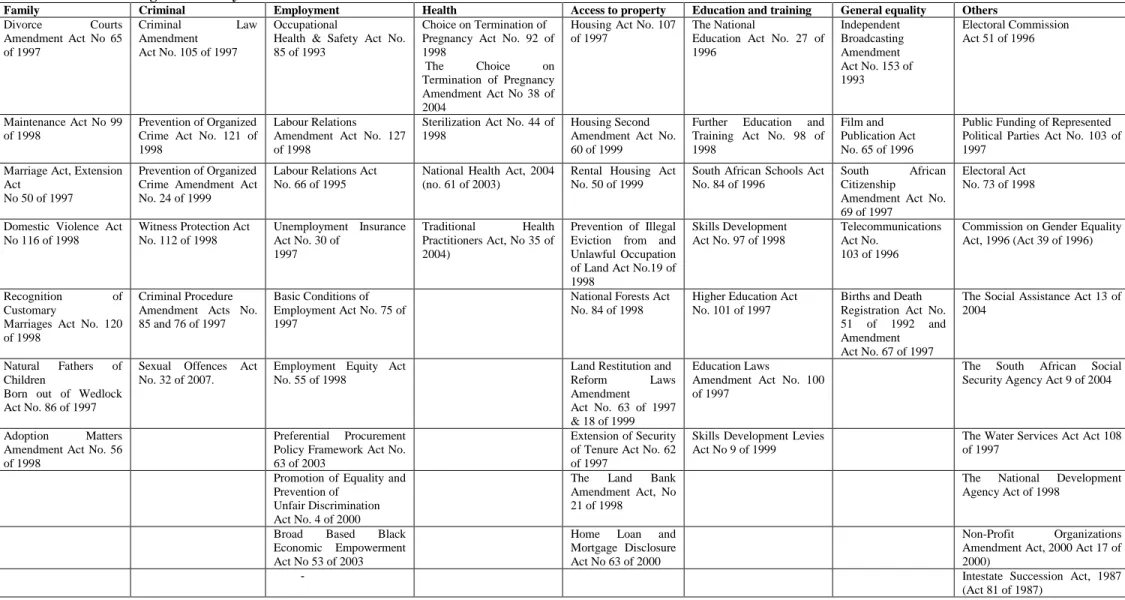
Table 1: Legal and Policy Framework ……….40
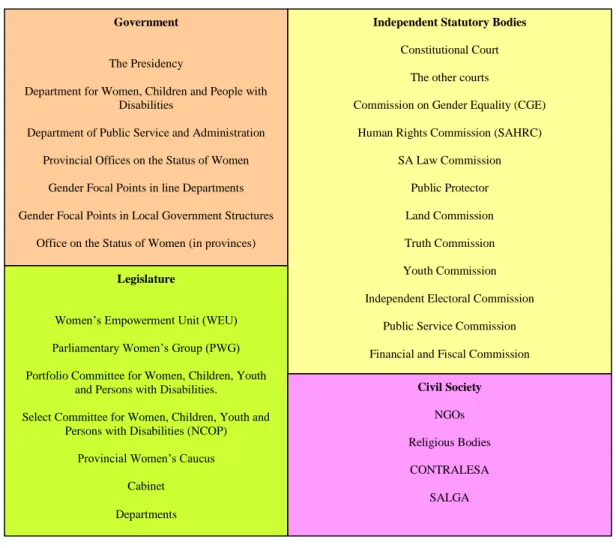
Table 2: The National Gender Machinery………43
FIGURES
Figure 1: DSD Organogram………...11
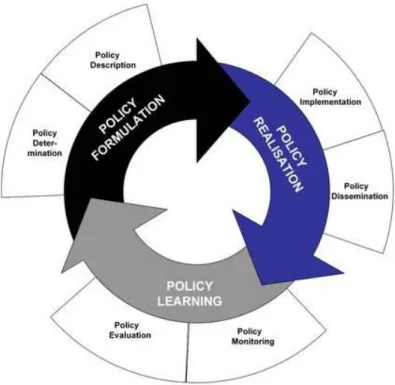
Figure 2: Public Policy Cycle ……..……….17
Appendix 1
1. Interview schedule………...105
Bibliography………...107
Chapter 1
Introduction
“Democracy will not be achieved unless we see in visible and practical terms that the condition of women in the country had radically changed for the better and that they have been empowered to intervene in all
spheres of life as equal with any member of our society.”
(Nelson Mandela, 1994)
1) Introduction
The DSD Gender Mainstreaming Guidelines (GMGs) define gender mainstreaming as “a process whereby attention to gender equality is integrated into an organization‟s analysis, planning, performance, personnel, policy, monitoring and assessment, thereby giving the content and direction of these practices at institutional level. The process assesses the implications for women and men of any planned action, including legislation, policies, research, dialogue and programmes in any area and at all levels. It is a strategy for making the concerns and experiences of both men and women an integral dimension of the design, implementation, monitoring and evaluation of policies and programmes in all political, economic and social spheres so that women and men benefit equally and inequality is not perpetuated” (DSD, 2007: 4).
The purpose of this research is to ascertain whether and how gender is being mainstreamed in the National Department of Social Development (DSD). The broad objectives of this study are to critically analyse;
1) the conceptualization of gender mainstreaming in the Public Service.
2) the management and structural arrangements (resources, processes, structures, personnel, mechanisms) in place for the implementation of gender mainstreaming in the Public Service.
3) the challenges and successes in the implementation of gender mainstreaming in the Public Service.
South Africa‟s National Policy Framework for Women‟s Empowerment and Gender Equality expects DSD, like other government Departments, to mainstream gender in its structures, systems and activities, but there has been no evaluation of how much progress is being made in this regard. The DSD really does not know how well it is achieving its commitment to gender equality. It is for this reason that an implementation analysis of gender mainstreaming in the Department was conducted.
2) Background to gender mainstreaming
2.1.Gender inequality within the South African Public Service
Gender inequality remains the greatest challenge entrenched by the patriarchal nature of societies and institutional structures. There exist gender inequalities with regards to
making power between races and between the sexes. It is for this reason that gender equality is broadly recognized as an imperative for the achievement of sustainable development.
Gender equality means that women and men have equal conditions for realizing their full human rights and potential and for contributing to, and benefiting from, economic, social, cultural and political development. Gender equity is the process of being fair to women and men by ensuring the availability of measures to compensate for historical and social disadvantages that prevent women and men from operating on a level playing field. Gender equity strategies are used to eventually gain gender equality. Equity is the means, equality is the result”(DPSA, 2006: 28).
Kate Young (1998), cited by Reddock (2000: 37) states that the subordination of women is socially constructed and not biologically determined and therefore can be changed and that change does take time. She defines gender as “the set of characteristics, roles and behavior patterns that distinguish women and men socially and culturally”. The gendered roles of women and men often relegate women to the household domain and essentially reproductive work, while men would be involved in productive work.
South Africa‟s Policy Framework for Women‟s Empowerment and Gender Equality, published by the Office on the Status of Women (OSW), defines gender as “the social roles allocated respectively to women and men in particular societies and at particular times. Such roles and differences between them are conditioned by a variety of political, economic, ideological and cultural factors and are characterized in most societies by unequal power relations” (OSW, 2000: xvii). This framework provides a roadmap for gender mainstreaming within SA government departments and elsewhere in society
towards achieving the goal of gender equality. It stipulates that the shift from inequality to equality requires the transformation of government and civil society. The main purpose of the Framework is to “establish a clear vision and framework to guide the process of developing laws, policies, procedures and practices which will serve to ensure equal rights and opportunities for women and men in all spheres and structures of government, as well as in the workplace, the community and the family” (OSW, 2000: 4-5).
This National Policy Framework recognizes that gender inequality is a complex structural problem of a generally patriarchal society that is evident even in government.
Gender inequality is systemic and entrenched in the structures, norms, values and perspectives of the state and civil society. It is pervasive but it is also often hidden, complex and insidious. The emancipation of women and the attainment of equality in the political, economic, social, cultural and civic spheres is a long-term process of social transformation that fundamentally challenges the way in which society is organized. At the level of the state it requires a new approach to the formulation and implementation of policy. Decision-makers need to develop new ways of thinking about the world; bureaucrats need to understand these in implementing policies, programmes and laws; and parliaments need to translate this thinking into law. At the level of civil society, women and men need to educate themselves and each other about the causes and manifestations of, and the solutions to, gender inequality and patriarchy (OSW, 2000: 25).
This understanding of gender inequality as a broad structural problem points to the complexity and far-reaching implications of gender inequality and the extent that all segments of government and society need to work together to abolish it. Employment is one of the areas in which gender inequality is prevalent and it has grave consequences for women.
The apartheid government was hierarchically structured along racial, ethnic and gender lines, with women, and especially black women, at the lower end of the hierarchy. In 2004, women constituted 31% of public servants nationally, compared to their male counterparts, who constituted 69%. There were even fewer women in senior management (Public Service Commission, 2008: 95). The new democratic government sought to address this problem by embarking on policy and legislative change to create an enabling environment for women‟s empowerment, representivity and gender equality. The number of women in the Public Service has steadily increased over the years, particularly those in senior management, and this is reported on in government reports discussed below.
The former Deputy President, Phumzile Mlambo-Ngcuka, in her speech at the Inauguration of the Public Service Gender Indaba in Boksburg on 18 August 2008, said that the number of women in government across all salary levels totalled more than 600 000, compared to about 500 000 men. This was a significant growth since 2004. She acknowledged that the challenge remained to raise the number of women in senior management, as women were more concentrated in non-decision-making positions. In 2008, women constituted 42.8% of ministers, 40% of deputy ministers, four of the nine premier posts in the country and 34% of senior managers in government (Mlambo- Ngcuka, 2008: 2). In 2010, women constituted 41% of ministers; 40.8% of deputy ministers, five of the nine premier posts and 34.8% in government senior management (The Presidency, 2010). The 2008 and 2010 figures for women‟s representation in political positions in government show no significant increase towards meeting the 50/50 representivity target of government, except for provincial premier‟s posts.
Mlambo-Ngcuka (2008), at the same Gender Indaba, reflected on the World Economic Forum‟s Gender Gap Index, which is a measurement of political empowerment, economic participation, educational attainment and health survival across 128 countries.
In 2007 SA ranked 20th in this Index, being the only African country to feature in the first 20, scoring well on political empowerment of women (Mlambo-Ngcuka, 2008: 2). In 2008 the country dropped to 22nd place, making small gains in political empowerment and educational attainment compared to Lesotho, ranking 16 (Hausmann et al., 2008: 16- 29).
At the second Public Service Gender Indaba, held in Durban from 20-21 August 2009, the Deputy Minister of the Department of Public Service Administration (DPSA), Mr Roy Padayachee, acknowledged the progress made by SA in being a signatory to international conventions and amending and enacting laws to ensure gender equality.
However, there are gaps in the implementation of such laws. He stated that “it is evident that Government has taken most necessary steps on paper towards the development and advancement of women. The challenge that still lies ahead of us is translating the paper gains into a reality that speaks to all women, especially women from rural areas and disabled women (Padayachee, 2009: 5).
Dr Richard Levin, Director-General (DG) of the DPSA, at the same Indaba, pointed out that the compliance with equity targets in the Public Service was less than desirable.
Women‟s representation at senior management in 2009 was 34.8% (compared to 34% in 2008), falling far short of the 50/50 target by March 2009. He referred to the analysis of
the Persal data [a name given to the information technology system that keeps information about all government employees] for 2008, which indicated that more women are at the bottom echelon of management positions. He emphasised what he called a very worrying trend, that there is no effort to replace women managers with other women when they exit a post. He called for a “national attitude revolution to see women recruited to senior positions, not merely for compliance, but for the recognition of their skills and competence” (Levin, 2009: 3-5).
It is generally understood that equity is just one important strategy for addressing gender inequality and that other more nuanced strategies are required to change the patriarchal nature of the Public Service, as well as the attitudes and behaviour of individuals. The struggle for gender equality not only focuses on the liberation and empowerment of women for their sake, but for the broader development of society. The goal of gender equality demands that gender is brought to the centre of government policy and programming. South Africa, in its 2008 CEDAW report, stresses the recognition of gender equality as essential to the achievement of development goals (OSW, 2008: 16).
There are policy imperatives for addressing gender equality in SA and gender mainstreaming is a strategy of ensuring that its commitment to gender equality is realized. The question of whether or not the ideals of gender equality are realized remains and requires continued investigation and, indeed, a long-term vision.
3) Overview of the research design
3.1.Research methodology
This is a qualitative analysis of gender mainstreaming in the DSD. Qualitative research allows for the use of more than one data collection method and strategy of inquiry (Creswell, 2003: 181-182). According to Amanda Wilmot (2005: 1), qualitative research
“aims to provide an in-depth understanding of the world as seen through the eyes of the people being studied”. Wilmot (Ibid) explains that qualitative research uses „non- probability sampling, as it is not its aim to produce a statistically representative sample or draw statistical inference‟. The present study focused on investigating the understanding and perceptions of public servants within the DSD on gender mainstreaming. It conducted a content analysis of official documents of DSD on the implementation of gender mainstreaming.
3.2.Research site and sampling
Tuckett (2004: 2) states that sampling in qualitative research often relies on small numbers and seeks to study a particular phenomenon in-depth. Respondents are purposively selected rather than randomly. The purposive non-random sampling technique was used for this study. With this technique, the number of people selected is not very important, as opposed to the criteria for selection, which focus on the
characteristics of respondents chosen to reflect the research population‟s diversity and breadth (Wilmot, 2005: 3).
The DSD is a National Department, with a Minister, Deputy Minister and DG, who is the administrative Head of the Department. The DSD also has Departments in the nine provincial spheres of government, tasked with the execution of its mandate at provincial level. The core functions of the DSD include:
“Management and oversight over social security, encompassing social assistance and social insurance policies that aim to prevent and alleviate poverty in the event of life cycle risks such as loss of income due to unemployment, disability, old age or death occurring.
Developmental social welfare services that provide support to reduce poverty, vulnerability and the impact of HIV and AIDS through sustainable development programmes, in partnership with implementing agents such as State-funded institutions, Non-Governmental Organisations (NGOs), Community-Based Organisations (CBOs) and Faith-Based Organisations” (DSD, 2010).
For the purposes of this study, middle management personnel from all the different branches (reflected in the Figure 1: organogram) of the National Department of DSD were selected. Middle Management refers to staff that have the ranks of Assistant and Deputy-Director. These are members of staff who are directly involved in policy implementation and, in many instances, contribute to the development of policies. A total of 18 face to face in-depth interviews were conducted and, of these, ten were women and
eight men. These individuals have worked for the Department for between one year and eleven years. The minimum period of one year was chosen as a reasonable time for them to be able to reflect on their experiences of implementing gender mainstreaming within the DSD. All the respondents approached for the interviews consented to participate in the study and signed their consent forms. Permission was requested to the respondents to voice record the interviews, only two respondents agreed to be recorded and the rest refused the recording. Detailed notes of the interviews were then taken and a thematic analysis of the data was conducted. The attached interview guide was used. See Appendix 1.
Figure 1: Department of Social Development: Organogram
3.3.Data collection methods
The primary data for this research was collected by using in-depth interviews. In-depth interviews were useful in understanding the perspectives of the respondents on gender mainstreaming. According to Carolyn Boyce and Palena Neale (2006: 3), in-depth interviews assist in acquiring information about a person‟s thoughts or behaviour as well as understanding what happened in the programme and why, thus providing more detailed information or data. Sharon B. Merriam (2001: 72) says:
We interview people to find out from them those things we cannot directly observe…We cannot observe feelings, thoughts, and interventions. We cannot observe behaviours that took place at some previous point in time. We cannot observe situations that preclude the presence of the observer. We cannot observe how people have organised the world and the meanings they attach to what goes on in the world. We have to ask people questions about those things. The purpose of interviewing, then, is to allow us to enter into the other person‟s perspective.
The secondary data was the policy and strategic documents of the Department, reports on gender mainstreaming and equity reports. A content analysis of this set of data was conducted to determine the presence of certain words or concepts within texts or sets of texts and an analysis of such relationships and meanings is conducted and inferences made (Busch et al., 2005: 1). The advantages of using content analysis include the use of non-interactive data, in that the researcher does not intrude into the space of the respondents, but analyses already existing data (Hesse-Biber and Leavy, 2006: 286-287).
Creswell (2003: 187) explains that the use of documents “enables the researcher to obtain the language and words of participants and represents data that are thoughtful, in that
participants have given attention to compiling, as written evidence it serves the researcher the time and expense of transcribing”.
3.4. Data analysis
Creswell (2003: 190) points out that data analysis is an ongoing process involving continual reflection about the data, asking analytic questions and writing memoranda throughout the study. A thematic analysis was used to analyse the data gathered from the in-depth interviews with Departmental officials. Themes are organized according to five protocols of Cloete and Wissink (2000) for successful policy implementation, which are content, context, commitment, capacity and clients and coalitions.
The secondary data was analyzed using relational analysis of content analysis. Relational analysis begins by identifying concepts in a text and examines semantic and meaningful relationships between them. Busch et al. (2005: 1) feel that concepts on their own do not have any „inherent meaning, rather meaning is a product of the relationships among concepts in a text‟. Policy implementation and Gender and Development (GAD) theories and approaches to gender mainstreaming were used as the theoretical framework to analyse and interpret findings and draw conclusions.
4. Overview of the research report
The next chapter presents a discussion concerning the theoretical framework that grounds this study. Chapter 3 is a discussion of the legislative and policy framework for gender equality and gender mainstreaming in the South African Public Service. Chapter 4 will review the literature on global gender mainstreaming in government and studies within the South African Public Service. The findings and analysis will be presented in Chapter 5. Chapter 6 will draw some conclusions on the factors influencing the implementation of gender mainstreaming in the Public Service.
Chapter 2
Theoretical Framework
“The implementation problem is assumed to be a series of mundane decisions and interactions unworthy of the attention of scholars seeking the heady stuff of politics. Implementation is
deceptively simple: it does not appear to involve any great issues”.
(Van Meter and Van Horn, 1975)
1) Introduction
This chapter presents a discussion of the theoretical framework that undergirds this study.
The study focuses on public policy implementation and gender and development theories.
These theories are used to critically analyse the implementation of gender mainstreaming within the National Department of Social Development (DSD). Over the years of the democratic government, great strides were made in developing a progressive legislative and policy framework for the achievement of gender equality. The National Policy Framework for Women‟s Empowerment and Gender Equality is a guiding policy document for the pursuit of the goal of gender equality through different strategies, including gender mainstreaming. However, policy implementation does not always correspond with policy objectives and this undermines the impact that a policy has on the lives of people.
2) Understanding public policy
Public policy is defined by Michael E. Kraft and Scott R. Furlong as “a course of government action or inaction in response to public problems. It is associated with formally approved policy goals and means as well as regulations and practices of agencies that implement programs” (Kraft and Furlong, 2007: 5). Robert M. Friedman defines public policy as “authoritative decisions that are made in the legislative, executive, or judicial branches of government that are intended to direct or influence the actions, behaviors, or decisions of others” (Friedman, 1999: 1-2). He stresses that the development of policy should be coupled with a strong implementation plan that is well carried out for it to have any meaningful impact.
Marilyn Taylor (2003: 106-108) discusses different views of public policy. The first view believes that the policy process is a rational, scientific, technical and managerial process that goes through a cyclical process. This process starts with the identification of objectives, followed by the development and implementation of plans to meet these objectives by systematic monitoring and evaluation, which feeds back into the development of future plans (top-down approach). Helga Pulz and Oliver Treib (2006: 3- 5) stated that the top-down theorists believed that policy implementation was purely an apolitical administrative process which required clear and accurate bureaucratic procedures, adequate resources, clear responsibilities for implementers, as well as control.
Drawing on Philip Haynes‟ (1999) work on chaos and complexity theory, policy-making is viewed as a “complex process that is concerned with the negotiation of competing and conflicting interests and that there can be many points of engagement”- bottom-up approach (Taylor, 2003: 106-108). Parsons (1995: 462) feels that “policy-making does not come to an end once a policy is set out or approved. Policy is being made as it is being administered and administered as it is being made”. The bottom-up approach means that policy implementation cannot be separated from policy formulation. This approach brought to the debate the role of street-level bureaucrats and their discretion in carrying out their roles and thus challenging the notion of hierarchical control (Pulz and Treib, 2006: 5-6).
Figure 2: Public Policy Cycle (www.transport-era.net/about-ent/description-o...)
The complexity of the policy process involves values and politics that are brought to bear in implicit as well as explicit ways and overlaps between policy design and implementation stages.
It is hard enough to design public policies and programmes that look good on paper. It is harder still to formulate them in words and slogans that resonate pleasingly in the ears of political leaders and the constituencies to which they are responsive. And it is excruciatingly hard to implement them in a way that pleases anyone at all, including the supposed beneficiaries or clients (Bardach, 1977: 3, cited in Cloete and Wissink, 2000: 168).
Even though policy implementation is often not given the same status as policy formulation, it is a critical stage of translating government policy into reality and is as political as policy formulation.
3) Policy implementation
Van Meter and Van Horn (1975: 447), cited in Friedman (1999: 3), define policy implementation as “those actions by public or private individuals (or groups) that are directed at the achievement of objectives set forth in prior policy decisions”. This definition means that policy implementation is a purposeful process, the aim of which is the accomplishment of policy goals. Cloete and Wissink (2000: 177) citing Pressman and Wildavsky (1973), explain that, “as a noun, implementation is the state of having achieved the goals of the policy. As a verb, it is a process – everything that happens in trying to achieve that policy objective. Thus, just because implementation (noun) is not achieved does not mean that implementation (verb) does not happen”. The present study
defines implementation in the verb form to understand the ongoing process of gender mainstreaming implementation in the DSD.
Policy implementation is not a neat, coherent and problem-free process. It is a complex, value-laden process, riddled with politics and power struggles. It requires much discussion and investigation for it to be handled more appropriately. Even this begs the question, who handles it more appropriately? John Montgomery states:
Politicians and officials do not always intend policies to succeed…development policies have served many purposes, not all of which are compatible with the presumed objective of improving immediate social conditions. Politicians may be satisfied with a policy that fails to achieve its stated goals if it succeeds in affirming public confidence in their tenure of office. Administrators, too, can be pleased with programmes that enhance their bureaucratic resources or status even though they have little impact (Montgomery, n.d: 4).
Eugene Bardach (1977: 56), cited in Parsons (1995:470-471), was of the opinion that
“implementation is a game of bargaining, persuasion, and maneuvering under conditions of uncertainty”. Parsons emphasised that policy implementation is not just a technical bureaucratic process, but a political process taking place within the domain of unelected power. Michael Lipsky (1980) introduced the concept of street-level bureaucrats (SLBs) and the role they play in policy implementation, in line with Parsons‟ opinions. Lipsky says:
the decisions of street level bureaucrats, the routines they establish, and the devices they invent to cope with uncertainties and work pressures, effectively become the public policies they carry out…public policy is not best understood as made in legislatures or top-floor suites of high
daily encounters of street level workers…Citizens directly experience government through them, and their actions are the policies provided by government in important respects (Lipsky, 1980:
xii, xvi).
Lipsky (1980: 13) felt that the SLBs make policy in two related respects, in that they exercise wide discretion in making decisions about citizens they interact with and determine the nature, amount and quality of benefits and sanctions meted out by their organizations. These work situations are too complicated to reduce to programmatic formats. SLBs will also circumvent reforms they view as limiting their discretion. Jerome Murphy, cited by Patton (1997: 201), concurs with the argument that it is incorrect to assume that “competently led bureaucracies would operate like goal-directed, unitary decision makers”. The SLBs do not simply follow directives but do what makes sense to them in their circumstances.
Patton (1997: 196) states that what gets implemented does not always match set policy goals and it is important to ascertain the level of accepted diversion and the conditions that necessitate such diversion. He stipulates that, to understand whether the policy was successful or not, implementation analysis needs to be conducted. It involves “finding out what is actually happening in the programme. Of what does the programme consist?
What are the key characteristics? Who is participating? What do staff do? What do participants experience? What‟s working and what‟s not working? What is the program?”
Similarly, Parsons (1995: 462) feels that “a study of implementation is a study of change:
how change occurs, possibly how it may be induced”. Implementation analysis is about
assessing the extent to which a programme is being implemented and the factors that enable or constrain successful implementation.
3.1. Conditions that enable successful policy implementation
Cloete and Wissink (2000); Kraft and Furlong (2007); Weimer and Vining (2005) and Parsons (1995) present conditions that enable and/or constrain policy implementation.
Their arguments enhance each other, as some go further than others and these will form the basis of this study‟s analysis. Cloete and Wissink (2000) provide the themes for analysis of this study, as their 5 protocols for successful implementation are broad enough and encompass the other factors discussed by the scholars mentioned above.
In appreciation of the complexity of policy implementation, Cloete and Wissink (2000:
179-185) use a combination of both top-down and bottom-up approaches to public policy. They present the 5C Protocols essential for successful implementation, a synthesis of the work of many scholars of policy implementation.
1. Content - refers to the articulation of the ends and specific means towards the achievements of the stated ends (179-180).
2. Context - refers to the institutional context, as well as the larger social, political and legal realities of the system enabling the implementation of the policy (180- 181).
3. Commitment - refers to the commitment and ability of SLBs to carry out their responsibilities (181).
4. Capacity - refers to the availability of human, financial, material, technological, logistical and other resources. The resource question is, in itself, political, as questions of who gets what, when, how, where and from whom need to be asked (181-182).
5. Clients and coalitions - refer to the identification and bringing on board of key stakeholders affected by the policy or those who have special interests who could support the implementation of the policy (185).
Kraft and Furlong (2007: 82) present similar conditions to those discussed above, synthesized in three broad categories;
1. Organization - the establishment of resources, offices and methods of administering a programme.
2. Interpretation - the translation of the programme‟s language, plans, directives and regulatory requirements into a language that will be understood by those affected.
3. Application - the development of programme details, routine provision of services, payments or other agreed upon programme objectives or instruments.
Weimer and Vining (2005: 275-279) present three factors which could either enable or constrain policy implementation. These are the logic of the policy (is the theory reasonable?); assembly (who has the essential elements?); and the availability of fixers (who will manage the assembly?).
1. The logic of the policy refers to the characteristics of the policy and the circumstances of its adoption. The more legal authority and political support the policy has, the greater the chances of its success.
2. Assembly – the more varied the actors and elements to be assembled are, the greater the potential for implementation problems.
3. Availability of fixers – implementation actors may fail to assemble some elements because of incompetence or inability to mobilize support necessary for the success of implementation, as well as the disposition of implementers. Fixers (from within or outside the organization) intervene by providing needed elements and assume an oversight role.
Parsons (1995: 486), like the other authors, stresses that communication, adequate implementation structures, implementer disposition, support of allies and an enabling socio-economic and political environment are critical for effective implementation. He adds that a causal theory of how change is to be effected is also important. Parsons (ibid) draws from both top-down and bottom-up approaches to policy implementation and feels that effective implementation requires the articulation of clear and consistent objectives;
legally structured implementation structures to enhance compliance; committed and skilful implementers; support of interest groups and socio-economic and political conditions that do not undermine the policy.
Whilst the factors discussed above enable policy implementation, they could have a reverse effect, that of hindering policy implementation. The following section examines critical constraints to successful policy implementation.
3.2.Conditions which constrain successful policy implementation
This discussion presents various factors which constrain policy implementation and gives a more comprehensive view of what hinders policy implementation. Patton (1997: 202) presents a number of factors:
1. The lack of assessing the feasibility of implementation and a lack of correct conceptualization of policy implementation by decision-makers results in policies not being implemented as intended.
2. The human element is often not considered in policy implementation.
Implementers make mistakes, power struggles develop and personalities clash, which have a negative effect on implementation.
3. What gets implemented does not always match with original goals and plans, as the implementation process contains “unknowns that change the ideal so that it looks different when and if it actually becomes operational”.
Patton (1997) feels that the ideal for policy implementation would be to address all these problems. Patton includes an excerpt that clearly articulates the struggles of implementation.
The objective of all dedicated department employees should be to thoroughly analyze all situations, anticipate all problems prior to their occurrence, have answers for these problems, and move swiftly to solve these problems when called upon…However…when you are up to your ass in alligators, it is difficult to remind yourself that your initial objective was to drain the swamp (Patton, 1997: 202).
According to Kaufman (1986), cited in Cloete and Wissink (2000: 71), non- implementation of policy is a result of three factors.
1. Subordinates do not know what their superiors want.
2. They cannot do what their superiors want.
3. They refuse to do what their superiors want.
Taiwo Makinde (2005: 63-64) argues that implementation problems arise whenever the following crucial factors for implementation are missing:
1. Communication – a lack of clear and consistent communication of what needs to be implemented creates implementation problems.
2. Resources - if adequate human (adequate number and competent staff) and material resources (relevant and adequate information, the authority to ensure accountability and facilities to support the implementation) are not made available implementation will be hindered.
3. Disposition - if the SLBs view the policy as hindering their organizational or personal interests they will resist, delay or subvert it.
4. Bureaucratic structures – lack of proper co-ordination of implementation actors may hinder successful implementation, especially in policy areas with varied elements to be assembled.
Policy implementation is a complex and nuanced process of translating stated policy goals into programmes and services for the intended beneficiaries. Crucial to the articulation of intended goals is how these goals are to be met, and setting in motion mechanisms and processes that support the implementation of policy. This is especially so in contested policy goals such as gender equality. Gendering public policy demands not only the enactment of specific gender policies but an integration of gender in all government policies and implementation processes. This is further discussed below.
4) Gender and public policy
Wakeman et al. (1996: 8-9) cite Caroline Moser in her book Gender Planning and Development: Theory, Practice and Training, stating, “if policy is about what to do, then planning is how to do it, the organization of implementation is about what is actually done…Policy making is the process of social and political decision making about how to allocate resources for the needs and interests of society, concluding the formulation of a policy strategy”. Wakeman et al. recommended that policies should not only state the goals but also how these are to be achieved. They elaborate on how they are informed by gender issues. They say that if gender issues are not considered at the policy level, it is not likely that they will be considered at the project level.
Gender in public policy stems from a long history of advocacy for women‟s inclusion in development discourse, dating back to the 1950s. In the 1980s there was a move from Women in Development (WID) to Gender and Development (GAD) approaches. WID focused on the contribution of women in development and advocated their inclusion in development programmes. This approach was criticised for its narrow focus on women without considering the contexts from which they came. The GAD proponents advocated for a focus not just on women but also on men and relations between them. They felt that the power relationships between men and women influenced the involvement of women in development, or lack thereof. The GAD approach conceded that even though women‟s and men‟s roles differ, they are nonetheless part of the same context (Wakeman et al., 1996: 9-11).
According to Connelly et al. (2000: 62), in their paper “Feminism and Development:
Theoretical Perspectives”, „GAD recognizes that women are deeply affected by the nature of patriarchal power in their societies at the national, community and household levels, as well as their position in national, regional and global economies‟. They emphasise that the GAD approach concerns itself with studying both the condition of women and patriarchal structures which define and entrench the subordination of women.
GAD acknowledges how development policies and programmes impact on women and men differently and insist on recognizing the agency of women in their own development and that of others.
Beverley Haddad (2000) states that government has an important role in promoting the emancipation of women. She asserts that the GAD approach is concerned with the transformation of structures and insists on the necessity of mainstreaming gender into all levels of society. She makes the point that GAD has been adopted by the South African government, expressed in a number of policies and structures that monitor gender equity.
This is primarily the reason why the GAD framework is being used for the present study.
The GAD approach makes advocacy and participatory knowledge claims and calls for the transformation of power relations between men and women. The GAD approach embraces politics and a political agenda recognizing that policy implementation of gender equality goals is as political as policy formulation. The GAD theories point out that policies need to include gender concerns at formulation, to ensure that these are implemented. Gender mainstreaming, as a strategy for the achievement of gender equality, is an ongoing process, the implementation of which requires continuous evaluation, lobbying and advocacy for improvement.
5) Approaches to gender mainstreaming in the Public Service
Gender mainstreaming as a strategy towards the achievement of gender equality is conceptualized and approached differently. Sylvia Walby (2003: 4) makes a distinction between agenda setting and integrationist approaches to gender mainstreaming. Agenda setting approaches, as with (or based on) the GAD approach, calls for the transformation of the mainstream policy paradigms and decision-making processes, whilst the
integrationist approaches seek to introduce a gender perspective without challenging the existing policy paradigm. Integrationist approaches are more in line with WID approaches that argued for the inclusion of women in development without seeking the transformation of contexts characterized by unequal power relations between men and women.
At a United Nations Workshop on Approaches and Methodologies for Gender Mainstreaming, held in New York from 27 February – 2 March 2001, a number of papers were presented highlighting different organizational approaches and lessons learned on gender mainstreaming. The following discussion will provide a summary of some of these papers. Thelma Kay (2001: 47-48) stated that three questions need to be asked in gender mainstreaming;
1. What kind of gender mainstreaming do we want or, more realistically, can we get? She echoes Walby‟s (2003) opinion that gender mainstreaming approaches could either be agenda setting (seeking to transform the driving force of development policies) or integrationist (integrating gender issues in existing programmes without altering the agenda).
2. What approaches should we use? These would include incremental approaches focusing on promoting gradual internal changes and deterring disengagement tendencies.
3. What strategies should we use? Sustained involvement of all entities, establishment and strengthening of institutional mechanisms and processes,
working with strategic allies, as well as competency building and support to staff, are all strategies that enhance the implementation of gender mainstreaming.
Wariara Mbugua (2001: 40) presented lessons on effecting gender mainstreaming within the United Nations Population Fund, which have a bearing on the Public Service;
1. The leader‟s commitment to gender equality in setting minimum standards, creating accountability measures and ensuring adherence to these.
2. Explicit unambiguous policy and goals.
3. Earmarked funds and ensuring that gender concerns are addressed in all other programmes.
4. Clear and adequately staffed structures to champion gender concerns.
5. Addressing gender issues at the initial stages of any intervention.
6. Developing gender competencies.
7. Adapting and changing strategies according to changing contexts.
8. The establishment of external allies to ensure both a barometer and catalyst contribution.
Carolyn Hannan (2001: 52-53) insists that the following key constraints to gender mainstreaming need to be addressed:
1. Lack of conceptual understanding of gender equality hinders the effective implementation of gender mainstreaming.
2. Poor knowledge of inter-governmental mandates on gender mainstreaming.
3. Lack of knowledge on the linkages between gender and the areas of work of the different departments.
4. Lack of capacity to incorporate gender perspectives.
Sissel Ekaas (2001: 32) stressed that, in order to make progress, gender mainstreaming must be linked with the overall programme planning, budgeting, monitoring, reporting and evaluation. She recommended that verifiable gender sensitive indicators need to be developed, monitoring responsibilities should be clearly communicated; regular progress reports should be made on gender mainstreaming and there must be a separation of gender mainstreaming in technical work and gender balance in staffing.
6) Conclusion
Policy implementation is a critical stage of the policy cycle during which policy goals are translated into programmes for beneficiaries. Initially, policy theorists conceptualized policy implementation as a value-free, technical process of realizing policy goals but, over the years of implementation studies, the recognition of the complexity of policy implementation has come to the fore. Scholars and practitioners acknowledge the politics involved in policy implementation, which could either enable or constrain successful implementation of the policy.
Policy implementation is enabled by a range of variables which include the organizational or broader societal context within which the policy is being implemented, the content of the policy itself, the commitment of implementers, the human, financial
and material capacity of implementers and the coalitions with key stakeholders who have an interest in the successful implementation of the policy.
The gender and policy theorists state that policies need to articulate gender concerns and need to explain how these would be addressed from the conceptual or design levels through to implementation. GAD theorists argue not for a mere inclusion of women‟s concerns in development, but also for the transformation of policy dynamics and decision-making.
The context for gender equality work within the South African government is enabled by the Constitution. The Constitution enshrines the rights to gender equality and is the basis for the Legislative and Policy Frameworks on gender equality and women‟s empowerment which are discussed in the following chapter.
Chapter 3
Legislative and Policy Framework
“We need a national attitude revolution that will challenge us to see women as our first recruitment choices for positions above our male counterparts, and not a second alternative which is regarded as
malicious compliance, but because of their suitability and competence”.
(Richard Levin, 2008)
1) Introduction
The first part of this chapter consists of an account of the history of the concept of gender mainstreaming, within the context of global, African Union (AU) and Southern African Development Community (SADC), followed by the South African legislative and policy framework for gender equality. The discussion on institutional mechanisms flows from the South Africa‟s National Policy Framework for Women‟s Empowerment and Gender Equality, which provides for the creation of structures and processes to support and monitor the implementation of the government‟s gender programme.
The mainstreaming of gender within the Department of Social Development (DSD) is described. Key strategic documents launched to drive this process are highlighted, viz.
the Gender Mainstreaming Guidelines (DSD, 2007) and the Women‟s Empowerment and Gender Policy (DSD, 2010). This discussion includes official progress reports of the
DSD on gender mainstreaming, as well as the commitments of the current Strategic Plan 2010/2015 towards the achievement of gender equality.
2) Global policy context for gender mainstreaming
The concept of gender mainstreaming gained momentum at the United Nations (UN) Third World Conference on Women, held in Nairobi, Kenya, in 1985. This conference and two previous ones, held in Mexico City in 1975 and Copenhagen in 1980, called for the establishment of national machineries to promote the status of women. The Decade for Women (1976-1985) focused on women-specific issues and, by the time of the Fourth World Conference on Women, held in Beijing in 1995, the discussion had shifted to gender equality (Rai, 2003: 1-2). The Beijing conference called for international promotion of gender mainstreaming through the integration of a gender perspective in all policies and programmes in order to consider their effects on both men and women (UN, 1995: 25-26).
The consideration of policy impacts on women has been largely with hindsight. Gender mainstreaming not only calls for a biased consideration of women in policy processes, but the inclusion of men as well. South Africa is a signatory to a range of international conventions affirming gender equality, including the Beijing Platform of Action and CEDAW (Convention for the Elimination of Discrimination against Women) and reports on progress every four years.
3) The African Union: efforts on gender equality
The African Union‟s commitment to gender equality includes the Solemn Declaration on Gender Equality in Africa, 2004. This is an important instrument to ensure that the gender equality agenda remains alive at the highest political levels within African governments. The New Partnership for Africa‟s Development (NEPAD), July 2001, has as one of its objectives the aim of accelerating the empowerment of women. “Promoting the role of women in social and economic development by reinforcing their capacity in the domains of education and training; by developing revenue generating activities through facilitating access to credit; and by assuring their participation in the political and economic life of African countries” (NEPAD, 2001: 10).
The AU adopted the Protocol to the African Charter on Human and People‟s Rights on the Rights of Women in Africa in July 2003. This Protocol commits member states to the elimination of discrimination against women and equal participation in decision-making through appropriate legislative, institutional and other measures (AU, 2003: 4). The African Charter on Democracy, Elections and Governance, 30 January 2007, recognizes the role of women in the development and strengthening of democracy and calls for their full and active participation in decision-making processes and advocates gender parity in representation at all levels, including the legislatures (AU, 2007: 12).
4) The Southern African Development Community (SADC)
Following the Beijing conference in 1995, SADC signed the Gender and Development Declaration in 1997. The Declaration commits member states to the equal representation of women and men in decision-making positions of states and SADC structures at all levels, with a target of 30% by 2005; promoting women‟s full access to, and control over, productive resources to reduce the level of poverty among women; repealing and reforming all laws; amending constitutions and changing social practices which still subject women to discrimination and taking urgent measures to prevent and deal with increasing levels of violence against women and children (SADC, 1997: 1).
In 2005, SADC members committed themselves to a target of 50% women in decision- making positions, aligned to that of the AU‟s Solemn Declaration on Gender Equality in Africa 2004. The SADC Regional Integration Strategic Implementation Framework (2006-2010) is based on the SADC Declaration and is aimed at achieving gender equality and equity through gender mainstreaming and women‟s empowerment.
The Official SADC Trade, Industry and Investment Review of 2006 hails the SADC region as a “trendsetter” in the implementation of a gender programme, particularly in the areas of increasing women‟s participation in politics and decision-making. The Review points to gaps and challenges, which include the inadequacy of laws, systems and services for addressing gender violence, as well as contradictions present in all SADC
countries between customary law and codified law concerning women‟s rights (The Official SADC Trade, Industry and Investment Review, 2006: 1).
The SADC Gender Protocol was adopted in Johannesburg on 17 August 2008. It is a legally binding document, which commits member states to ensuring that gender transformation happens in their countries, both in government and civil society, by setting specific targets in various aspects to redress gender inequalities. This is a step forward for the SADC region and builds on previous efforts of ensuring that gender remains on the agenda of this Community. The Protocol calls states to enshrine gender equality and equity in national constitutions, to repeal all discriminatory laws and ensure 50% women representation in political and decision-making positions by 2015. It makes bold commitments, including abolishing the minority status of women by 2015 and requires member states to report on progress every two years.
5) The National Legislative and Policy Framework for gender equality in South Africa
The advent of democracy after the general elections in 1994 brought liberation for all South Africans. The new democratic government conceptualized gender equality as central to the realization of democracy in the country and this is entrenched in the new Constitution. The Constitution attests that SA is an independent state, founded on the values of “human dignity, the achievement of equality and the advancement of human rights and freedoms; non-racialism and non-sexism” (Constitution No 108 of 1996).
Chapter II, Section 9, of the Bill of Rights outlines the equality commitment:
1. Everyone is equal before the law and has the right to equal protection and benefit of the law.
2. Equality includes the full and equal enjoyment of all rights and freedoms. To promote the achievement of equality, legislative and other measures designed to protect or advance persons, or categories of persons, disadvantaged by unfair discrimination, may be taken.
3. The state may not unfairly discriminate directly or indirectly against anyone on one or more grounds, including race, gender, sex, pregnancy, marital status, ethnic or social origin, colour, sexual orientation, age, disability, religion, conscience, belief, culture, language and birth.
4. No person may unfairly discriminate directly or indirectly against anyone on one or more grounds in terms of subsection (3). National legislation must be enacted to prevent or prohibit unfair discrimination.
5. Discrimination on one or more grounds listed in subsection (3) is unfair, unless it is established that the discrimination is fair.
The Constitution addresses the weak position of women in law and society. Ntlama (2001) explained that, in enforcing the Constitution, the Constitutional Court has worked to give meaning and content to the concept of the right to equal protection and benefit of the law. “It has rejected the same or identical treatment standard of equality and has recognized that not every instance of different treatment will result in inequality and that identical treatment may produce serious inequality..interpreted the equality clause in a
manner that takes into account South Africa‟s history of exclusions and inequalities”
(Ntlama, 2001: 3).
The government further changed and amended a range of laws and policies to integrate gender equality concerns. Table I shows the legislative and policy framework that redresses the imbalances of the past based on gender and race and creates an enabling environment for gender equality.