Gender, experience and events at the station influenced the perception of the role of the station manager in maintaining a personal connection, individual well-being, team climate and interference with professional tasks. The position of station manager is seen as an important position, which plays a crucial role in the success of an Antarctic station.
List of acronyms and abbreviations
INTRODUCTION
- INTRODUCTION
- BACKGROUND
- PROBLEM STATEMENT
- RESEARCH OBJECTIVE AND AIMS
- RESEARCH DESIGN
- CHAPTER OUTLINE
The choice of team leader has a significant impact on the success of the expedition (Schmidt, Wood & Lugg, 2005:924). Understanding the leadership needs of the Antarctic team member can assist Antarctic programs in selecting station leaders.
LITERATURE REVIEW
INTRODUCTION
ABOUT ANTARCTICA
- Background and importance
- Governance of Antarctica
- South Africa and Antarctica
In the same year, the first South African National Antarctic Expedition (SANAE 1) departed South Africa for Antarctica on 3 December 1959 to settle in an abandoned Norwegian wintering base in Dronning Maud Land (ALSA, 2015). The South African Department of Science and Technology (DST) manages the scientific research functions of SANAP through its research agency, the National Research Foundation (NRF).
AN EXTREME ENVIRONMENT
- Understanding extreme environments
- Leading in extreme environments
Teams in extreme environments, such as the polar regions, can consist of different types of groups. Leadership in extreme contexts is a unique field of research and, according to Hannah, Uhl-Bien, Avolio, and Cavarretta (2009), one of the least researched topics within the study of leadership.
UNDERSTANDING OVERWINTERING
- Antarctic adaptation, behaviour norms and expectations
- Stressors and influences for Antarctic expeditioners
- Balancing gender, leadership and the Antarctic
- Returning expeditioners
- Crisis and emergency management in Antarctica
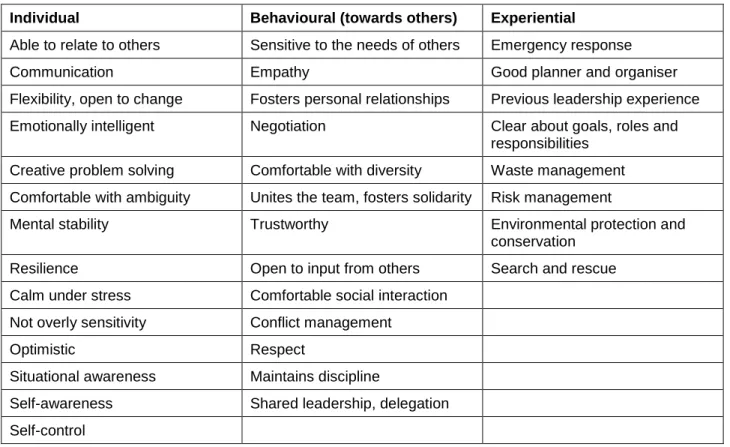
Emergency response and risk management Balance station requirements and physical well-being of the team. The stressors can affect the well-being of the wintering individual in Antarctica, and can have detrimental effects on the team and team climate.
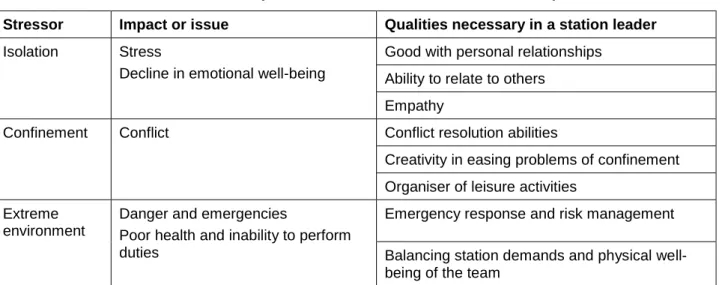
- The role and challenges of the Antarctic station leader
- Leadership theory in Antarctica
- Antarctic team composition and selection
- Antarctic station leader selection
- Concluding on key issues and competencies for Antarctic station leaders
The station manager has a responsibility to achieve the objectives of the national program (Godwin, 1987:3) and must ensure that Antarctic Treaty requirements, policies and procedures are adhered to and administered effectively (AAD, 2016). The social distance between the leader and the follower affects the effectiveness of the station leader.
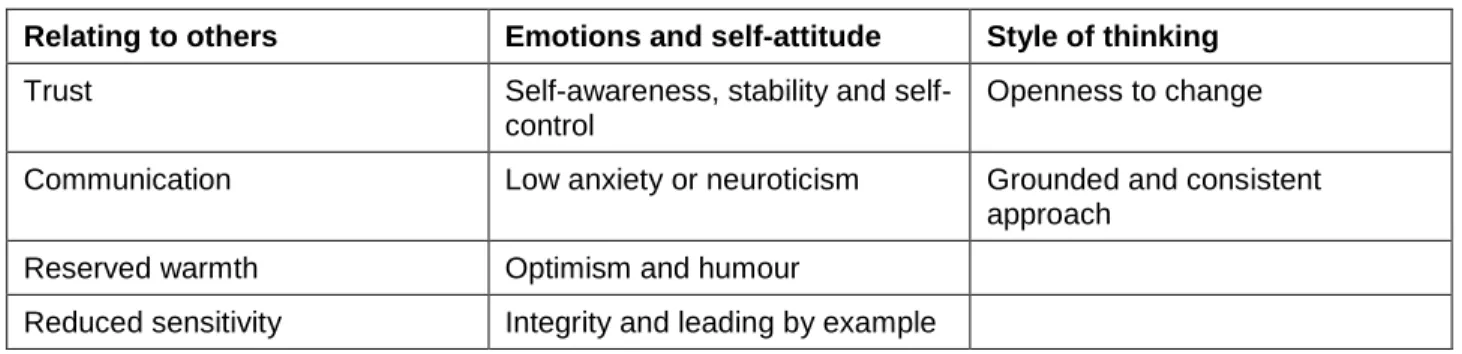
- Styles matter
- Leading the distressed
The station manager's style or approach is influenced by various environmental factors, such as team size, diversity goals, and team maturity. The next section looks at some of the theoretical aspects of management, such as the competencies of an effective manager, different management styles and their relevance to an Antarctic station manager. Since the station manager is part of the Antarctic station community in a work and a social position, the performance evaluation of team members during their tenure can have negative effects on the team.
The maturity of the team can determine the approach the station leader should take to effectively influence the team members. Some of the features used to describe turning leaders were similar to descriptions of Antarctic station leaders.
THEORETICAL PERSPECTIVES ON PERSONAL CHARACTERISTICS .1 Emotional intelligence
- Resilience
- Conflict management
An Antarctic station leader is exposed to multiple environmental stressors while dealing with the responsibilities of leadership. This is related to the idea that an Antarctic station leader must be flexible, but at the same time decisive in the way he tackles problems. A resilient leader of an Antarctic station would be able to deal with his own problems, as well as the problems and challenges caused by the team environment on an Antarctic station.
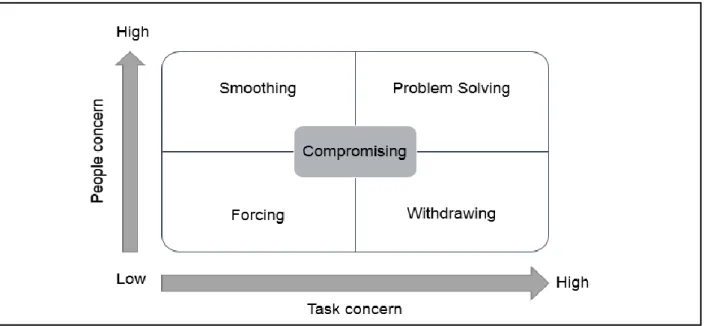
Conflict management has been identified in the literature as an important competency for an Antarctic station leader. Kohlrieser (2007) identified several approaches that can help an Antarctic station leader deal with conflict at the station.
SUMMARY
Production could represent the task role, and caring for people is related to the support role of the leader. The leader should try to determine the root cause of the conflict and determine each party's perception of the cause of the conflict. An exploration of the characters of historical Antarctic leaders revealed several competencies that leaders of Antarctic stations may possess.
The literature provided considerable coverage of the station manager's role and influence, particularly when it comes to personal relationships, personal well-being and team climate. Station managers were tasked with achieving the results of the expedition and the achievement of station objectives by managing the way team members performed their professional duties.
RESEARCH METHODOLOGY
INTRODUCTION
THE POPULATION AND SAMPLE
THE QUESTIONNAIRE DESIGN .1 Research methodology
- Personal information design
- Leadership question design
The research was descriptive in nature, and the content of the questionnaire was based on findings from the literature study. The literature provided many examples of what the station leader is responsible for, where the main themes were the task and supporting roles of the station leader. Whether the respondent was comfortable with a station leader who allowed the team to discuss problems together;.
This section of the questionnaire tested perceptions of the station manager's position and appointment. The section concluded with two questions dealing with the autocratic appointment of the station manager.

DATA COLLECTION
Factors such as the importance of the role and the impact the station leader had on team members' adjustment, the quality of the tour of duty, and the decision to rehibernate were tested using five-point Likert scale measures. Respondents were asked to indicate whether they wanted to be involved in the appointment of the station leader, and to express their views on the emphasis on leadership qualities in the appointment of SANAP the station leaders. The final section was an open-ended question, allowing participants to provide feedback on their perceived differences between the requirements for leadership on an Antarctic station, compared to those in the traditional business environment in South Africa.
DATA ANALYSIS
- Pre-analysis filter and analysis software
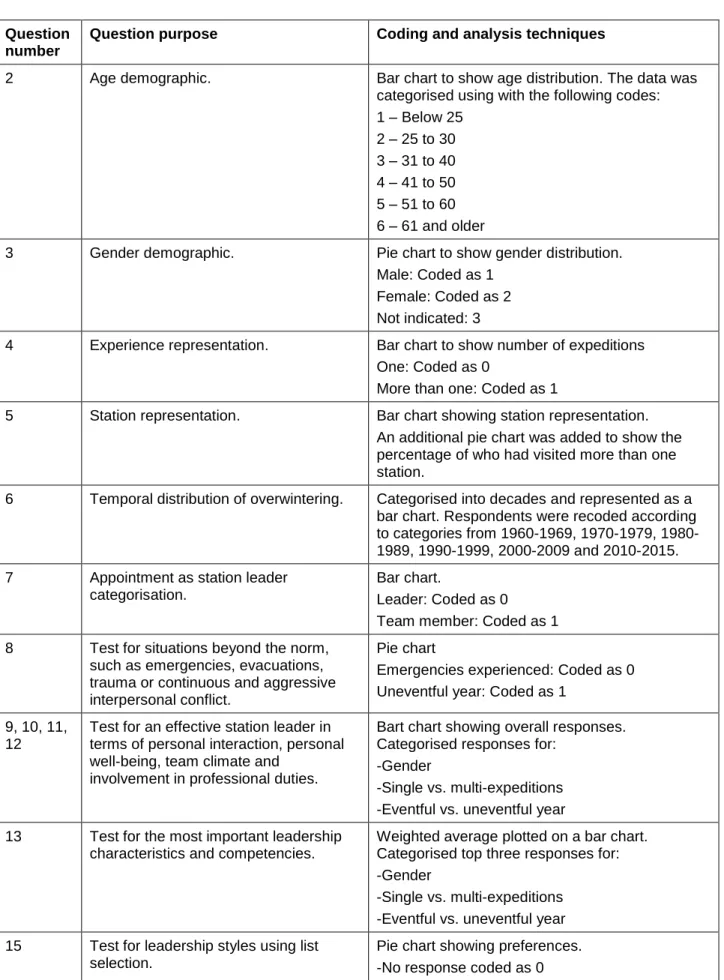
- Data analysis techniques
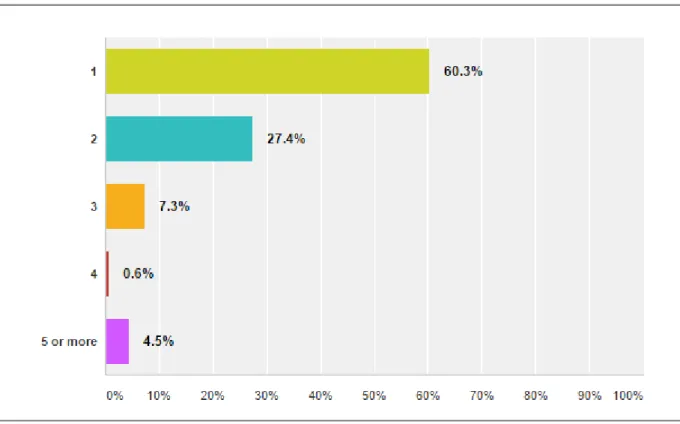
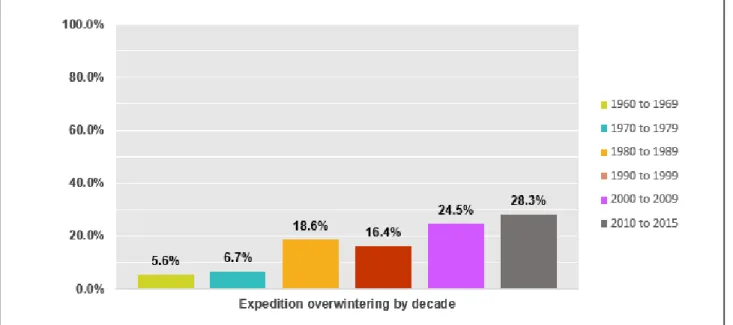
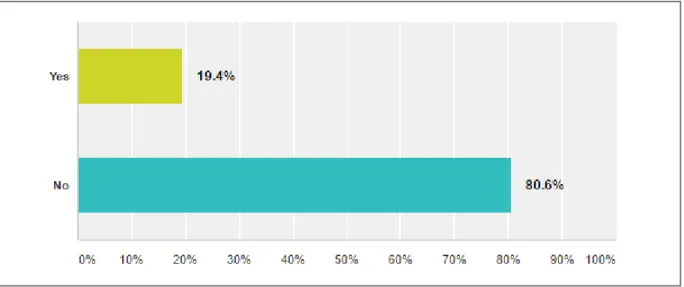
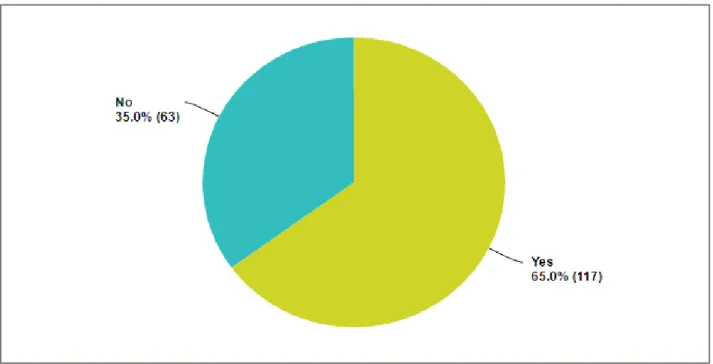
An additional pie chart was added to show the percentage of those who had visited more than one station. Test for an effective station manager in terms of personal interaction, personal well-being, team climate and.
SUMMARY
FINDINGS
- INTRODUCTION
- MAIN FINDINGS
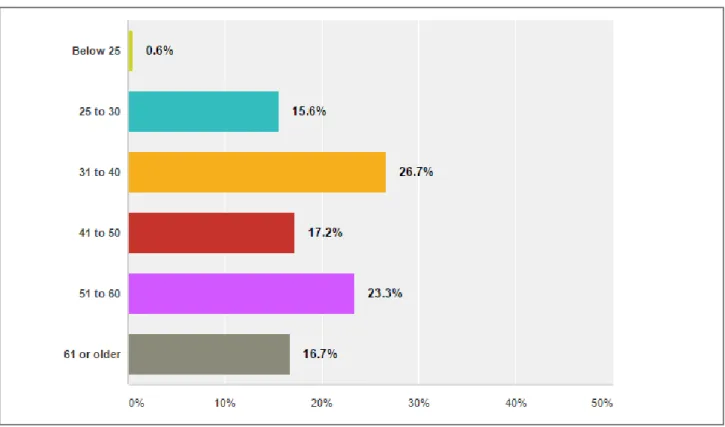
- The profile of the respondents .1 Age and gender profiles
- The role of and approaches for an effective station leader .1 Personal relationships
- Station leader characteristics and competencies .1 Ranked characteristics and competencies
- Leadership style
- The position of station leader and its effect on the team .1 Importance of the position
- Unique qualities for the Antarctic leader
- SUMMARY
Of the respondents, 40.2 percent agreed and 30.2 percent strongly agreed that a station manager should maintain a strong personal bond with team members. A comparison of genders in response to the role of station manager in a team atmosphere is shown in Figure 4.18. The Station Manager is responsible for achieving national program objectives (Godwin, 1987:3) and must ensure that Antarctic Treaty requirements, policies and procedures are followed and effectively managed (AAD, 2016).
Leaders rated the importance of the station manager's position somewhat more strongly. The results of the research on the role of the station leader in adaptation are shown in Figure 4.39 and Table 4.7. We can conclude that the station manager influenced the quality of the winter flight.
The majority of expedition participants wanted to have some input in the appointment of the station leader.
SUMMARY, CONCLUSION AND RECOMMENDATIONS
- INTRODUCTION
- SUMMARY OF MAIN FINDINGS .1 Respondent profiles
- The role of and approaches for an effective station leader .1 Personal relationships
- Station leader characteristics and competencies
- Leadership styles
- The position of station leader and its effect on the team .1 Importance of the position
- IMPLICATIONS
- The Antarctic community
- Traditional business environments and organisations in distress
- LIMITATIONS
- RECOMMENDATIONS
- FURTHER RESEARCH
More experienced winterers prefer a station manager who is more involved in their personal and emotional well-being. More experienced winterers had a slightly greater advantage in the inclusion of the station manager in the team climate. However, if emergencies arise at South African stations in Antarctica, the station manager must retain decision-making autonomy.
South African Antarctic expeditions would like to contribute to the appointment of their station leader. Diversity-related challenges, and the station leader's effectiveness in dealing with them, emerged from the open-ended responses.
Research report presented in partial fulfillment of the requirements for the degree of Master of Business Administration, Stellenbosch University, Cape Town. Lausanne: International Institute for Management Development (IMD). http://www.imd.org/research/publications/upload/PFM149_LR_Kohlrieser.pdf. Thesis for Certificate in Antarctic Studies, University of Canterbury, Gateway Antarctica, Christchurch, New Zealand. http://www.anta.canterbury.ac.nz/documents/GCAS_7/Lilburne_L_Lit.Review.pdf.
Innovativeness in multidisciplinary teams: The moderating role of transformational leadership in the relationship between professional heterogeneity and shared mental models. Out in the Cold: Science and Environment in South Africa's Twentieth-Century Sub-Antarctic and Antarctic Involvement.
APPENDIX A
SURVEY PARTICIPATION LETTER
APPENDIX B
QUESTIONNAIRE
- Your current age category
- Your gender
- Number of expeditions for SANAP
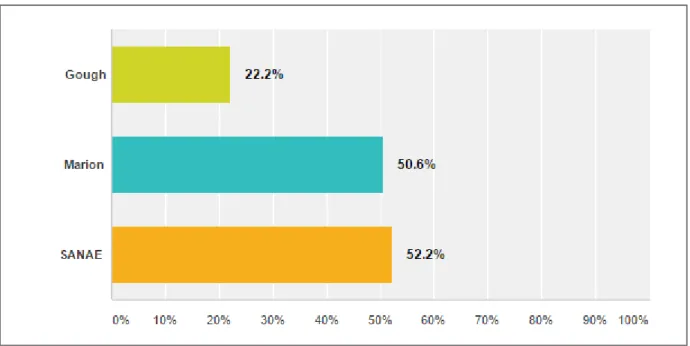
- At which stations did you overwinter? (choose multiple where applicable)
- What year(s) did you overwinter? For multiple expeditions choose all years
- Where you appointed as station or team leader during any of your expeditions?
- Did you or your team experience any emergencies, evacuations, trauma or continuous and aggressive interpersonal conflict during your expedition?
- In terms of personal interaction with team members, indicate on the scale of 1 to 5 what type of station leader is more effective
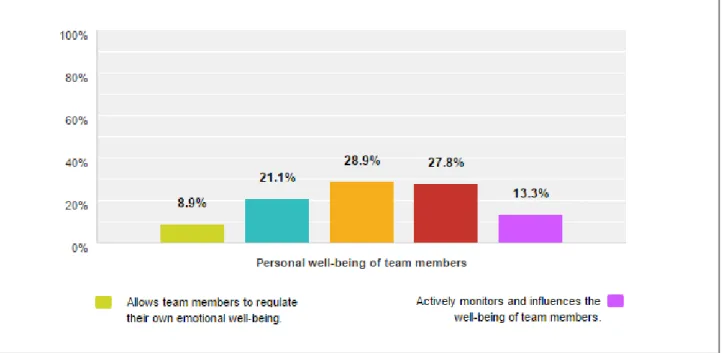
- In terms of the personal well-being of team members, indicate on the scale of 1 to 5 what type of station leader is more effective
- In terms of the team climate at the station, indicate on the scale from 1 to 5 what type of team leader is more effective
- As far as the professional duties of team members are concerned, indicate on the scale of 1 to 5 what type of station leader is more effective
- Please rank the following characteristics and competencies for a station leader from most important (1) to least important (13)
- Are there any other characteristics that you feel are important for a station leader at a remote research station?
- With which of the following station leaders would you the most comfortable with (choose only one)
- I am comfortable if a station leader makes decisions without consulting me
- When there is a problem at the station, the station leader should get the team together to discuss the solution
- I am comfortable with a station leader who wants to approve all station decisions
- I am more comfortable with decisions when everyone in the team were allowed to give their input as part of the decision-making process
- A station leader must monitor the work output from team members and make sure they perform their tasks adequately
- During emergencies, the station leader must retain decision-making autonomy
- The station leader plays a decisive role in the success of a Sub-Antarctic or Antarctic station
- The station leader/s affected my ability to adapt to life at the station
- The station leader/s influenced the quality of my overwintering year
- The station leader/s affected my decision to overwinter again
- Team members should be allowed to give input in their station leader appointment
- My Antarctic Program places a high emphasis on leadership qualities when appointing the station leaders
- Do you have any views on special leadership qualities that a station leader requires in the unique Antarctic and Sub-Antarctic environments, which are not so prominent in a traditional
In terms of personal interaction with team members, indicate on the scale of 1 to 5 which type of station leader is more effective. In terms of the personal well-being of team members, indicate on the scale of 1 to 5 which type of station leader is more effective. Regarding the professional duties of team members, indicate on the scale of 1 to 5 which type of station leader is more effective.
I am comfortable if the station manager delegates decision-making authority to other experienced team members and shares management responsibilities. A station manager must monitor the work output of team members and ensure that they perform their tasks adequately.
APPENDIX C
OPEN ENDED RESPONSES
49 Must be able to read the mood of the team and deal with any conflict in a way that is not too autocratic or militaristic. 50 The ability to read people (and team dynamics), social and situational awareness, and accompanied by a real intuition for proactive intervention (no . interference) which can include skillfully doing the scary - nothing, in certain chosen situations that I suppose can be summed up as wisdom. Leads by example Calm under pressure 52 Ability to delegate - some of his/her responsibilities - form.
Mostly lightweight, but should have the ability to lower the leg when needed. Ability to interact with SANAP 81 Knowledge of the subject - he/she must be part of the team with him/her.
APPENDIX D
OPEN ENDED RESPONSES
29 Since teams can be very different based on the personalities of the team members, the qualities of a team leader must be determined with the team members in mind. 36 I believe that the head of the station and other team members should undergo a mandatory psychological examination before appointment. 63 Ability to adapt to unique circumstances, consideration of the character of the team as a whole, ability to perceive the possible.
67 Some team leaders confuse their appointment as team leader with appointment as boss of the team. In short, the team leader is not a critical part of the expedition's mission success.