To account for this, this research adopted a psychological climate perspective, considering psychological capital and organizational citizenship behavior. The main findings of the study showed that there are practically and statistically significant relationships between psychological capital, organizational citizenship behavior and psychological climate. According to this mediation analysis, psychological capital is confirmed as a mediator of the relationship between psychological climate and organizational citizenship behavior.
In the future, the recommendation for research exploring the relationship between the three constructs of psychological capital, organizational citizenship behavior and psychological climate. The first of which is the necessary link between organizational citizenship behavior and psychological climate degraders.
INTRODUCTION
- Background to this study
- Problem Statement
- Research Objectives
- Research Questions
- Hypothesis’
- Structure of the Research Study
Under apartheid, education was one of the many elements that were racially biased (Barkhuizen & Rothmann, 2006). In light of the latter, one must then consider the academic role in such a complex structure. In relation to the organisation, this is infused into perceptions of the role, the organisation, politics etc.
The education industry is an example of how these thrusts can have a unique impact on an organization. In addition, this research aims to explore: a) The nature of the educational institute as an organizational entity, (b) positivist attitudes and change management in the educational environment, (c) provide insights into the benefits of this knowledge in a South African context, and finally (d) the relationship between perception and internal competences.
LITERATURE REVIEW
Introduction
- Positive Psychology
- Positive Psychological Behaviour (POB)
- The Philosophy of Wellness
- Positive Psychological Concepts
- Psychological Capital, Organisational Citizenship Behaviour and Organisational Climate
- Organisational Change
- Conclusion
This study employed the theoretical lenses of the broaden-and-build theory of positive emotions. Research by Ahmed (2007) examines each of the four constructs and the ability of each of them to develop over time and experience. An example of OCBs in action is colleagues who help other colleagues achieve their goals, but sacrifice their own time (Islam et al, 2010).
In relation to the aspect of climate, it becomes of great value to explore the dynamic nature between the academic's perception and the impact it has on their personal resources. In order to contextualize this study and the impact that the world of work has on individual resources, one must consider the barrier that can affect the workspace. Therefore, in this case it is important to consider change as a vital and often critical touchpoint for many organizations. (Hammer et al, 2010). In this regard, the academic is faced with unique and conflicting demands that are beyond the nature of the work itself (Bozalek & Leibowitz, 2014).
Understanding the nature of the education sector within an organizational function becomes equally involved in economic complexities.
METHODOLOGY
Introduction
- Research Methodology
- Sampling
- Data Collection
- Measuring Instruments
- Research Procedure
- Data Analysis Method
- Ethical Considerations
- Summary
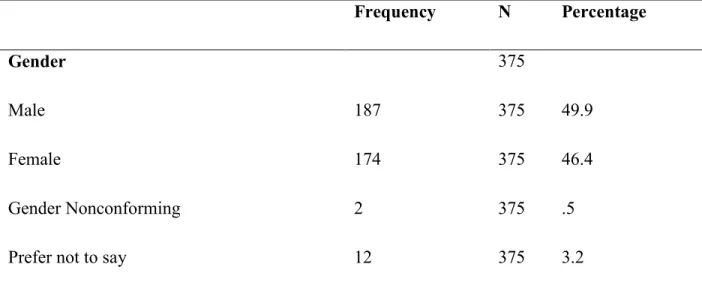
55 in this research, the definition of an academic or participants can be described as members who belong to academic environments in universities. The biographical survey, which was developed by the researcher, was used simply to collect demographic material of the participants. A study conducted by Barkhuizen and Du Plessis (2012) in South Africa found that the reliability coefficients of the four subscales were 0.81 respectively.
For the purposes of this research, some of the statements were changed to better fit the sample. An example of a conscience item is: "Employees work to exceed customer expectations"; an altruism item is: "I can rely on my colleagues when I need help"; an element of civic virtue such as "the work team feels responsible for our success." Further examples include a sports article such as "the people I work with have a can-do attitude"; and an etiquette article such as.
However, many of the universities were difficult to contact and many stated that due to the researcher's stay in Gauteng, they could not physically deliver the study. Willing participants were given a detailed letter about the nature and aims of the study. Issues of confidentiality and anonymity were both described in this letter, and all willing participants were asked for their consent to participate in the study.
Data were analyzed using SPSS statistical software, version 23.0 (IBM Corporation, released 2015), the research study first used descriptive statistics to analyze the data. The chapter has given an explanation of the research design of the study, the sampling technique used in the study, the measurement instruments used, the method of data collection is discussed and the procedure of the study was outlined. This chapter also outlined the ethical considerations that were followed in conducting the research study.
RESULTS
Introduction
- Factor Analysis
- Descriptive Statistics
- Pearson’s Product Correlation Analysis
- Regression Analysis
- Multiple Regression Analysis
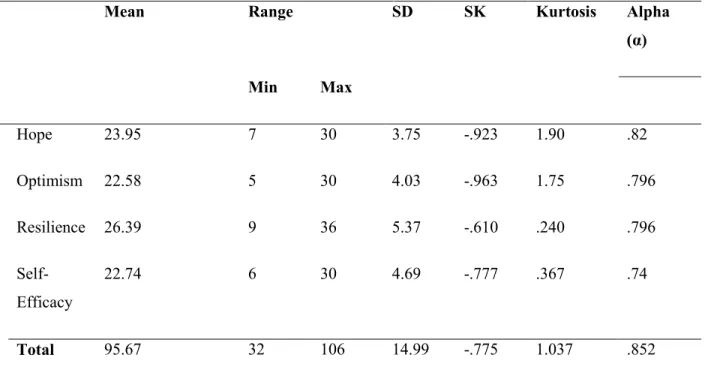
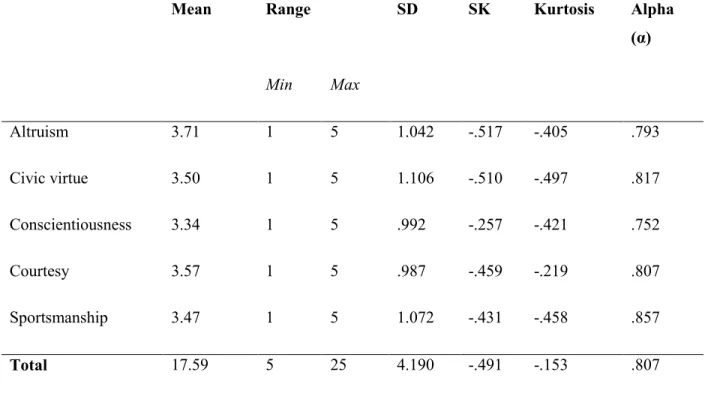
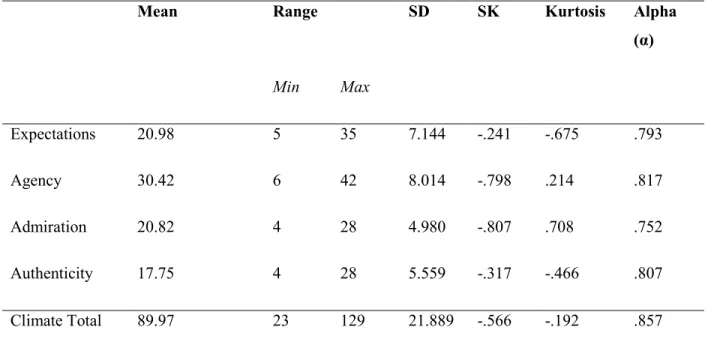
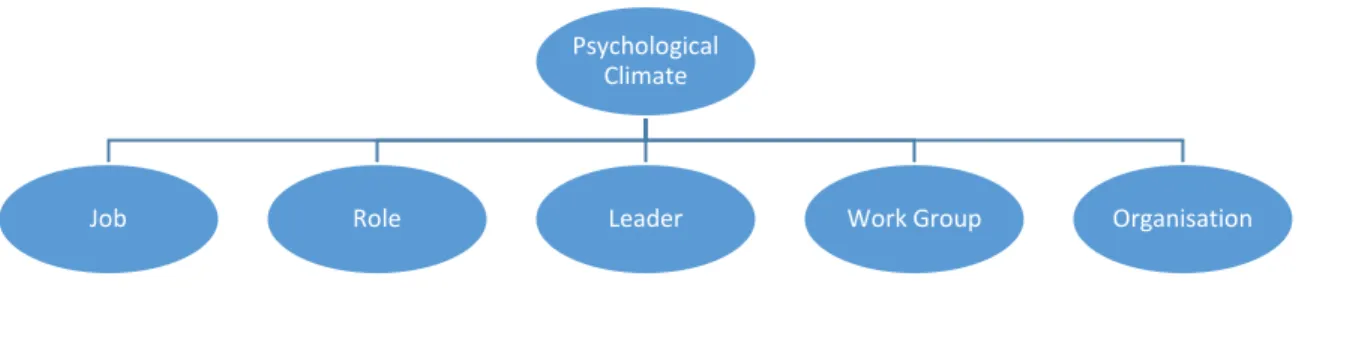
Furthermore, this relates to perceived organizational transparency. iv) Agency/Leadership/Leadership (Psychological Climate 2) – The Hay Group has shown a well-established tool namely OHS. A Kolmogorov-Smirnov test was also conducted to assess the normality of PsyCap, Organizational Citizenship Behavior, and Psychological Climate. Furthermore, in relation to sample sizes, while it is often reflected that larger sizes have greater 'power', this is not necessarily true as such statistics become much more sensitive to variability and drift (Pallant, 2011 ). Following are the results of a simple linear regression analysis and a multiple regression analysis, which provides an indicator of PsyCap that mediates the relationship between Organizational Citizenship Behavior and Psychological Climate.
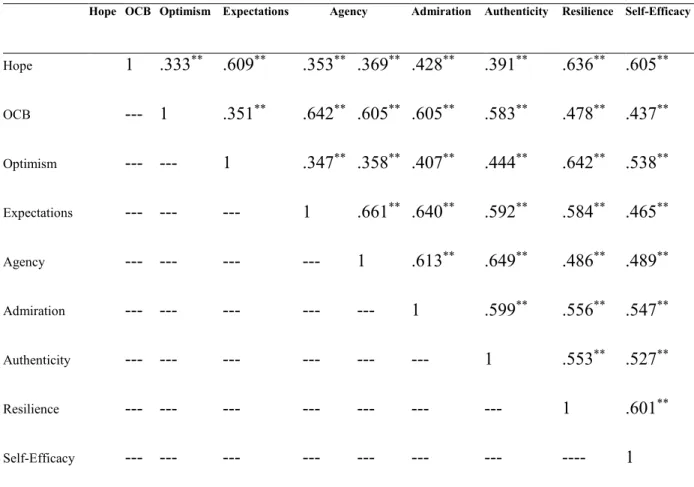
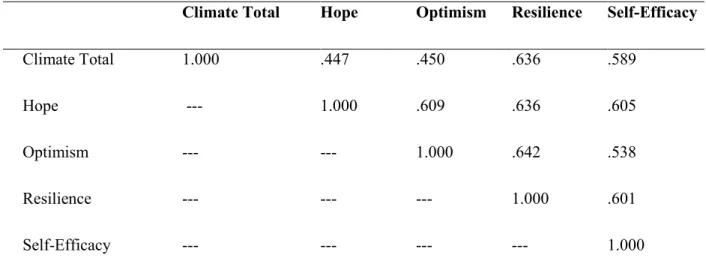
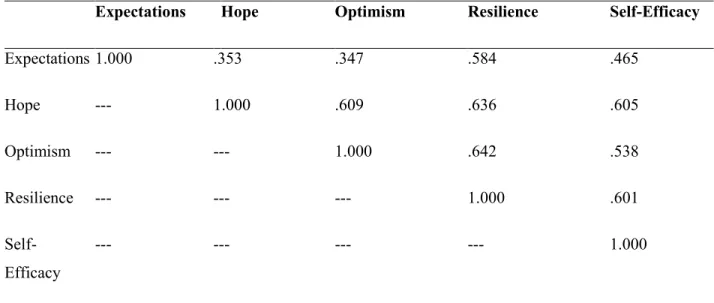
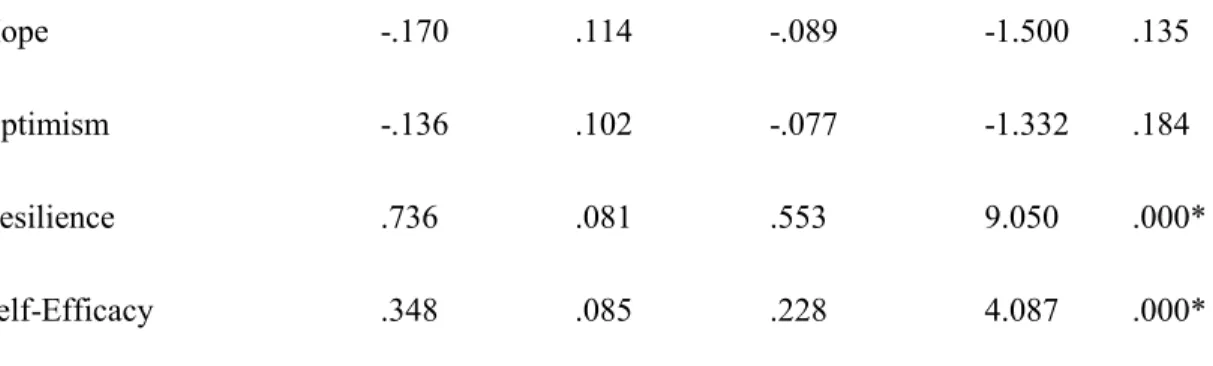
After descriptive statistics analysis, a Pearson's product correlation analysis was conducted to determine the relationship between psychological capital, psychological climate and organizational citizenship. The results of the linear regression analysis show that Psychological Climate predicts 47.3% of the variance in the Psychological Capital sections (R2= .467; ʄ = 82.99, p < 0.00). A standard multiple regression test was used to assess the ability of organizational citizenship behavior to predict hope.
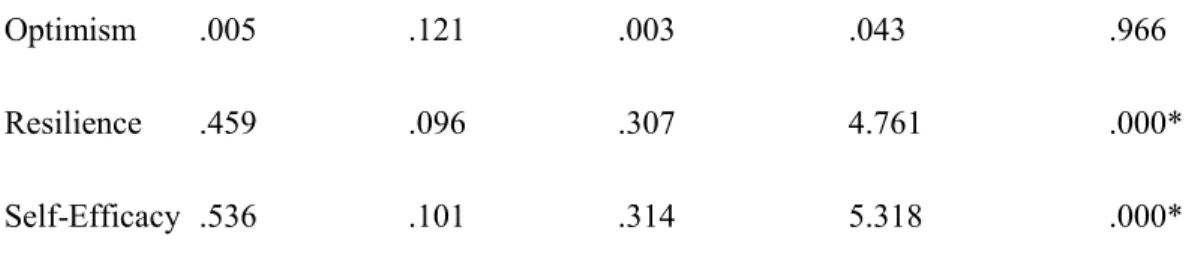
A standard multiple regression test was used to assess the ability of organizational citizenship behavior to predict optimism. A standard multiple regression test was used to assess the ability of organizational citizenship behavior to predict resilience. A standard multiple regression test was used to assess the ability of organizational citizenship behavior to predict self-efficacy.
A final analysis was performed on the data set to determine whether PsyCap mediated the relationship between psychological climate and organizational citizenship behavior. Therefore, it can be inferred that while psychological capital predicts both organizational citizenship and psychological climate, there is a high chance that it mediates climate rather than citizenship. A secondary measure was preformed to confirm the findings - the Sobel test, which can confirm assumptions about the relationship between variables.
The Sobel test confirmed that psychological capital is the mediating variable between psychological climate and organizational citizenship behavior as the Z-score was confirmed as Z. According to this mediation analysis, PsyCap is confirmed to mediate the relationship between psychological climate and organizational citizenship behavior.
DISCUSSION
Introduction
- Discussion of Results
- Summary
Finally, the qualification status of the sample showed that the majority of the sample had a master's degree. The overall purpose of the research was to investigate the relationship between PsyCap, OCB and organizational climate. To carry out a purpose of the research was to determine the strength of the relationship between these constructs and what predictive value, if any, was at all apparent.
A confirmatory factor analysis was performed on the items in each of the constructs. The psychological capital instrument revealed a five-factor model. The results of the Kolmogorov-Smirnov test showed that there was no difference between the distribution of the sample and the population. First, the main statistical elements to note are the presence of a strong positive relationship with resilience, which was present through each of the factors.
In this regard, research on work engagement and academics seems to cohort a limited binary between the values of education that outweigh the needs of the academic. Within this spectrum, it is argued that the relationship between work engagement and satisfaction is weighted in relation to the organizational climate. It is important to consider the implications of each of the correlations between the constructs and not just the constructs themselves, but the intercorrelations between each construct.
If we consider some of the earlier studies of Hope, the notion of Agency becomes prominent in the literature. Therefore, several linear regressions were performed to fulfill the first two steps of the mediation process. From these perspectives, it becomes further important to recognize these aspects as part of the scope and experience of academics.
CONCLUSION, LIMITATIONS AND RECOMMENDATIONS
Introduction
- Conclusion
- Conclusion in accordance with the empirical results of the study
- Limitations
- Recommendations
- Summary
From the results, psychological capital was found to predict both organizational citizenship and psychological climate. However, it was noted that factors found in the Psychological Capital scale are more likely to have a more significant impact on climate than citizenship behavior. The sobel test confirmed that Psychological Capital is the mediating variable between psychological climate and Organizational Citizenship Behavior as the Z-score was confirmed as Z = 8.79 and p = 0.005.
109 It can be inferred that although psychological capital predicts both organizational citizenship and psychological climate, it is more likely to mediate climate than organizational citizenship. Although no previous research has examined the moderating power between these three constructs, there has been adequate research on the ability of psychological capital to be a mediating variable for certain workplace behaviors. Psychological Capital has demonstrated a significant relationship in the explanatory and predictive value of individual behavior, as well as its implicit nature which has an equally valuable implication in influencing organizational behavior (Bowyer, Roberts, Scherer, 2011). iii).
They are considered intuitive with perspectives. iv) Which factors of psychological capital burden psychological climate and organizational citizenship. Although this research may suggest that psychological capital mediates the relationship between OCB and psychological climate, there is reason to believe that organizational climate may not be its own independent variable, but equally a mediator. The interactive effects of psychological capital and organizational identity on organizational citizenship and deviant behavior.
Increased awareness of self and facilitation practice in preparation for transition to a new role - the critical reflective process of becoming a Certified Professional Facilitator. The effects of organizational psychological capital on attitudes toward commitment and satisfaction: A public sample in Turkey. Psychological capital: Internal and external validity of the Psychological Capital Questionnaire (PCQ-24) in a South African sample. SA Journal of Industrial Psychology.
The impact of employees' positive psychological capital on job satisfaction and organizational citizenship behavior in the hotel. Positive psychological capital in the workplace: where we are and where we need to go.