Integrated
Development Plan
2013/2014
GLOSSARY
AG Auditor General
AIDS Acquired Immune Deficiency Syndrome
ART Antiretroviral therapy ARV Antiretroviral
ASGISA Accelerated Shared Growth Initiative of South Africa
BBBEE Broad Based Black economic Empowerment
CDWs Community Development Workers CFO Chief Financial Officer
DBSA Development Bank of Southern Africa
DAEA Department of Agriculture and Environmental Affairs
DEAT Department of Environmental Affairs and Tourism
DFA Development Facilitation Act DFID Department for International
Development
DLA Department of Land Affairs DLGTA Department of Local Government
and Traditional Affairs DM District Municipality DoH Department of Housing DoL Department of Labour
DWAF Department of Water Affairs &
Forestry
EIA Environmental Impact Assessment EKZNW Ezemvelo KwaZulu-Natal Wildlife EMF Environmental Management
Framework
EMP Environmental Management Plan EPWP PSC EPWP Provincial Steering Committee EPWP Expanded Public Works Programme FBS Free Basic Services
FET Further Education and Training HH Households
HIV Human Immune-deficiency Virus
HR Human Resources
IAS Invasive Alien Species
ICMA Integrated Coastal Management Act ICT Information Communications
Technologies
IDP Integrated Development Plan IDPRF Integrated Development Plan
Representative Forum IGR Inter Governmental Relations
ISRDP Integrated Sustainable Rural Development Programme
IWMP Integrated Waste Management Plan KZN KwaZulu-Natal
LED Local Economic Development LGSETA Local Government SETA LM Local Municipality
LRAD Land Redistribution Programme LUF Land Use Framework
LUMS Land Use Management System GDS Growth and Development Strategy MUMF Land Use Management Framework MDG Millennium Development Goals MIG Municipal Improvement Grant MLL minimum Living Level
MM Municipal Manager MPA Municipal Plan of Action
MSIG Municipal Systems Improvement Grant
NEMA National Environmental Management Act
NSDP National Spatial Development Perspective
OHS Occupational Health and Safety PGDS Provincial Growth and Development
Strategy
PMS Performance Management System PMTCT Prevention of Mother to Child
Transmission
PSEDS Provincial Spatial Economic Development Strategy
RDP Reconstruction and Development Programme
SANBI South African National Biodiversity Institute
SANRAL South African National Roads Agency Limited
SDBIP Service Delivery and Budget Implementation Plan
SDF Spatial Development Framework SEA Strategic Environmental Assessment SIC Standard Industrial Codes
SLA Sustainable Livelihood Approach STATSSA Statistics South Africa
VCT Voluntary Counselling and Testing WESSA Wildlife and Environmental Society of
South Africa
GLOSSARY OF LEGISLATIVE ENACTMENTS
The Constitution Republic of South Africa’s Constitution, Act 108 of 1996 The Systems Act Municipal Systems Act, No 32 of 2000
The Structures Act Municipal Structures Act, No 117 of 1998 DFA Development Facilitation Act, No 67 of 1995 MFMA Municipal Finance Management Act, No 56 of 2003
I. ExECuTIVE SuMMARY
i. Who are we?
Umzumbe Municipality runs along the coast for a short strip between Mthwalume and Hibberdene and then balloons out into the hinterland for approximately 60 km.
It covers a vastly, large rural area of some 1260 square kilometres with approximately 1% being built up/
semi-urban area. The municipality incorporates 17 traditional authority areas comprise of 19 municipal wards. It is a local municipality (KZN 213) that falls within Ugu District Municipality (DC 21) and is one of the six local municipalities within the District of Ugu.
There are no established towns in the municipality, which is characterized by a vast backlog of basic services, high levels of poverty and virtually no
economic base. The most striking physical feature is the extent of undeveloped natural, land which represents almost 60% of the total land area.
Agriculture is the mainstay of the economy with the main activities being sugar cane and small scale farming, as well as small business community.
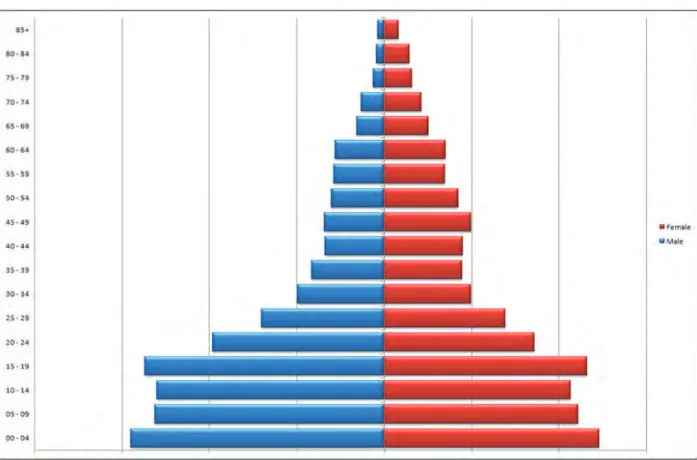
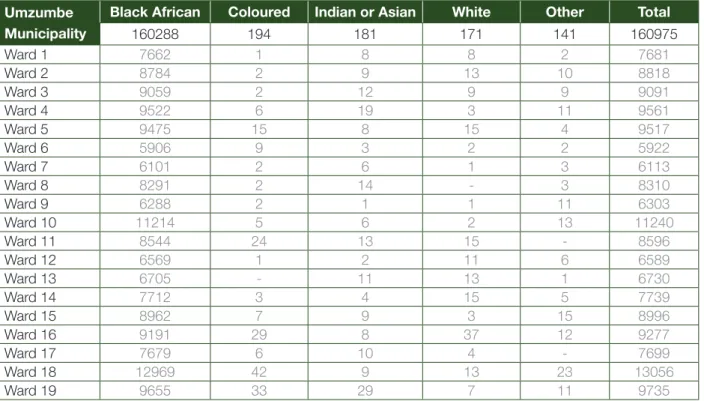
The Municipality is the second largest municipality within the district. The census 2011 indicates that the total population within Umzumbe is estimated at 160 975 persons shared amongst 19 wards. The most populated ward is ward 18 with 13056 persons and the least populated ward is ward 6 with 5922 people.
The average ward population is 8472 people.
Map 1: Locality Map
ii. How was the Plan Developed?
The preparation of the Integrated Development Plan of the municipality was an integrated participatory process that began in July 2012 with the development of the process plan, the first IDP forum was held in September where the process plan was presented as well as the Municipals Draft Spatial Development Framework (SDF).
In November a total of five mayoral Imbizo’s were held in and around the municipality taking a cluster approach in the participation of the community.
The table below provides a schedule of key activities to be carried out in the IDP, PMS and budget processes.
ACTION RESPONSIBILITY ACTION DATE BUDGET
1. Prepare joint process plans for IDP, PMS & budget IDP Manager / CFO July 2012 In house 2. Draft IDP review advertisements and advertise. IDP Manager July 2012 R10 000.00 3. Submit Process Plans to IDPRF, portfolio
committees (Steering Committees) and EXCO
IDP Manager / CFO August 2012 In house 4. Liaise with national and provincial governments for
planning and budgeting process IDP Manager / CFO
/ MM August 2012 In house
5. Assessment of objectives, strategies and projects
against cross cutting issues IDP Manager / CFO
/ MM Sept ember
2012 In house
6. Assessment of alignment of IDP strategies &
projects for medium term in relation to NSDP and PGDF
IDP Manager September 2012 In house
7. Determine funding availability & requirements per sector plan and where relevant prepare business plan / Terms of Reference & rollout accordingly
All relevant
departments* September 2012 In house 8. Review and confirm objectives, strategies &
projects at IDPRF workshop
IDP Manager / CFO / MM
October 2012 In house 9. Review Capital/institutional/Operational/
Maintenance) projects IDP Manager /
HODs / MM October 2012 In house 10. Estimate available sources & provide guidance for
way forward for budgeting CFO October 2012 In house
11. Review Capital/institutional/Operational/
Maintenance projects (Drafting the budget) Municipal Manager/
IDP Manager/CFO October 2012 In house 12. Submit revised projects to Treasury CFO / MM November 2012 In house 13. Submit first draft of IDP to IDPRF, IDPSC and
Council for in principle approval IDP Manager November /
December 2012 In house 14. Submit Budget instructions to all relevant persons CFO December 2012 In house 15. Submit 2012/20113 budget framework to all
relevant persons (Budget framework to include salary, operational and capital budget related information).
CFO December 2012 In house
16. Submit IDP review first draft to province (DLGTA)
for assessment by service providers IDP Manager December 2012 In house 17. Preparation of a summary of available funds from:
Internal Funds, eg. CDF and External Funding, eg.
MIG
CFO December 2012 In house
18. Assess financial Feasibility of proposed new
projects based on existing and potential funds. CFO February 2013 In house 19. Meeting with relevant officials – discussing budget
process plan ( First Draft Budget meeting) CFO February 2013 In house
ACTION RESPONSIBILITY ACTION DATE BUDGET 20. Meeting with relevant officials – submitting inputs (
Second Draft Budget meeting) CFO February 2013 In house
21. Meeting with relevant officials – with submitted
inputs( Third Draft Budget meeting) CFO February 2013 In house
22. Consideration of Draft Budget by Finance and
EXCO (First Meeting) CFO and Exco February 2013 In house
23. Consideration of Draft Budget by Finance and
EXCO (Second Meeting) Municipal Manager,
CFO and Exco February 2013 In house 24. Tabling of 2010/2011 draft budget to Council Municipal Manager,
CFO and Exco March 2013 In house 25. Publicise tabled budget within 5 days after tabling
the media CFO March 2013 In house
26. Send copy of tabled budget to National Treasury
and Provincial Treasury CFO March 2013 In house
27. Provincial IDP forum assessment of IDP IDP Manager / March 2013 In house
28. Budgetary process Finance, Planning,
Mayoral Services March 2013 In house 29. Align and link all Key Issues in the IDP to KPA’s IDP Manager /
HODs / MM March 2013 In house
30. Determine objectives for each KPA IDP Manager /
HODs / MM March 2013 In house
31. Set KPI’s for each objective. KPI’s to be based on the SMART principle, i.e. KPI’s must be simple, measurable, applicable, relevant and timely
IDP Manager /
HODs / MM March 2013 In house
iii. What are the key challenges?
• The municipality is completely rural with no town and very little economic activity.
• The municipality owns no land, close to 40% of the land falls under Ingonyama trust and about 35% Is under private ownership and government department.
• A large portion of the population lives in poverty and depend on social grants.
• Attracting investment is a challenge but it can be unlocked through proper settlement planning, zoning of areas to assist in land management as well as environmental conservation.
• Lack of sufficient infrastructure such as electricity and water supply is hindering the development
and sustainability of economic activity in the sense that it does not boost investor confidence.
• Revenue Enhancement: as the municipality is predominantly rural with high level of unemployment and poverty, it makes it difficult for to generate own venue in terms of waste removal, electricity, sanitation and other municipal services.
• Financial Management has resulted in good financial Audit
• Establishment of local businesses: most of them are not well established and therefore cannot supply or provide certain goods or services
Financial Viability
KPA 2: INFRASTRUCTURE DEVELOPMENT AND SERVICE DELIVERY
• Huge infrastructure backlog: There are some major infrastructure backlogs in terms housing, water sanitation and electricity. Access roads need to maintained regularly.
• Funding: is limited: more funding that is required to fast track reduction of the backlog.
• Housing provision: even though construction of low cost housing is progressing fairly well, the process is hindered by limited, available, suitable land for housing development.
• Non availability of land for landfill site
• Scattered settlement pattern hinders provision of services
• Aging infrastructure
• Topography hinders deployment of services
• Out dated Capital investment Plan
KPA 3: MUNICIPAL TRANSFORMATION AND INSTITTUTIONAL DEVELOPMENT
• In the process of restructuring itself to ensure that it carries out its developmental responsibility.
KPA 4: LOCAL ECONOMIC DEVELOPMENT
• Created nodes: have relatively vibrant economic activities. Examples are Umthalume (turton), Ophepheni and St Faiths….
• Primary corridors (P68 and P73): are envisaged to unlock more economic potential as mobility would be enhanced culminating in further infrastructural development.
• Secondary Node (Morrison and Umgayi)
• Tourism: there are a number of projects and initiatives to develop the tourism assets and improve the management and marketing of Umzumbe tourist products and services.
• High level of poverty and unemployment as well as low economic growth in the area.
• Informal trade: is currently the backbone of Umzumbe’s economy and is mostly situated in the areas that have already been identified as the economic nodes.
• Development of coastal zone: critical and in line with the Provincial Growth and Development Strategy, i.e. beach development.
• Agricultural sector: bulk of agricultural activities are mainly subsistence farming on rural communal land. Major enterprises are sugar cane, bananas and timber.
• Good agricultural potential
• The success rate of LED project is low
• Incorporating of Heritage sites into tourism
• Serious economic leakage
• Inadequate Skills profile (in communities)
KPA 6: GOOD GOVERNANCE AND PUBLIC PARTICIPATION
• Public participation meetings: are also held regularly to deliberate on developmental matters of the municipality as well as reporting.
• Challenges: administration support, vastness, inaccessibility of some of the wards,
• IGR structures functional
• The is promotion of good governance within the municipality
• good Social cohesion
• High HIV & Aids prevalence
• Low Crime perception
• High teenage pregnancy
KPA 5: SPATIAL ANALYSIS AND ENVIRONMENT MANAGEMENT
• Land use system: is incomplete this makes it extremely difficult to handle land use applications.
• There is a need to develop land use management
system in line with the Planning Development Act, schemes and approved Spatial Development Framework.
• The indigenous/traditional methods of land use allocation is not compatible with the current legislative requirements/approaches
• Lack of Environmental and sector plans (e.g.
coastal, flood lines, biodiversity)
• Lack of capacity to deal with environmental Issues
iv. What is our long term vision?
By 2030 Umzumbe will be economically viable enjoying heritage, tourism and agricultural benefits.
v. What is our mission?
We are dedicated to promote people-centered development, acceleration of service delivery and sustainable local economic development.
vi. What are we going to do to unlock and address our key challenges?
vii. What could you expect from us, in terms outputs, outcomes and deliverables, over the next five years?
• Implementing “new development approach” that strategically addresses the key challenges of the people
• Integrated development planning and proper co-ordination and integration of development initiatives of the Municipality and other spheres of government
• Ensuring the fair and just allocation and distribution of resources within the municipality
• Enhancing the economic development and growth within the municipality
• Infrastructure development and service provision that meets priority needs of communities
• Learning from other municipalities with the best practice in service delivery
• Empowering our citizen through capacity building initiatives that characterizes developmental local government
i. How will our progress be measured?
The Municipal Systems Act (32 of 2000) requires that municipalities to develop their own performance management system (PMS). They need to set performance targets and monitor and review their performance based on indicators that are linked to their Integrated Development Plan (IDP).
In addition, the Municipal Finance Management Act (56 of 2003) embeds the need for performance management in local government and requires municipalities to develop a Service Delivery and Budget Implementation Plan (SDBIP).
This SDBIP serves as a “contract” between the administration, council and the community expressing goals and objectives set by Council as quantifiable outcomes to be implemented over the next twelve months. The SDBIP provides the basis for measuring performance in service delivery against end-of-year targets and implementing the budget.
The Umzumbe IDP ensures that the resources available to the Municipality are directed at the delivery of projects and programmes that meet agreed development priorities. Once the Municipality starts to implement the IDP, it is important to check that delivery happens in a planned manner, that the Municipality is using its resources most efficiently, producing the quality of delivery envisaged and that the delivery is having the planned effect on the lives of people living in the Municipal area.
To achieve this it is necessary to monitor and evaluate measure and review the performance of the Municipality against indicators and targets set in its IDP. Performance management will thus assist us to make immediate, appropriate changes in the delivery and management of resources, identify and overcome major systematic blockages and guide future planning on development objectives and resource use.
Achieving this requires that our PMS is pro-actively developed in conjunction with the annual review of the municipal IDP. This will allow for performance management within the local context as a tool to ensure accountability of:
• The Municipality to its constituents, citizens and communities;
• The Executive Committee to the Council;
• The Administration to the Executive Committee or Executive Mayor;
• All line, functional and sectorial managers to the Executive Management and the
• All employees to the organization
Planning and development principles
DEVELOPMENT FACILITATION ACT
The DFA contains general principles for land development and decision making. Some of these principles, as contained in section 3 of the Act, are summarized at overleaf.
1. Provision should be made for urban and rural land development including the development of formal and informal, existing and new settlements.
2. Illegal occupation of land should be discouraged.
3. Land development should take place effectively and in an integrated manner by:
a. Integrating social, economic, institutional, environmental and spatial aspects of land development.
b. Developing urban and rural areas in support of each other.
c. Providing areas of residence and job opportunities close together or integrated with each other.
d. Optimize the use of existing resources.
e. Permitting and encouraging diverse land uses.
f. Rectifying the distorted spatial patterns of the past.
g. Compaction of towns to discourage urban sprawl.
h. Ensuring a sustainable natural environment.
i. Promote conditions under which economic activities can flourish.
j. Create opportunities for small business at places of high accessibility and economic agglomeration.
k. Provide the basics for survival to all existing settlement and focus on places with economic potential to provide a higher level and wider range of services or facilities.
4. Development within an area should take place within the limited resources, financial, institutional and physical of the area in order to create a viable community and to protect the natural environmental to enable economic growth.
NATIONAL SPATIAL DEVELOPMENT PERSPECTIVE (NSDP)
Ultimately, all government programmes and activities find expression in space. The spatial dispensation and the nature of the space economy of a country/
region have important implications for meeting the social, economic and environmental objectives of a government. For instance, in cases where human settlements are scattered and fragmented over vast distances, servicing becomes expensive, both in terms of initial capital investment and subsequent maintenance. On the other hand, well connected settlements, with sufficient densities to enable better public transport, are far more conducive to spatial
targeting of investment in nodes along such routes to facilitate the creation of jobs that are accessible to all.
The NSDP puts forward a set of five normative principles:
Principle 1:
Rapid economic growth that is sustained and inclusive is a prerequisite for the achievement of other policy objectives, among which poverty alleviation is key.
Principle 2:
Government has a constitutional obligation to provide basic services to all citizens (e.g. water, energy, health and educational facilities) wherever they reside.
Principle 3:
Beyond the constitutional obligation identified in Principle 2 above, government spending on fixed investment should be focused on localities of economic growth and/or economic potential, in order to gear up private-sector investment, stimulate sustainable economic activities and create long-term employment opportunities.
Principle 4:
Efforts to address past and current social inequalities should focus on people, not places. In localities where there are both high levels of poverty and demonstrated economic potential, this could include fixed capital investment beyond basic services to exploit the potential of those localities. In localities with low demonstrated economic potential, government should, beyond the provision of basic services, concentrate primarily on human capital development by providing education and training, social transfers such as grants and poverty-relief programmes. It should also reduce migration costs by providing labour-market intelligence to give people better information, opportunities and capabilities, to enable them to gravitate - if they choose to - to localities that are more likely to provide sustainable employment and economic opportunities.
Principle 5:
In order to overcome the spatial distortions of apartheid, future settlement and economic development opportunities should be channeled into activity corridors and nodes that are adjacent to or that link the main growth centers. Infrastructure investment should primarily support localities that will become major growth nodes in South Africa and the SADC region to create regional gateways to the global economy.
In areas of low or no economic potential, the path of development and poverty reduction should be through a focus on investment in human capital development (education, training, social welfare, sound rural development planning, aggressive land and agrarian reform and the expansion of agricultural extension services, etc.).
The NSDP supports the view that states that poverty is prevalent in some areas because .economic and social dynamism is at such low ebb in those areas and is unlikely to improve under any feasible scenario of intervention by government or donors..
It is more beneficial to engage in activities such as education and healthcare, etc. that provide .valuable momentum to increasing human capital, knowledge and the capability of individuals to make decisions from a broader set of alternatives.
In terms of poverty eradication the NSDP is underpinned by the following assumptions:
• Location is critical for the poor to exploit opportunities for growth;
• The poor, who are concentrated around vibrant and active junction points or activity corridors, have greater opportunity to gain from higher rates of economic growth and to improve their welfare;
• Areas of demonstrated economic potential give greater protection to the poor against adverse effects of economic shock because of greater opportunities to diversify income sources;
• Areas with demonstrated economic potential are the most favourable for overcoming poverty;
• Migration studies conclusively prove that the poor are making rational choices about locating to areas of employment and economic opportunities; however
• Government must ensure that policies and programmes are in place to ensure the poor are able to benefit fully from growth and development opportunities in such areas.
In opting for sustainable development, spatial interventions and impacts have to be designed and monitored for the broader economy and human settlements, for specific sectors in the economy (e.g. water and energy consumption, air pollution and waste management, brick making, etc) and at household level (e.g. exploring renewable energy alternatives, reducing and re-using waste, and efficient public transport use).
The NSDP places a lot of emphasis on the presence of institutional capacity to realize the developmental impact of any given area or identified resource that has developmental potential. As such, it distinguishes between the following categories of potential: (1) innovation and experimentation, (2) the production of high-value differentiated goods, (3) labour intensive mass-production, (4) public service and administration, (5) tourism and (6) commercial services and retail.
THE DRAFT SPATIAL PLANNING AND LAND USE MANAGEMENT BILL, 2011
The draft Spatial Planning and Land Use Management Bill, 2011, sets out the following spatial planning and land use management principles:
The principle of spatial justice, whereby:
• Past spatial and other development imbalances are redressed through improved access to and use of land;
• Spatial Development Frameworks and policies at all spheres of government address the inclusion of persons and areas that were previously excluded, with an emphasis on informal settlements, former homeland areas and areas characterised by widespread poverty and deprivation;
• spatial planning mechanisms, including land use schemes, include provisions that enable redress in access to land and property by disadvantaged communities and persons;
• land use management systems are inclusive of all areas of a municipality and specifically include provisions that are flexible and appropriate for the management of disadvantaged areas, informal settlements and former homeland areas;
• land development procedures will include provisions that accommodate access to secure tenure and the incremental upgrading of informal areas; and
• where a planning tribunal considers an application before it, the planning tribunal’s exercise of discretion may not be impeded or restricted on the ground that the value of land or property is affected by the outcome of the application;
The principle of spatial sustainability, whereby spatial planning and land use management systems must
• Promote land development that is within the fiscal, institutional and administrative means of the country;
• ensure protection of the prime and unique agricultural land, the environment and other protected lands and the safe utilisation of land;
• promote and stimulate the effective and equitable functioning of land markets;
• consider all the current and future costs to all parties for the provision of infrastructure and social services in land developments;
• promote land development in locations that are sustainable and limit urban sprawl;
• result in communities that are viable;
The principle of efficiency whereby
• Land development optimises the use of existing resources and infrastructure;
• decision-making procedures are designed with a view to minimizing negative financial, social, economic or environmental impacts; and
• development application procedures are efficient and streamlined and time frames are adhered to by all parties;
The principle of spatial resilience whereby flexibility in spatial plans, policies and land use management systems is accommodated to ensure sustainable livelihoods in communities most likely to suffer the impacts of economic and environmental shocks; and The principle of good administration whereby:-
• All spheres of government ensure an integrated approach to land use and land development that is guided by the spatial planning and land use management systems as embodied in this Act;
• No government department may withhold their sector input or fail to comply with any other prescribed requirements· during the preparation or amendment of Spatial Development Frameworks;
• The requirements of any law relating to land development and land use are met timeously;
• the preparation and amendment of spatial plans, policies, land use schemes as well as procedures for development applications, to include transparent processes of citizen participation and all parties to have the opportunity to provide inputs on matters affecting them; and
• Policies, legislation and procedures must be clearly set out and inform and empower citizens.
BREAKING NEW GROUND: FROM HOUSING TO SUSTAINABLE HUMAN SETTLEMENTS
Poverty is understood to involve three critical dimensions: income, human capital (services and opportunity) and assets. Housing primarily contributes towards the alleviation of asset poverty.
“Sustainable human settlements” refer to:
“well-managed entities in which economic growth and social development are in balance with the carrying capacity of the natural systems on which they depend for their existence and result in sustainable development, wealth creation, poverty alleviation and equity”
The present and future inhabitants of sustainable human settlements located both in urban and rural areas, live in a safe and a secure environment and have adequate access to economic opportunities, a mix of safe and secure housing and tenure types, reliable and affordable basic services, educational, entertainment and cultural activities and health, welfare and police services.
Land utilization is well planned, managed and monitored to ensure the development of compact, mixed land-use, diverse, life-enhancing environments with maximum possibilities for pedestrian movement and transit via safe and efficient public transport in cases where motorized means of movement is imperative.
Specific attention is paid to ensuring that low-income housing is provided in close proximity to areas of opportunity. Investment in a house becomes a crucial injection in the second economy, and a desirable asset that grows in value and acts as a generator and holder of wealth.
Sustainable human settlements are supportive of the communities which reside there, thus contributing towards greater social cohesion, social crime prevention, moral regeneration, support for national heritage, recognition and support of indigenous knowledge systems, and the ongoing extension of land rights.
In line with the NSDP and the Draft National Urban Strategy, the Department will enhance its contribution to spatial restructuring by:
Progressive Informal Settlement Eradication
Informal settlements must urgently be integrated into the broader urban fabric to overcome spatial, social and economic exclusion.
Promoting Densification and Integration
The new human settlements plan includes the following interventions:
• Densification policy
• Residential development permits
It is proposed that 20% of all residential development would constitute low cost to affordable housing and would be prescribing through the permit.
• Fiscal incentives
The Department, in conjunction with Treasury and SARS, will investigate the development of fiscal incentives to promote the densification of targeted human settlements and whilst introducing disincentives to sprawl.
Enhancing Spatial Planning
Greater coordination and alignment of various planning instruments and economic policies lies at the heart of sustainable human settlements.
Enhancing the location of new housing projects The new human settlements plan envisages the following interventions:
• Accessing well-located state-owned and para- statal land
• Acquisition of well-located private land for housing development
• Funding for land acquisition
• Fiscal incentives
The Department will engage with SARS and Treasury to investigate the introduction of fiscal incentives (and disincentives) to support the development of well- located land.
Supporting Urban Renewal and Inner City Regeneration
Urban renewal is a targeted intervention by government to resuscitate declining urban areas.
The new human settlements plan will support this by:
• Encouraging Social (Medium-Density) Housing
• Increasing effective demand
Developing social and economic infrastructure There is a need to move away from a housing-only approach towards the more holistic development of human settlements, including the provision of social and economic infrastructure. The new human settlements plan proposes that:
• Construction of social and economic infrastructure A multipurpose cluster concept will be applied to incorporate the provision of primary municipal facilities such as parks, playgrounds, sport fields, crèches, community halls, taxi ranks, satellite police stations, municipal clinics and informal trading facilities.
• New funding mechanism
A New funding mechanism be introduced to fund the development of the primary social/community facilities, which will focus on informal settlement upgrading projects, completed housing projects still lacking social facilities and new housing projects.
• Municipal implementation
Municipalities will be the primary implementation agencies and will submit business plans for approval to Provincial Housing Departments.
Enhancing the Housing Product
There is a need to develop more appropriate settlement designs and housing products and to ensure appropriate housing quality in both the urban and rural environments. The new human settlements plan accordingly proposes the following:
• Enhancing settlement design
The Department will investigate the introduction of enhancing measures and incentives to include design professionals at planning and project design stages, and will develop design guidelines for designers and regulators to achieve sustainable and environmentally efficient settlements.
• Enhancing housing design
Within the rural context, there is a need to make housing interventions more effective, to enhance the traditional technologies and indigenous knowledge which are being used to construct housing in rural areas and to improve shelter, services and tenure where these are priorities for the people living there.
Within the urban context, there is a need to focus on .changing the face. Of the stereotypical ”RDP” houses and settlements through promotion of alternative technology and design.
• Addressing housing quality.
KWAZULU-NATAL PROVINCIAL GROWTH AND DEVELOPMENT STRATEGY (PGDS)
The Provincial Growth and Development Strategy recognises that environmental vulnerability, social need and economic development are not evenly distributed and spatial disparities will always exist due to the spatial distribution of natural resources,
historical imperatives and cultural factors. These spatial disparities have often been aggravated by past spatial planning. This has resulted in a disjuncture between where people live and where social and economic opportunities are concentrated. This spatial marginalization from economic opportunities of the majority of the population needs to be addressed in order to reduce poverty and inequality and ensure shared growth and the protection of vulnerable bio- resources.
The strategic and targeted nature of the Provincial Growth and Development Strategy implies that specific interventions will be undertaken within key geographical areas of Need and Potential.
SPATIAL RATIONALE SPATIAL VISION AND APPROACH
The envisaged spatial vision for KwaZulu-Natal could be summarised as follow:
“Optimal and responsible utilisation of human and environmental resources, building on addressing need and maximising opportunities toward greater spatial equity and sustainability in development”
SPATIAL PRINCIPLES
Principle of Environmental Planning
The Principle of Environmental Planning (Bioregional Planning) refers to understanding and respecting the environmental character (potential and vulnerability) and distinctiveness of places and landscapes and promoting balanced development in such areas.
Principle of Economic Potential
The Principle of Economic Potential aims to improving productivity and closing the economic performance gap between the various areas of KwaZulu-Natal towards economic excellence of all areas. Rapid economic growth that is sustained and inclusive is seen as a pre-requisite for the achievement of poverty alleviation.
The principles further promotes the consideration of spatial needs for Economic Competitiveness (Potential) by proposing an asset based spatial approach based on unique advantages and opportunities within various areas.
Principle of Sustainable Communities
The Principle of Sustainable Communities promotes the building of places where people want to live and work. Again the sense of Quality of Living refers to the balance between environmental quality, addressing social need and promoting economic activities within communities.
Often communities within the rural context of KwaZulu-Natal are not located in the areas with perceived highest economic potential. Where low economic potential exists planning and investments should be directed at projects and programmes to address poverty and the provision of basic services in order to address past and current social inequalities towards building sustainable communities.
Principle of Local Self-Sufficiency
The Principle of Local Self-Sufficiency promotes locating development in a way that reduces the need to travel, especially by car and enables people as far as possible to meet their need locally. Furthermore, the principle is underpinned by an assessment of each areas unique competencies towards its own self-reliance and need to consider the environment, human skills, infrastructure and capital available to a specific area and how it could contribute to increase its self-sufficiency.
Principle of Spatial Concentration
The Principle of Spatial Concentration aims to build on existing concentrations of activities and infrastructure towards improved access of communities to social services and economic activities. In practical terms this promotes concentration along nodes and corridors with multi-sectoral investment ie roads, facilities, housing etc. This is envisaged to lead to
greater co-ordination of both public and private investment and result in higher accessibility of goods and services to communities while ensuring more economic service delivery.
This principle will further assist in overcoming the spatial distortions of the past. Future settlement and economic development opportunities should be channeled into activity corridors and nodes that are adjacent to or link the main growth centres in order for them to become regional gateways.
Principle of Sustainable Rural Livelihoods
The Principle of Sustainable Rural Livelihoods considers rural areas in a way which is integrated with other decision making associated with the Sustainable Livelihoods framework. This principle requires that spatial planning consider the locality and impact of human, physical, natural , financial and social capitals of an area and spatially structure these in support of each other.
Another aspect of this principle is promoting spatial planning in a continuum where rural areas are not addressed as completely separate entities to urban centres, but rather a gradual change in landscape with the potential progression of rural areas to more closely resemble the service standards and quality of living achieved in some urban contexts.
Principle of Balanced Development
The Principle of Balance Development promotes the linking of areas of economic opportunity with areas in greatest need of economic, social and physical restructuring and regeneration at all spatial scales.
In practical terms the principles sought to find a balance between the potentially competing land uses by understanding the relationship and integration between major dimensions within the province and promoting a synergetic mixture of land uses in support of each other at various spatial scales.
Principle of Accessibility
The Principle of Accessibility simply promotes the highest level of accessibility to resources, services, opportunities and other communities. This is intrinsically linked to transportation planning and should consider localised needs for the transportation of people and goods by various modes of transport as guided by the scale and function of a region.
At a provincial level there is a strong correlation between the most deprived areas and poor regional accessibility to those areas. In addressing accessibility at provincial and local level, the need for possible new linkages, the upgrade in the capacity of existing linkages and the suitable mix of modes of transport should be considered.
Principle of Co-ordinated Implementation The Principle of Co-ordinated Implementation actually projects beyond spatial planning and promotes the alignment of roleplayer mandates and resources with integrated spatial planning across sectors and localities. Essentially the principle suggests that planning-implementation becomes a more continuous process and that government spending on fixed investment should be focused on planned key interventions localities.
This principle ultimately also proposes a move towards more developmental mandate definitions of the various departments away, from single mandates to enable the spatial alignment of growth and development investment.
SPATIAL VARIABLES
• Environmental Sensitivity
• Economic Potential
• Social Need
• Urban Accessibility
In order to effectively combine these four variables into a single map of key intervention areas, the categories/level of each variable was weighted and
ranked into five similarly described categories to allow for effective overlaying comparisons. The various weighting and categories used per variable is briefly illustrated below:
National Development Plan
In 2011 the National Planning Commission (NPC) conducted a diagnosis of the challenges facing South Africa. This process culminated to the NPC producing a Diagnostic Report which report highlighted critical challenges facing the people of this country from joblessness, poor education, disease burden health, corruption etc.
The situation that the country finds itself has had an effect of leaving the majority of the population trapped in a vicious circle of poverty and a growing gap of the haves and those that have not. To arrest this situation the NPC has developed a 20 year National Development Plan (NDP).
WHAT DOES THE NATIONAL DEVELOPMENT PLAN PROPOSE?
The point of departure for the NDP is fighting poverty and inequality in South Africa. According to the NPC South Africa can eliminate poverty and reduce inequality by 2030. It will require change, hard work, leadership and unity. The main goal is to improve the life chances of all South Africans, but particularly those young people who presently live in poverty.
The plan helps to chart a new course. It focuses on putting in place the things that people need to grasp opportunities such as education and public transport and to broaden the opportunities through economic growth and the availability of jobs. Everything in the plan is aimed at reducing poverty and inequality.
The plan asks for a major change in how we go about our lives. In the past, we expected government to do things for us. What South Africa needs is for all of us to be active citizens and to work together – government, business, communities – so that people have what
they need to live the lives they would like. South Africa can become the country we want it to become. It is possible to get rid of poverty and reduce inequality in 20 years. We have the people, the goodwill, the skills, the resources – and now, a plan. This is how the plan proposes we achieve the goal of fighting poverty and reducing inequality:
CREATE JOBS
• Create 11 million more jobs by 2030:
1. Expand the public works programme 2. Lower the cost of doing business and costs
for households
3. Help match unemployed workers to jobs 4. Provide tax subsidy to businesses to reduce
cost of hiring young people
5. Help employers and unions agree on start- ing salaries
6. Make it possible for very skilled immigrants to work in South Africa
7. Make sure that probationary periods are managed properly
8. Simplify dismissal procedures for perfor- mance or misconduct
9. Take managers earning above R300 000 out of the CCMA process
10. Reward the setting up of new businesses, including partnering with companies
11. Increase value for money for tourists by sell- ing regional packages that meet all pocket sizes. Consider a single visa for SADC visi- tors
12. Deal with confusion over policies to do with transport, water, energy, labour and com- munications
EXPAND INFRASTRUCTURE
• Invest in a new heavy-haul rail corridor to the Waterberg coal field and upgrade the central
basin coal network
• Enable exploratory drilling to see whether there are viable coal seam and shale gas reserves, while investigations continue to make sure that operations do not damage the environment
• Move Eskom’s system operator, planning, power procurement, power purchasing and power contracting functions to the independent system and market operator
• Closely regulate the electricity maintenance plans of large cities
• Set up an investment programme for water resource development, bulk water supply and wastewater management this year, with reviews every five years
• Fix and build transport links, in these key areas:
1. Upgrade the Durban-Gauteng freight cor- ridor and build a new port at the old Durban airport site
2. Expand the coal, iron ore and manganese lines. Build the N2 road through the Eastern Cape
3. Upgrade the Sishen to Saldanha iron ore line and expand capacity on the manganese line (including port capacity)
4. Improve and cut the cost of internet broad- band by changing the regulatory framework TRANSITION TO A LOW-CARBON ECONOMY
• Speed up and expand renewable energy and waste recycling, and ensure buildings meet energy-efficient standards
• Set a target of 5 million solar water heaters by 2030
• Introduce a carbon tax
• Scale up investments and R&D for new technologies
• Stop building houses on poorly located land and shift more resources to upgrading informal settlements, provided that they are in areas close
to jobs
• Improve public transport
• Give businesses incentives to move jobs to townships
• Fix the gap in the housing market by combining what banks have to offer with subsidies as well as employer housing schemes
• Give communal farmers, especially women, security of tenure
• Put money into irrigation in Makatini Flats and Umzimvubu River Basin
EDUCATION AND TRAINING
• Develop a nutrition programme for pregnant women and young children, to be piloted by the Department of Health for two years
• Make sure all children have two years of pre- school
• Get rid of union and political interference in appointments and appoint only qualified people
• Increase teacher training output by expanding
“Funza Lushaka” to attract learners into teaching, especially those with good passes in maths, science and languages
• Regularly test teachers in the subjects they teach to determine level of knowledge and competence. Link teacher pay to learner performance improvements
• Good schools should not be burdened with the paperwork that poor performing schools have to do to improve. Schools performing very poorly should receive the closest attention
• Change the process of appointment of principals and set minimum qualifications
• Gradually give principals more powers to run schools, including financial management, procurement of textbooks and other educational material, as well as hiring and firing educators
• Increase the number of university graduates and
the number of people doing their doctorates
• Build two new universities in Mpumalanga and the Northern Cape
• Build a new medical school in Limpopo and a number of new academic hospitals
• Consider extending the length of first degrees to four years on a voluntary basis
• Provide full funding assistance covering tuition, books, accommodation and living allowance (in the form of loans and bursaries) to deserving students
• Grant seven-year work permits to all foreigners who graduate from a registered South African university
BUILD A CAPABLE STATE
• Fix the relationship between political parties and government officials
• Make the public service a career of choice
• Improve relations between national, provincial and local government
• Boost state-owned enterprises to help build the country
FIGHT CORRUPTION
• Centralise the awarding of large tenders or tenders that go for a long time
• Take political and legal steps to stop political interference in agencies fighting corruption
• Set up dedicated prosecution teams, specialist courts and judges
• Make it illegal for civil servants to run or benefit directly from certain types of business activity PROVIDE QUALITY HEALTH CARE
• Broaden coverage of antiretroviral treatment to all HIV-positive people
• Speed up training of community specialists
in medicine, surgery including anaesthetics, obstetrics, paediatrics and psychiatry
• Recruit, train and deploy between 700 000 and 1.3 million community health workers to implement community-based health care
• Set minimum qualifications for hospital managers and ensure that all managers have the necessary qualifications
• Implement national health insurance in a phased manner
• Promote active lifestyles and balanced diets, control alcohol abuse and health awareness to reduce non-communicable diseases
TRANSFORMATION AND UNITY
• The Bill of Responsibility, developed by the Department of Basic Education and others, should be popularised and used as a pledge by all South Africans to live the values of the Constitution
• Encourage all South Africans to learn at least one African language
• Employment equity and other redress measures should continue and be made more effective THE NEW GROWTH PATH FRAMEWORK
Government recently adopted the New Growth Path (NGP) as the framework for economic policy and driver of the country’s jobs strategy. There is growing consensus that creating decent work, reducing inequality and defeating poverty can only happen through a new growth path founded on a restructuring of the South African economy to improve its performance in terms of labour absorption as well as the composition and rate of growth. To achieve that step change in growth and transformation of economic conditions requires hard choices and a shared determination as South Africans to see it through.
The Government is committed to forging such a consensus and leading the way by:
1. Identifying areas where employment creation is possible on a large scale as a result of substan- tial changes in conditions in South Africa and globally.
2. Developing a policy package to facilitate em- ployment creation in these areas, above all through:
a) A comprehensive drive to enhance both so- cial equity and competitiveness;
b) Systemic changes to mobilise domestic in- vestment around activities that can create sustainable employment; and
c) Strong social dialogue to focus all stakehold- ers on encouraging growth in employment- creating activities.
The New Growth Path must provide bold, imaginative and effective strategies to create the millions of new jobs South Africa needs. It must also lay out a dynamic vision for how we can collectively achieve a more developed, democratic, cohesive and equitable economy and society over the medium term, in the context of sustained growth.
The strategy sets out critical markers for employment creation and growth and identifies where viable changes in the structure and character of production can generate a more inclusive and greener economy over the medium to long run. To that end, it combines macroeconomic and microeconomic interventions.
The New Growth Path identifies five key job drivers:
Jobs Driver 1: Infrastructure. Public investment can create 250 000 jobs a year in energy, transport, water and communications infrastructure and in housing, through to 2015. The jobs are in four activities:
construction of new infrastructure; operation of the new facilities; expanded maintenance; and the
manufacture of components for the infrastructure programme. In addition to these four activities, the impact of the massive infrastructure programme on job creation across the economy (the “multiplier effect”) will be substantial.
Jobs Driver 2: Main economic sectors. The New Growth Path targets opportunities for 300 000 households in agricultural smallholder schemes plus 145 000 jobs in agroprocessing by 2020, while there is potential to upgrade conditions for 660 000 farmworkers. Initial projections by the Industrial Development Corporation (IDC) suggest that mining can add 140 000 additional jobs by 2020, and 200 000 by 2030, not counting the downstream and sidestream effects. Much of manufacturing is included under other jobs drivers, but IPAP2 targets 350 000 jobs by 2020 in the industries not covered elsewhere. High level services can create over 250 000 jobs directly just in tourism and business services, with many more possible in the cultural industries.
Jobs Driver 3: Seizing the potential of new economies.
Technological innovation opens the opportunity for substantial employment creation. The New Growth Path targets 300 000 additional direct jobs by 2020 to green the economy, with 80 000 in manufacturing and the rest in construction, operations and maintenance of new environmentally friendly infrastructure. The potential for job creation rises to well over 400 000 by 2030. Additional jobs will be created by expanding the existing public employment schemes to protect the environment, as well as in production of biofuels.
Jobs Driver 4: Investing in social capital and public services. The social economy includes myriad not- for-profit institutions that provide goods and services, including coops, non-governmental organisations (NGOs) and stokvels. If the sector grew in South Africa closer to international norms, we can anticipate 260 000 new employment opportunities. The public service can also generate 100 000 jobs in health, education and policing by 2020 even if it grows by
only 1% a year, as well as substantial opportunities through public employment schemes. Significant steps are being taken to address the challenge of HIV/AIDS and these will impact on the size and shape of the public health infrastructure as well as improve the welfare and productivity of the workforce.
Jobs Driver 5: Spatial development. While urbanisation will continue, a significant share of the population will remain in rural areas, engaged in the rural economy. Government will step up its efforts to provide public infrastructure and housing in rural areas, both to lower the costs of economic activity and to foster sustainable communities. Rural development programmes can achieve a measurable improvement in livelihoods for 500 000 households, as well as stimulating employment in other sectors.
Medium Term Strategic Framework The Medium Term Strategic Framework (MTSF) below demonstrates how the MDGs have been domesticated into the current priority agenda of the government.
1. Speeding Up Growth and Transforming the Economy To Create Decent Work And Sustain- able Livelihoods
2. Massive Programme To Build Economic And Social Infrastructure
3. Comprehensive Rural Development Strategy Linked To Land and Agrarian Reform and Food Security
4. Strengthen the Skills and Human Resource Base
5. Improve the Health Profile of all South Africans 6. Intensify the Fight against Crime and Corruption 7. Building Cohesive, Caring and Sustainable
Communities
8. Pursing African Advancement and Enhanced International Cooperation
9. Sustainable Resource Management and Use 10. Building A Developmental State Including Im-
provement Of Public Services And Strengthens Democratic Institutions,
ugu Growth and development strategy The Ugu Growth and Development Strategy (GDS) commits all stakeholders (public, private and civil society) to achieving a shared vision that by 2030 the Ugu district will be a leading tourism destination and manufacturing and agricultural hub where jobs are created and everyone benefits equally from socio-economic opportunities and services. . This intent is based on a shared understanding of the inter-relationships amongst communities and the challenges facing the district economy as a whole. It is based on a commitment to working collaboratively to achieve the most beneficial outcomes for all.
The vision of the Ugu GDS is that “By 2030 the Ugu District will be a leading tourism destination and manufacturing and agricultural hub where jobs are created and everyone benefits equally from socio- economic opportunities and services”. It has six economic drivers which are:
1. Strategic infrastructure investment 2. Education & skills development 3. Institutional development 4. Strategic sector engagements 5. Environmental Sustainability 6. Safety Nets & Civic empowerment
Section 2.5 above demonstrated the alignment between the DGDS and PGDS which ultimately talks to the NDP.
The 12 National Outcomes
The outcome based approach is designed to ensure that government is focused on achieving the expected real improvements in the life of all South Africans. It clarifies what the government is expected to achieve, how it is expected to achieve it and how
it will whether it is achieving it. Thus in the main the outcomes approach is centered toward:
• Focus on results,
• Explicit and testable chain of logic in planning so as to see that the assumptions that are made about resources are needed,
• Linkage of activities to outputs and outcomes and to test what works and what doesn’t,
• Ensuring expectations are clear and unambiguous
• Providing clear basis for discussion, debate and negotiation about what should be done and how it should be done,
• Enabling learning and regularly revising and improving policy, strategy and plans through experience,
• Makes co-ordination and alignment easier.
The Cabinet Lekgotla held from 20 to 22 January 2010 adopted the following 12 Outcomes where municipalities are accountable for outcome 9:
1. Improved quality of basic education.
2. A long and healthy life for all South Africans.
3. All people in South Africa are and feel safe.
4. Decent employment through inclusive economic growth.
5. A skilled and capable workforce to support an inclusive growth path.
6. An efficient, competitive and responsive eco- nomic infrastructure network.
7. Vibrant, equitable and sustainable rural commu- nities with food security for all.
8. Sustainable human settlements and improved quality of household life.
9. A responsive, accountable, effective and efficient local government system.
10. Environmental assets and natural resources that are well protected and continually enhanced.
11. Create a better South Africa and contribute to a better and safer Africa and World.
12. An efficient, effective and development oriented public service and an empowered, fair and inclu- sive citizenship
The aim of Delivery Agreement: Outcome 9 is to ensure a responsive, accountable, effective and efficient local government system so as to restore the confidence of citizens in the local government sphere. As such municipalities need to ensure that the basic needs of communities are met; build clean, effective, efficient, responsive and accountable local government;
improve performance and professionalism and strengthen partnerships between local government, communities and civil society. The Outcome consists of seven outputs which need to be achieved viz.:
1. Implement a differentiated approach to municipal financing, planning and support;
2. Improve access to basic services;
3. Implementation of the Community Work Programme;
4. Actions supportive of the human settlement outcome;
5. Deepen democracy through a refined Ward Committee Model;
6. Improve administrative and financial capability;
7. A single window of coordination.
The outputs consist of targets, indicators and key activities which need to be achieved. The achievement of these outputs will go a long way in improving the lives of residents whilst at the same time improving the processes within government so they are able to operate more effectively and efficiently.
1. SPATIAL ANALYSIS
1.1 Regional Context
The recently introduced Provincial Growth and Development Strategy for KwaZulu-Natal, classifies the Umzumbe area, and more specifically the St Faiths area, as a quaternary node. These nodes should provide service to the local economy and community needs. In addition, it is also identified as a priority intervention area, where short-term concentration and coordination of public interventions are required.
This means that the area requires social, economic and agricultural investment.
Almost the entire municipal area is classified as an area that requires social investment and service delivery.
This can be attributed to the rural character of the area. In addition, a large portion is classified as an agricultural investment area, with the coastal area as an economic support area. An important secondary corridor connects St Faiths to Ixopo in the north and Port Shepstone in the southeast. The coastal area is also connected to economic hub of eThekwini on the north, via a primary corridor (N2).
Map 2: Umzumbe Context map
Map 3: Traditional land 1.2 Administrative Entities
Umzumbe municipality is covered predominantly by Ingonyama Trust
Land occupied by members of 13 traditional authorities (refer to map 2). The traditional authorities are as follows:
• Bhekani Traditional Authority has a total population of 96 households and accounts for 898.27ha of the municipal area.
• Cele P Traditional Authority has a total population of 3784 households and accounts for 26910.78 ha of the municipal area.
• Hlongwa Traditional Authority (2) has a total population of 706 households and accounts for 2306.61 ha of the municipal area.
• Hlubi Traditional Authority has a total population of 1172 households and accounts for 7800.56 ha of the municipal area.
• Mabheleni Traditional Authority has a total population of 1171 households and accounts for
5770.58 ha of the municipal area.
• Ndelu Traditional Authority has a total population of 2443 households and accounts for 8653.95ha of the municipal area.
• Nhlangwini Traditional Authority has a total population of 3039 households and accounts for 8140.30 ha of the municipal area.
• Nyavini Traditional Authority has a total population of 647 households and accounts for 4366.12ha of the municipal area.
• Qoloqolo Traditional Authority has a total population of 1967 households and accounts for 5327.50ha of the municipal area.
• Qwabe (2) Traditional Authority has a total population of 1212 households and accounts for 3893.48ha of the municipal area.
• Thulini Traditional Authority has a total population of 8082 households and accounts for 8104.45ha of the municipal area.
1.3 Existing Nodes and Corridors The municipality has a predominant rural nature with no formal established towns. The Mtwalume and Turton area, located along the coastal strip, is a concentration of settlements.
It presents the largest settlement agglomeration/
cluster within the Umzumbe spatial landscape.
This area is located in the eastern border of the municipality, and not centrally located as to provide easy access to surrounding communities. Funding has been received from the previous Department of Local Government and Traditional Affairs (DLGTA) to formalise and develop this node.
Corridor-type development is characterised by intense bands of high-density development and settlements, which tends to concentrate at points
of high accessibility and along public transportation routes, where residential, commercial, institutional and recreational activities occur in close proximity.
Corridor development is associated with a system of transport facilities on key routes that work together as an integrated system to facilitate ease of movement.
Each route tends to exhibit a different function, with some routes combining route functionality in terms of accessibility and mobility. They are an effective means for breaking down fragmentation and increasing integration and spatial transformation.
This approach will improve access to opportunities, and integrate communities with service provision, while also fulfilling a range of economic and social needs.
Map 4
Upgrade and road maintenance projects on corridors that leads to development opportunity areas such as rural service centers, high potential agricultural land and tourism nodes should be prioritized as this will encourage investment, improve accessibility and enhance mobility. This principle supports the phased approach to development, targeting areas of greatest potential first.
Development corridors are effective in linking infrastructure and economic development as towns and structures connect to each other in a functionally effective manner.
1.4. Land cover and broad land uses Umzumbe covers approximately 1,260km² of land.
It is predominantly a rural area with settlements patterns that are widely distributed in the landscape where most people make a subsistence living.
Socio-economic activities in the area are limited to commercial and emerging sugarcane farmers (7850ha), plantations (approximately 5496ha) and permanent orchards (banana and citrus, approximately 46ha). Only 34% of the land area is transformed. Map 5 serves to illustrate that most of the surface cover of the land remains in a natural state.
The terrain, soils and climate features combined, indicate land capability, which can be defined as
“the most intensive long-term use of land for rain-fed agriculture taking into account continuing limitations or hazards”. This is illustrated in Map.
Different land uses affect the condition of the land and the functioning of associated ecosystems. Map 18 illustrates the spatial distribution of the various land cover classes in 2008. There is a distinct pattern of land use activities concentrated in specific areas:
• Built up dense settlement primarily occurs on the coastal strip;
• Low density settlement is scattered across the landscape while the majority of the population congregates towards the coast;
• Commercial sugarcane and emerging farmers prevail in the east;
• Plantation in the north-east; and
• Natural open space dispersed in between the above land uses.
Changes in land use transform and degrade natural systems and impact directly on biodiversity through habitat loss. Associated human activities generate other pressures that should be maintained within limits, for example:
• Most settlements are associated with low- lying areas, which are also high rainfall areas. It exposes them to flood risks;
• The dense settlements on the coastal strip (Turton area) falls within the ‘’KZN High Water Yield Zone”, placing pressures on downstream freshwater ecosystems (estuaries);
• Livestock and grazing practices degrades vegetation, accelerate soil erosion, influence sediment yields in the catchment and affect water quality;
• Subsistence lifestyles on marginal land place fragile ecosystems under pressure, and increase runoff due to vegetation clearing and soil compaction; and
• Inadequate access to sanitation infrastructure affects water quality.
The map displays existing agriculture with land capability.
It is evident that the inhabitants of the area have optimised the capability of the land.
• Plantation forestry occurs on arable land (Class III). This area also falls within a high precipitation zone (see map 10). This land use places pressure on stream flow and catchment yields.
• Commercial sugarcane fields are associated with low-lying areas, on non-arable land (Class VI) which is generally unsuited to cultivation.
This area also yields high rainfall, which may explain its location in the landscape but it is likely that fertiliser inputs are high, and there will be pressures on downstream water quality. Most of the wetlands in the area (see map 10) are found in the sugarcane areas and they place pressures on riparian zones.
• Emerging sugarcane farmers are also associated with non-arable land adjacent to the main commercial sugarcane farmers.
• The arable land area that falls within Class III in the north-western section of Umzumbe seems to be used for built-up dense settlements and low density settlements. These areas are likely to be under severe pressure.
Map 5: Land Cover