• Tidak ada hasil yang ditemukan

Rekrutmen Dan Seleksi Berbasis Kompetensi Terhadap Kinerja Karyawan Pada PT. Sherish Cipta Interindo Bandung

N/A
N/A
Protected

Academic year: 2017

Membagikan "Rekrutmen Dan Seleksi Berbasis Kompetensi Terhadap Kinerja Karyawan Pada PT. Sherish Cipta Interindo Bandung"

Copied!
114
0
0

Teks penuh

  • Penulis:
    • Kristina Huta Barat
  • Sekolah: Unikom
  • Mata Pelajaran: Human Resources Management
  • Topik: Rekrutmen Dan Seleksi Berbasis Kompetensi Terhadap Kinerja Karyawan Pada PT. Sherish Cipta Interindo Bandung
  • Tipe: Thesis
  • Kota: Bandung

I. Introduction

This research paper, 'Rekrutmen Dan Seleksi Berbasis Kompetensi Terhadap Kinerja Karyawan Pada PT. Sherish Cipta Interindo Bandung,' investigates the impact of competency-based recruitment and selection on employee performance within PT. Sherish Cipta Interindo Bandung. The study acknowledges the crucial role of employees as a company's primary asset, highlighting the importance of effective recruitment and selection processes. The introduction establishes the research problem—the inadequacy of existing competency-based recruitment and selection methods within the company—and its potential negative consequences on employee performance. It then sets the stage for the research methodology and the expected outcomes.

II. Literature Review

This section provides a theoretical framework for understanding competency-based recruitment and selection and their relationship to employee performance. It draws upon existing research and theories of human resource management, particularly focusing on the definition, processes, and indicators of competency-based recruitment and selection. Key concepts like competency-based human resource management (CBHRM), the matching of individual characteristics with job requirements (resource-based theory), and different methods of recruitment (internal vs. external) and selection are discussed. The literature review also establishes the theoretical basis for the study's hypotheses.

2.1 Rekrutmen berbasis kompetensi

This subsection delves into the theoretical underpinnings of competency-based recruitment. It examines definitions from various sources, outlining the core activities involved in attracting applicants possessing the necessary skills, abilities, and knowledge. The advantages of competency-based recruitment are highlighted, including enhanced accuracy in matching individuals with roles and minimizing bias in the selection process. Different sources of recruitment (internal and external) and associated methods are also explored. The section concludes by outlining the chosen indicators used in the study for assessing competency-based recruitment.

2.2 Seleksi berbasis kompetensi

This subsection focuses on competency-based selection. It defines the concept and elaborates on the processes involved in choosing qualified and competent candidates. Various stages of competency-based selection, such as screening applications, conducting interviews, and background checks, are explained. The section uses existing literature to demonstrate the importance of aligned recruitment and selection procedures, with competency acting as a unifying factor. Different selection methods are touched upon, and the chosen indicators used to assess competency-based selection in the study are specified.

2.3 Kinerja Karyawan

This subsection provides a definition of employee performance, which serves as the dependent variable in the study. The section presents a theoretical definition of employee performance, highlighting both qualitative and quantitative aspects of job output. This lays the foundation for understanding how the independent variables (competency-based recruitment and selection) influence this dependent variable. The specific indicators used to measure employee performance in the study are clearly identified, tying the theoretical concepts back to the practical application in data collection.

III. Research Methodology

The methodology section details the research design, data collection methods, and data analysis techniques employed in the study. It justifies the use of both qualitative and quantitative methods to gain a comprehensive understanding of the research problem. The sampling method (proportionate stratified random sampling) is explained, along with the sample size (50 employees out of a population of 100). The section describes the specific statistical tools used for data analysis, including descriptive statistical analysis and path analysis, linking these methods to the research questions and hypotheses.

IV. Results

This section presents the findings of the study, presenting the data obtained through both descriptive and inferential statistical analysis. The results section first displays descriptive statistics summarizing the variables of competency-based recruitment, competency-based selection, and employee performance. Then, it presents the results of path analysis, showing the direct and indirect effects of the independent variables (recruitment and selection) on the dependent variable (employee performance). Correlation coefficients are presented and interpreted, illustrating the relationships between the variables.

4.1 Validity and Reliability Testing

This subsection details the results of the validity and reliability tests conducted to ensure the quality of the data. The process of validating the measurement instruments (questionnaires) and assessing their reliability is outlined. The results of these tests demonstrate the suitability of the instruments for data collection and analysis, ensuring the internal consistency of the measures. The values for Cronbach’s alpha, often used to evaluate reliability, would be presented and interpreted here to support this claim.

4.2 Descriptive Statistics

This subsection presents descriptive statistics for each of the study's variables (competency-based recruitment, competency-based selection, and employee performance). Measures of central tendency (e.g., mean, median) and dispersion (e.g., standard deviation) are reported for each variable, giving a comprehensive overview of the data distribution. This section provides context for the inferential statistics presented later. This descriptive overview aids understanding the characteristics of the sample and provides a context for interpreting the more complex results from the path analysis.

4.3 Path Analysis Results

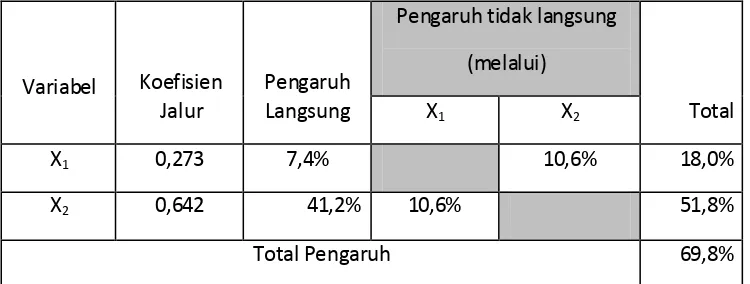
This subsection presents the results of the path analysis. The coefficients and significance levels (p-values) of the paths linking competency-based recruitment and selection to employee performance are presented. The direct and indirect effects of each independent variable on the dependent variable are discussed, along with the overall model fit. This section interprets the strength and significance of the relationships between the variables, using statistical tests to draw conclusions about the hypotheses.

V. Discussion

The discussion section interprets the results in the context of the existing literature. The findings are compared with the results of previous studies, identifying similarities and differences. The implications of the study's findings for both theory and practice are explored. The discussion may also address limitations of the study and suggest areas for future research. The section provides a nuanced interpretation of the results, considering potential factors that could have influenced the findings.

VI. Conclusion and Recommendations

The conclusion section summarizes the main findings of the study, reiterating the impact of competency-based recruitment and selection on employee performance in PT. Sherish Cipta Interindo Bandung. The section presents the key conclusions drawn from the research, providing a concise overview of the study's contribution to the field. Based on the results, recommendations are made to improve the recruitment and selection processes within the company, and these recommendations are grounded in the empirical evidence from the research.

VII. Bibliography

This section lists all the references cited in the research paper, adhering to a consistent citation style. The bibliography ensures the academic integrity of the work by providing a complete list of sources consulted.

Gambar

gambar nilai thitung sebesar = 2,709 lebih besar dari ttabel sebesar 2,012 dan juga
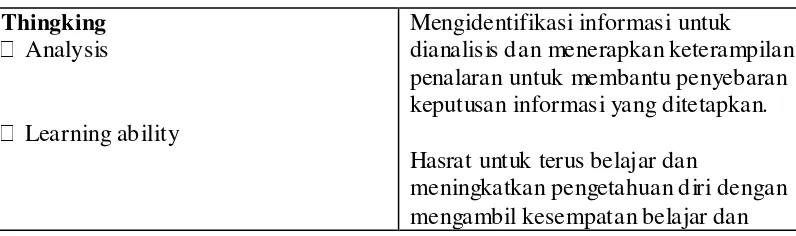
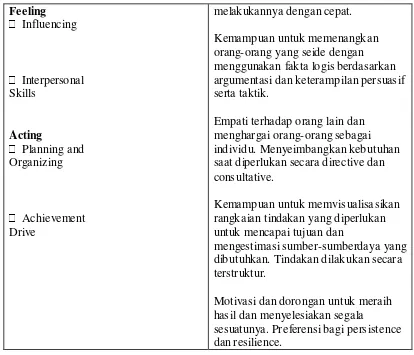
Tabel 2.1 : The Fettercorn Competency Framework
Tabel 2.1 memaparkan kerangka kompetensi modern yang dilakukan oleh
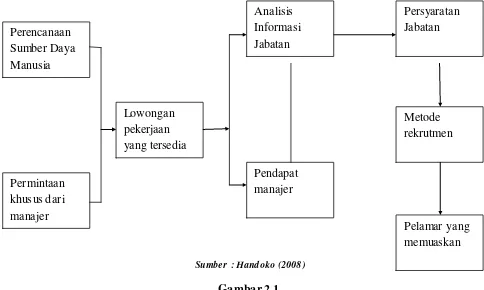
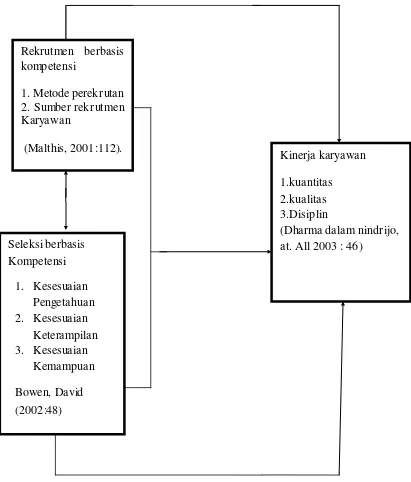
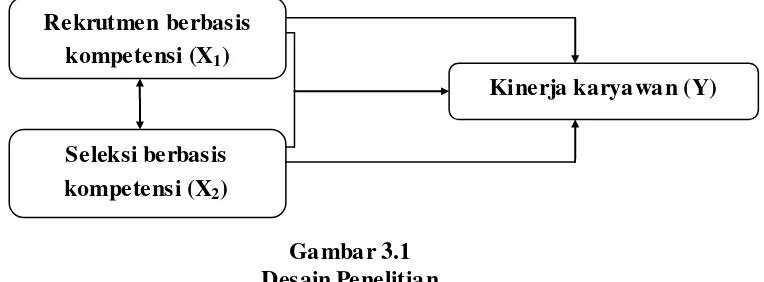
Gambar 2.1.
+7

Referensi

Dokumen terkait

Jadi hasil seleksi yang cermat akan bermanfaat bagi individu maupun organisasi.Hasil seleksi yang baik akan mempengaruhi kinerja karyawan, hal ini sesuai dengan

Kuantitas hasil kerja karyawan pada bagian pemasaran PT.Agrodana Futures Bandung diukur menggunakan 5 butir pernyataan. Berikut rekapitulasi skor tanggapan responden

Hasil penelitian menunjukkan bahwa Rekrutmen, budaya organisasi, dan kinerja karyawan di PT Graha Merah Putih (Telkom Indonesia Bandung) termasuk dalam

Populasi pada penelitian ini adalah seluruh karyawan PT. Daya Cipta Dianrancana dan peneliti akan mengambil sampel sebanyak 150 responden sebagai sampel /

1) Kompetensi karyawan pada PT PLN (Persero) Rayon Rengasdengklok adalah cukup tinggi, artinya kompetensi karyawan PT PLN (Persero) Rayon Rengasdengklok sudah

Hasil penelitian menunjukkan bahwa tanggapan responden terhadap disiplin kerja dalam kategori cukup baik dengan skor 67,5%, tanggapan responden terhadap pengawasan kerja dalam

Hal ini dapat di lihat dari rekapitulasi hasil jawaban dari tanggapan responden yang berjumlah 51 orang karyawan mengenai Motivasi sebesar 68,0%, artinya kinerja

Penelitian ini menguji pengaruh proses rekrutmen dan seleksi terhadap kinerja karyawan di PT. Godong Ijo