i
HEGEMONY OF MUI HALAL LABELING
THESIS
Submitted to Ushuluddin and Humanity in Partial Fulfillment of The Requirements for The Degree of S-1 of Islamic Theology
on Theology and Islamic Philosophy Departement
By: AKBAR FARID NIM: 134111015
USHULUDDIN AND HUMANITY FACULTY
STATE ISLAMIC UNIVERSITY (UIN) WALISONGO
SEMARANG
2019
v
MOTTO
نم يرثك نهملعي لا تاهبشتم روما امهنيبو ينب مارلحاو ينب للالحا
)ملسم هاور( .وضرعو ونيدلأ برتسا دقف تاهبشلا ىقتا نمف ,سانلا
Translation:
"It is clear that lawful and unlawful is already clear; and between them there are things that musyta-bihat (doubtful, vague, not clearly lawful illegitimate), most people do not know the law. Whoever careful of doubtful cases, indeed he had saved religion and pride ... "(HR. Muslim)
“All men are intellectuals, one could therefore say: but not all men have in society the function of intellectuals”
vi
DEDICATION
This thesis is decicated to:
My God who sent Prophet Muhammad SAW who have made me to get an enjoyability of faith, Islam, and moral values in my life.
My lovely parents: H. Abdul Mutolip and Hj. Intim Irmawati love and respect are always for you. Thanks for the hard efforts in making my education`s success. My beloved brothers and sisters: Nilam Kusuma, Rusdiarto Wisnu Prabowo, Nadea Feby Ayuningtyas. I love you more than anything in the world. I hope that you always do the righteous and get your dreams.
My beloved woman, Aliyatur Rofi`ah, that will be past, present, and future in my life.
All of my beloved teachers at Kindergarten of Masyitoh Kalegen, Elementary School of State Kalegen 1, Junior High School of State 1 Bandongan, Senior High School of State 4 Magelang, State Islamic University of Walisongo Semarang, specially Boarding school of Raudlatuth Thalibin Tugurejo, who taught me and inspired me to always study and open my mind.
My classmates, the great and funny genuine of AF 2013, we have made many experiences of our age journey. I hope that Allah always give his blessing to all of you.
My new family in Semarang “Keluarga Besar PPRT Tercinta” and “Posko 35 Banyukuning”. There are no word can be describe of my thanks for your joking and supporting to me. I glad to be a part of them.
And thanks for everyone whom i can`t mention one by one who give their beloving, caring and knowledge to me.
vii ACKNOWLEGDEMENT
I would like to extend my great appreceation to all those who have assisted me during my graduates studies in State Islamic University (UIN) Walisongo Semarang. First respectable, i would like to thank to Prof. Dr. Muhibbin, M. Ag. as rector of State Islamic University Walisongo Semarang. The Second, my sincere thank to Dr. Mukhsin Jamil, M.Ag. as dean of Ushuluddin and Humanity Faculty and generally to lectures in UIN Walisongo Semarang, as my motivators and inspirators during my study in Ushuluddin and Humanity Faculty.
My big thanks go to Dr. Nasihun Amin, M. Ag. and Dr. Zainul Adzfar, M.Ag. as my academic advisors. Because without their guidance and encouragement, this work would not be accomplished. I was benifited greatly from their contructive critism and was indebted to them in a way that perhaps could not be repaid.
Furthermore, i would like to show my great thanks to Dr. Zainul Adzfar, M.Ag. as chief of Theology and Islamic Philosophy departement and Yusriyah, M.Ag. as the secretary, who both motivated and facilited me to finish this work. Additionally, many sincere thanks go to all of my teachers that taught and educated me during my studies.
Certainly, i also should express my special gratitude to my parents, H. Abdul Mutolip and Hj. Intim Irmawati, who continuously encouraged and motivated me through their praying and advices. This sample expression really can not describe the depth of my feeling.
Last but not least, i would like to thanks to all of my friends in AF 2013 class who the great that i have ever seen, and IKAWAMA regional organition which to be new a part of my journey. Specially to my new big family in Semarang; “Keluarga Besar PPRT Tercinta” and “Posko 35 Banyukuning” which give more experiences and laugh during my getting pass from my studies. There are no words to describe them, thanks you so much.
viii
TRANSLITERATION
A. Transliteration Table: Consonants
Arabic Roman Arabic Roman Arabic Roman Arabic Roman
ب
bذ
dhط
ṭل
lت
tر
rظ
ẓم
mث
thز
zع
„ن
nج
jس
sغ
ghه
hح
ḥش
shف
fو
wخ
khص
ṣق
qء
‟د
dض
ḍك
kي
yB. Transliteration Table: Vowels and Diphthongs
Arabic Roman Arabic Roman
ََ
aىءا ًَ
anَُ
uو ٌَ
unَِ
iي ٍَ
inىءا ََ
āْو ََ
awو َُ
ūْي ََ
ayix TABLE OF CONTENT PAGE OF TITLE ... i ADVISOR APPROVAL ... ii RATIFICATION ... iii DECLARATION ... iv MOTTO ... v DEDICATION ... vi ACKNOWLEDGEMENT ... vii TRANSLITERATION ... viii TABLE OF CONTENT ... ix
LIST OF TABLES AND PICTURES IN THE RESEARCH ... xiii
ABSTRACT ... xiv
CHAPTER I : INTRODUCTION A. Background ... 1
B. Research Question ... 7
C. Aims and Significance of Research ... 7
D. Literature Review ... 7
E. Methodology of Research ... 10
F. Structure of Writing ... 14
CHAPTER II : THE HISTORY AND HEGEMONY THEORY OF ANTONIO GRAMSCI`S THOUGHT A. Antonio Gramsci ... 17
1. The Biography ... 17
2. The History of Antonio Gramsci`s Tought ... 18
B. Gramsci`s Hegemony Theory ... 21
1. The Definition of Hegemony ... 21
x
b. Substucture ... 24
2. The History of Hegemony ... 24
3. The Theoretical Framework ... 27
a. The Dominant Ideology ... 27
b. The Media/ Hegemony Equipments ... 32
1) The Intellectual Leadership ... 33
a) The Organic Intellectual ... 35
b) The Traditional Intellectual ... 36
c) Party ... 38
2) The Moral Leadership ... 40
c. The Consensus ... 42
C. Counter Hegemony ... 43
1. The Way of Counter Hegemony ... 43
2. The Purpose of Counter Hegemony ... 45
CHAPTER III : DEVELOPMENT OF MUI HALAL LABELING AND IT`S INFLUENCES A. Indonesian Ulema Council / Majelis Ulama Indonesia (MUI) ……….... 49
1. Definition of MUI ... 49
2. Research Institute for Food Drugs and Cosmetics Indonesian Ulema Council/Lembaga Pemeriksa Produk Olahan Makanan Majelis Ulama Indonesia ( LPPOM MUI) ... 51
a. The Definition of LPPOM MUI ... 51
b. The Goal Formation of LPPOM MUI ... 52
B. The Advertisements of MUI Halal Labeling ... 53
1. The Legal Basic for Halal Products ... 53
2. The Halal Labeling Legitimacy ... 55
3. The Network and International Cooperation ... 56
4. The MUI Halal Journal ... 57
xi
C. The Procedures and Regulations of Halal Labeling ... 58
1. Halal Certification Procedures ... 58
2. Halal Labeling Regulations ... 60
D. The Influences of MUI Halal Labeling ... 62
1. The Production Sphere ... 62
a. LPPOM MUI Halal Certification Data from January to October 2017 ... 62
b. LPPOM MUI Center Halal Certification Data Period 2012 – Oct 2017 ... 63
c. LPPOM MUI Province Halal Certification Data Period 2012 – 2016 ... 64
2. The Consumption ... 65
a. Halal Labeling Effect on Muslim Consumers .... 65
b. Factors Affecting Consumer`s Decision in Purchasing MUI Halal Labeling ... 66
E. The Role of State of MUI ... 68
1. The State as Legitimator ... 68
2. The Development of MUI in Indonesia ... 69
F. The Role of Ulema in MUI ... 70
1. The Fatwas ... 70
2. Ulema as socio-history of religious society ... 71
3. The Contributions of The Ulema in International ... 72
G. MUI in Political Stability ... 73
1. The Political Infrastructure ... 73
2. The Agent of Social Consensus ... 75
H. The Society Response to MUI ... 76
CHAPTER IV : HEGEMONY ON LABELING HALAL’S MUI A. Analysis Hegemony of MUI Halal Labeling According to Antonio Gramsci`s Perspective ... 79
1. The Dominant Discourse ... 79
xii
a. The States ... 80
b. The Laws ... 81
3. The Political Stability ... 84
c. The Role of Ulemas ... 84
d. The Contribution of MUI ... 86
e. The Moral Leadership ... 87
4. The Society Dicipline of Consensus ... 88
CHAPTER V : EPILOGUE A. Conclusion ... 91 B. Suggestion ... 92 C. Closing ... 93 BIBLIOGRAPHY... 95 ATTRACHMENTS ……….. 99 CURRICULUM VITAE ……… 111
xiii
List Of Tables Or Figures In The Research
A. The List of Figures
Figure 1. Photos of LPPOM MUI Center
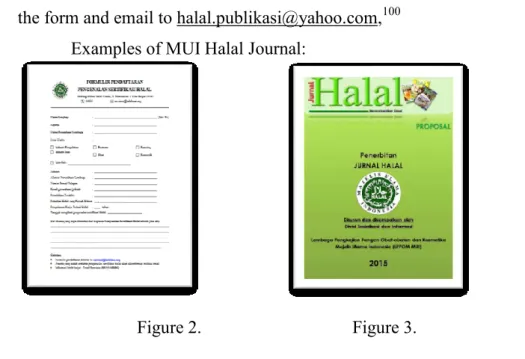
Figure 2. Image Registration Form Introduction MUI Halal Certification Figure 3. MUL Halal Journal Cover Image
Figure 4. LPPOM MUI Halal Certification Data from January to October 2017 Figure 5. LPPOM MUI Center Halal Certification Data Period 2012 - Oct 2017 Figure 6. LPPOM MUI Province Halal Certification Data Period 2012 – 2016 Figure 7. Muslim Consumer Food Expendicture Markets
Figure 8. The Global Islamic Economy Indicator (GIEI) Report 2016/17
B. The List of Tables
Table 1.Association of Halal Products Have Obtained Halal Certificate Indonesian Ulema Council
Table 2. LPPOM MUI Center Halal Certification Data Period 2012 - Oct 2017 Table 3. LPPOM MUI Province Halal Certification Data Period 2012 – 2016
xiv
ABSTACT
The research background discussed about phenomenon of MUI halal labeling. Therefore the MUI is a non-government institution. They ordered by the Ministry of Religious Affairs as well as examiner implementing halal products sold in Indonesia. And why them are so influences in Indonesia society, especially MUI`s Halal Labeling. The aim of the research is how hegemony on MUI halal labeling according to Antonio Gramsci's thought to determine the consumption pattern of today's society with the mechanism of consensus without coercion.
The thesis use library research with use qualitative descriptive approach. The data collection is done by using the documentation. The data analysis with method of data compiled data systematically that discussed about the subject matter through the following three steps: developing and applying codes; identifying themes, patterns and relationships; summarizing the data. The conclusion is MUI create a social hegemony in society with contructing dominant discourse, using the role of the state and law as the legitimacy of the established discourse, there are intellectual and moral leadership through the role of the Ulema who are part livelihood of the people of Indonesia; and public discipline or agreement on the credibility of Ulema in solving the problems of the people. Hegemony works not through coercion, but the hegemony of making minorities accept voluntarily through a consensus process.
Keywords : Hegemony, MUI Halal Labeling, Antonio Gramsci`s Tought
1
CHAPTER I INTRODUCTION A.Background
One of major concerns of Islamic teaching for its believers is to consume all products that are pemissible (halal) and good (thayyib) according to the revelation specifically the Quran, in surah Baqarah (2) verse 168, like below:
Translation:"O people! Eat of the (food) is lawful and good contained in the earth, and do not follow the steps of Satan. Indeed, the devil is real enemy to you."1
With the existence of the verse, Muslims would surely choose the food they consume it halal. In this case, all halal food products become a necessity that can not be bargained. Muslims are also very trust that the foods are halal and also good for the body.2
Halal food is an obligation for Muslims. With the variety of food products, Muslims will be confused in choosing which halal and not. In this context, because the Muslims can not directly observe the mechanism of manufacture or composition of the product. Therefore, there should be standardization of the type of foods that meet Halal standards in accordance
1Al-Qur`an Al Karim dan Terjemahannya Departemen Agama RI, PT. Karya Toha Putra,
Semarang, 1996, p. 20
2Nurul Huda and Muchlisin (t.th.) Pengaruh Label Halal pada Makanan terhadap
Konsumsi Mahasiswa Fakultas Agama Islam Universitas Muhammadiyah Surakarta. Retrieved on 8 July 2017 from https://publikasiilmiah.ums.ac.id/handle/11617/4572
with Islamic law, through guarantees and assurances halal products consumed every Muslim.3
The halal food market in Indonesia has a big potensial where 88 % of the population is Muslim. The number of islamic population in Indonesia according to the Central Bureau of Statistics (BPS) in 2010 reached 207.1 million people. Even Thombson Reuters article (2015) showed that Indonesia got first ranks “Top Muslim consumer food expenditure market”.4
Indonesia mostly Muslim population, it makes sense if Muslims have a role and a great responsibility as well for the progress and prosperity of Indonesia.5 In this case, all the state administration largely concentrated from the standards of Muslims, although the aim for the common good.6Starting from various aspects, social, education, health, population, economy, and politics. Based on the above, in the administration of the state, especially in the field of halal products in Indonesia is handled by the national government-sponsored organization, Indonesian Ulema Council (Majelis Ulama Indonesia/MUI).
MUI is a container consensus of ulema, zu`ama and Muslim scholars who deemed as most competent institution to give religious answers to social problems that always arise and facing the people of Indonesia. It reminded that the institution is forum for all Muslims in Indonesia's diverse tendencies and
madzhab (religion diverse). Therefore, the fatwa7 / decision issued by MUI is
3Burhanuddin S., Pemikiran Hukum Perlindungan Konsumen dan Sertifikasi Halal,
UIN-Maliki Press, Malang, 2011, p. 143
4Syaifuddin Fahmi (2017) Halal Labeling Effect on Muslim Consumers Attitude and
Behavior. Retrieved on 17 May 2018 from https://www.researchgate.net/profile/Syaifuddin_ Fahmi/publication/318802786_Halal_labeling_effect_on_muslim_consumers_attitude_and_behavi or/links/59fe9bfea6fdcca1f29bf6a2/Halal-labeling-effect-on-muslim-consumers-attitude-and-behavior.pdf
5Majelis Ulama Indonesia, Pedoman Penyelenggaraan Organisasi Majelis Ulama
Indonesia, MUI, Jakarta, 2011, p. 5
6Ibid., p. 5
7a question addressed to a scholar of Islam (Ulema) about a particular topic which has been
addressed to him by one or more believers in order to obtain the scholar‟s opinion about this topic
from the perspective of Islamic law. Look at Nico J.G Kaptein (2014) The Voice of the Ulama:
3
expected to be accepted by all groups and layers of society, and is expected to be a reference also to the preformance of government policy-making.8
MUI was founded in 1975 on the initiative of the then President Soeharto to function as a kind of interface between the government and the Muslim community at the national level. This initiative can be seen as an attempt by the government to involve the `ulamâ‟ in its developmental policy in an institutionalized way. One of the domains in which the MUI is active is in the giving of fatwas, both to the government and to the Muslims in general. For this purpose the MUI has a special fatwa committee. The MUI is often in evidence in the media, and since its foundation has regularly delivered fatwas. Sometimes the government asks the MUI to lend religious legitimation to certain of its activities and, although the MUI is a government institution, it does not always automatically adopt the same opinion as the government.
The fatwa can be an instrument of social change. Fatwa a bridge between the idealism of religious and social realism. And more than that it becomes the engine of social change through the authority of the cleric or mufti
(either individually or in institutions) to undertake social engineering in order to establish, change and improve the state of society in their view on the basis of religion authoritative sources. In addition, fatwa is also not limited as an instrument of social change, but also can serve as a media law, the creator of social stability, political discourse and also can be a tool for doctrinal reform So that the fatwas issued by these organizations by many scholars referred to as a collective fatwa. The technical term of collective ijtihad into use in the 1950s refer to consensus.9
The existence of halal food in Indonesia have been obtained through the certification of halal food product by the Institute of Control and Distribution of Drugs and Food-Majelis Ulama Indonesia, called LPPOM MUI, assigned to
8Bagian Proyek Sarana dan Prasarana Produk Halal Direktorat Jendral Bimbingan
Masyarakat Islam dan Penyelenggaraan Haji Departemen Agama RI, Sistem dan Prosedur
Penetapan Fatwa Produk Halal Majelis Ulama Indonesia, DEPAG RI, Jakarta, 2003, p. 6
9Nico J.G Kaptein (2004) The Voice of the Ulama: Fatwas and Religious Authority in
Indonesia. Retrived on 23 January 2019 from https://www.researchgate.net/publication/30425264_ The_Voice_of_the_Ulama%27_Fatwas_and_Religious_Authority_in_Indonesia
conduct the inspection, supervision, and provide halal certification to food products.10 Halal certification procedures with halal assurance system built LPPOM MUI has been recognized internationally.11 The presence of MUI Halal Certificate, Muslims are already able to choose food products, medicines and cosmetics are clearly halal status by choosing products bearing the "kosher" MUI agreed BPOM RI based MUI Halal Certificate.12Halal Logo Indonesia show consumers which products that can be consumed by Muslims and who can not. Food or cosmetic products are sold without a logo can be considered as Halal or Haram, which means that Islam as musch as 88% of total population in Indonesia, will tend to avoid such products.13
Post-structuralism philosophy is criticism of everything at the phenomenon of today. Where the Grand Narrative of modern times questioned again for causing the occupation in many areas of life, such as power relations and business. In this case, criticism to the problems of the people of this era, especially the highly contested issue of capital management is debated by Post-Structuralism thinkers. Where it involves the knowledge / power relations in the growth of different knowledge, in the treatment of psychiatric, in criminal law and sexuality.14
The state / government are regarded as autonomous power, should reflect the prestige class back into its base, is the importance of practice and theoretical biggest and analyzed entirely feasible if people want a more realistic concept of the state itself. it may, it seems, included in the elite group function or group leaders, for example, the parties or the organizations, in conjunction with the class they represent. This class, often, as a moral, that may not be able to affirm its hegemony, which means it can not establish a
10Majelis Ulama Indonesia, Op.Cit.., p. 151-152
11Loc.Cit.
12Ibid., p. 159-160
13Syaifuddin Fahmi, Loc.cit
14Ian Craib, Teori-Teori Sosial Modern, trans. Paul S. Bolt and T. Effendi, Rajawali,
5
state.15In this case, it becomes also has attracted the attention of Italian philosopher, named Antonio Gramsci.
Gramsci was a devoted Marxist and the founderof Italian Communist Party (PCI). He was, literally “a man of action”. As an intellectual leader, he participated in the mass proletarian movements durung the first war, and afterwards he involves heavily in Italian politics as a member of the PCI. It is not surprising therefore to find in Gramsci an action oriented political philoshopy based mostly on the political development of his era. He was concerned with empirical as well as theorical problems of communism; especially with failure or non realization in western world. In that sense the questions of power and ideology also have empirical basis in Gramsci and can be found in the realism of “politique reelle”.16
Gramsci put groups of people do not have self-consciousness, while intellectuals have it. With this position, then the mass is believed to be picking up the idea of an elite and use it as a basis for a mass revolution. Gramsci used the term hegemony to explain their system of government of a country that is based on the establishment and development of a consensus that is directed into an agreement without coercion through a leadership culture that is not always based on coercion.
The workings of hegemony is by creating a "common sense" would be something, so that audiences consider it a reasonable problem. Hegemony can only be achieved by changing the consciousness, thinking and understanding of the community, their conception of the world, as well as the norms of their moral behavior. Intellectual and moral revolution necessary to build awareness of the people. The goal is common sense. In order to successfully build awareness of the people, the views (ideology) the dominant projected to the people and make common sense, a process where ideas are considered part of
15Ronald H. Chilcote, Teori Perbandingan Politik: Penelusuran Paradigma, trans. Haris
Munandar and Dudy Priatna, PT. Raja Grafindo Persada, Jakarta, 2004, p. 497
16Asli Daldal (2014) Power and Ideology in Michel Foucault and Antonio Gramsci: A
Compartive Analysis. Retrieved on 17 May 2018 from http://rhpsnet.com/journals/rhps/Vol_2 _No_2_June_2014/8.pdf
the natural order. This is where the importance of the role of the intellectuals, because hegemony implies intellectual leadership and moral. This group cannelled the ideas of the dominant of superstructure form (common sense) and then common sense is absorbed by the workers, so that consciously they agree with the ideas that carried the dominant, even them to adopt these ideas for his eloquence.
In some studies found also the implementation of halal principles in the supply chain, namely by avoiding direct contact with the Haram object, overcoming the risk of contamination and ensure it is in accordance with Muslim consumers perseption. Even other religion or non-Muslim consumer understand the importance of halal principles that also address health issues, food safety and environmentally friendly ways of production. Consumer awareness of Muslims in Indonesia in obtaining products that mus comply with Islamic sharia is very high especially in the food industry. The increase religious awareness of Muslim consumers will encourage producers or industries to provide products labelled halal as selling point or branding in covincing comsumers. Thus, halal label stamped on the product is one of the factors that attract Muslim consumers in deciding the purcase.17
From all the above, the MUI aims to create a public opinion in regard to the importance of food with Halal MUI labeled. In this case, they disseminate to the public through the common sence discourse, the socitey dicipline (consensus), the politic stability (moral leadership), and the stastus qou by goverment. Therefore, with all of the above reasons, the authors will examine how the mechanism of the formation of public opinion (consensus without coercion). Why MUI is so influence to many sectors, especially on halal labeling. Why producers or industries must to provide products labelled halal as selling point or branding in covincing comsumers. In this case will be analyzed by the thought magnate of postmodernism / or post-structuralism, namely Antonio Gramsci with the theory of hegemony, because he explains that their system of government of a country (or as goverment like MUI) that
7
is based on the establishment and development of a consensus that is directed into an agreement on many aspects without coercion. From the result, it can be assumed that there is a synchronization and relevance of the theory of the pattern forming that opinion in Hegemony`s theory of Antonio Gramsci and MUI Halal labeling. Thus, the researchers will create a research thesis entitled "Hegemony of MUI Halal Labeling (Analysis of Antonio Gramsci Thought)".
B.Research Question
How is the hegemony on MUI halal labeling according to Antonio Gramsci's thought?
C.Aim and Significance of Research
1. Aims of Research
To determine the critical study of philosophy against actual phenomenon (especially hegemony on MUI halal labeling according to Antonio Gramsci's thought)
2. Significance of Research
Knowing the critical study of philosophy against Hegemony of MUI`s Halal Labeling according by Antonio Gramsci`s Tought
D.Literature Review
First, the article titled “ The Voice of the Ulama: Fatwas and Religious Authority in Indonesia” complied by Nico J.G Kaptein in Achives De Sciences Sociales Des Religions 125 I Janvier – Mars 2004. The aims that deal with the concept of religious authority in Indonesia by means of studying a number of fatwas and comparable documents. Through the medium of the fatwas, the ulema express their opinion from the point of view of Islamic Law about all kinds of topical issues submitted to them by believers, and for this reason a fatwa forms an important expression of religious authority. In the first part of the article describe some important developments in the Indonesian institution of fatwa-giving in the last hundred years. Commenting upon the materials
presented in this part. In the second part reflect on a number of topics which emerge from fatwas and fatwa-like documents and which are relevant to religious authority. The conclusion is the deal consecutively with the holders, the centres, the sources, the language, and the effectiveness of religious authority.18
Second, the journal titled “Factors Affecting Consumer`s Decision in Purchasing MUI Halal-Certified Food Products” compiled by Qurroh Ayuniyyah, Didin Hafidhuddin and Hambari, in Tazkia Islamic Finance and Business Law Volume 10.2. This research aims at analyzing factors affecting consumer`s decision in purchasing mui halal-certified food products. This study employs survey method and descriptive analysis approach. Three hundred repondents are selected using non-probability convenience sampling tecnique and analyzed using multiple regression. This study finds that four independent factors (cultural and religious; social; personal; and psychological factors) significantly influence costumers` decision in purchasing MUI halal-certified food products. However, social factor are negatively related with the consumers` purchasing decision.19
Third, the journal titled "Hegemony, Democracy, and Passive Revolution in Gramsci's Prison Notebooks" compiled by Dylan J. Riley, of the University of California, Berkeley. This research looks at the relationship between the concept of hegemony and democracy in the book Prison Notebooks. The research is a Library Research. The research approach uses explorative description of qualitative research. In this study the data obtained using the method of documentation. The conclusion of this study stated that under Riley, Antonio Gramsci does not equate meaning between hegemony
18Nico J.G Kaptein, Loc.Cit.
19Qurroh Ayuniyyah, Didin Hafidhuddin, Hambari (t.th.) Factors Affecting Comsumer`s
Decision in Purchasing MUI Halal-Certified Food Product. Retrieved on 17 May 2018 from http://tifbr-tazkia.org/index.php/TIFBR/article/view/111
9
and dictatorship, but the dictatorship will be important in the placement of a new foundation concept of hegemony and toward a new democracy anyway.20
Fourth, the journal entitled "Persepsi Label Halal terhadap Keputusan Pembelian Konsumen pada Produk Minuman Berenergi" compiled by Aris Setiawan Prima Sandi, Marsudi, and Dedi Rahmawanto of University of Muhammadiyah Malang. This study aims to determine the result of the perception there is a decision to buy a product and its relationship with kosher label. Type of research is descriptive survey method. Methods of data analysis using multiple linear regression. Comsumer`s perception are variables include attention, comprehension, and memory. The result is a significant effect between the perception of halal label on consumer purchasing decisions on product energy drinks.21
Fifth, Thesis entitled "Politik Tata Pajang Museum: Studi tentang Wacana dan Hegemoni Militeristik dalam Pameran Museum di Era Orde Baru di Provinsi Daerah Istimewa Yogyakarta" organized by Ibrahim Almadhani of the Department of Politics and Administration Faculty of Social and Political Sciences, University of Gadjah Mada. This study aims to analyze the political strategies used display system in the military group present militaristic discourse and hegemony in the exhibition at the Museum of the new order era in the province of Yogyakarta Special Region. This study also used the method of critical discourse analysis Fairclough in describing two military museum Yogyakarta, Museum Dharma Army wiratama Center and Museum Sasmitaloka Sudirman. This study uses primary data obtained through interviews and secondary data obtained from the literature study and observation. The collected data is analyzed into three dimensions, namely, analysis of symbol, analysis of discourse practice, and analysis of sociocultural practice. The results of this study showed that there is a discourse that is spread
20Dylan J. Riley (2011) Hegemony, Democracy, and Passive Revolution in Gramsci's
Prison Notebooks. Retrieved on 28 September 2017 from http:// sociology,berkeley.edu/sites/ default/files/faculty/Riley/hegemonydemocracy.pdf
21Aris Setiawan Prima Sandi, Marsudi, Dedy Rahmawanto (2011) Perpsepsi Label Halal
terhadap Keputusan Pembelian Konsumen pada Produk Minuman Berenergi. Retrieved on 27 September 2017 from http://ejournal.umm.ac.id/index.php/jp2m/article/view1331&ei
through the expo and the consensus of the community with no resistance or protest of the content of the exhibition.22
Sixth, the journal titled “Power and Ideology in Michel Foucault and Antonio Gramsci: A Compartive Analysis” compiled by Asli Dalal in Review of History and Political Science June 2014, Vol. 2, No.2, pp. 149-167. This research aims to analyze Foucault`s and Gramsci`s conceptions of power and idelogy on comparative perspective. This study employs library research and qualitative research of descriptive analysis approach. This study finds that both Gramsci anf Faucoult make use of Machiavelli`s notion of “relations of force”. They therefore diffuse the power relations to the complex mechanisms of society. In this case Gramsci power produces ideologi (and vica versa) and for Faucoult power produces apparatuses of knowledge.23
E.Methodology of Research
1. Research methods
In a research / writing of this thesis, researcher use the scientific literature (library research) that is by reading and understanding the literature that are associated with the above title discussion. To obtain a clear picture, this research using several methods as follows:
a.Inductive method
Inductive method is the method of reasoning that departs from the facts of the particular, the concrete events of the special events then pulled generalizations are common.24 So the history of MUI, MUI halal labeling, and the influence of the MUI halal certification against political and economic patterns, studied as an object of study. By making an analysis of all the key concepts one by one, in relation (induction) in order to build a synthesis.
22Ibrahim Almadhani (2015) Politik Tata Pajang Museum: Studi tentang Wacana dan
Hegemoni Militeristik dalam Pameran Museum di Era Orde Baru di Provinsi Daerah Istimewa Yogyakarta. Retrieved on 28 July 2017 from http://etd.repository.ugm.ac.id/index.php.html
23Asli Daldal, Op.Cit.., p.166
11
b.Deduction method
Deductive method is a method of writing that began by taking the rules of a general nature and then drawn the conclusion of a special nature.25 This is more advanced method that consists of several stages such as familiarization, identifying a thematic framework, coding, charting, mapping and interpretation. With the deduction, from visis and general style for the character/ figure is understood as well, all the details of thoughts involved themselves in thinking such thoughts. Here,the researcher will focus on the Hegemony`s theory of Antonio Gramsci as a tool to analyze the phenomenon MUI halal labeling.
2. Research Approach
In this thesis writing, the author uses qualitative descriptive approach, this approach is used because the data collected in the form of words, not numbers.26 The qualitative method is a method in research that produces descriptive data analytics, which is expressed by the respondent in writing or orally and real behavior are researched and learned as something intact.27
Based on Anton Bakker and Achmad Charris Zubair in his book entitled "Metodologi Penelitian Filsafat”, this study can be categorized as research philosophical view on the field as a formal object, which had a material object among one group, or region, tribe, nation, state investigated this view of life or worldview that underlies the whole culture. And also investigated basic view behind one of the important phenomena, such as family life, social structure, education system, one of the customs or ceremonies, and one form of art.28
Thus, the research report will contain excerpts of data to provide a clear picture of the presentation of the report. In this case the author tries to
25Ibid, p. 37
26Lexy.J. Moleong, Metode Penelitian Kualitatif, Remaja Rosdakarya, Bandung, 1990, p. 6
27Sudarto, Metodologi Penelitian Filsafat, Raja Grafindo Persada, Jakarta, 1997, p. 62
28Anton Bakker and Charris Ahmad Zubair, Metodologi Penelitian Filsafat, Kanisius,
examine the books, journals, and other research reports relating to the MUI Halal label and study of Antonio Gramsci`s thought in the theory of hegemony.
3. Methods of collecting data
a. The data collection is done by using the following methods: 1) Documentation
Documentation is a way of collecting data through written heritage, especially in the form of archives as well as books about the opinions, theories, premises or laws and other related investigations issues.29 In the method of data collection, researchers will look for, selecting, collecting and classifying data associated with the profile of MUI, MUI halal labeling, the history of thought Antonio Gramsci and Antonio Gramsci thought studies in the theory of hegemony. b. The source of the data that will be used as follows:
1) The primary data source
The primary data source is the authentication data or the direct data at first hand about the problems disclosed, also called the original data.30 The primary data source MUI in a book entitled “Pedoman Penyelenggaraan Organisasi Majelis Ulama Indonesia” and thinking about the concept of hegemony Antonio Gramsci in his
"Selections from the Prison Notebooks". 2) The Secondary data source
Secondary data source that cites data from other sources, so it is not authentic because it was obtained from the second hand, third, and so on.31This data is also referred to as the supporting data or complementary. As for the secondary data source that on the Act of halal products guarantee, the advertisement of halal labeling about the importance of the consumption of halal food, product ads on
29Suharsimi Arikunto, Prosedur Penelitian Suatu Pendekatan Praktek, Rineka Cipta,
Jakarta, 2002, p. 108-112
30Winarno Surachman, Op.Cit.., p. 156
13
television about the centrality choose kosher products, research thesis or journal relating to the labeling of halal MUI and study thought the concept of hegemony Antonio Gramsci, and other supporting data. 4. Data Analysis Methods.
As a follow-up data collection, the data compiled systematically. By using descriptive method is a way to get an authentic data source, and then used to analyze the subject matter. Data collected in the form of words rather than the split sentences according to the categories in getting conclusion32 nor numbers. This qualitative method that qualitative methodology as an assessment procedure that produces descriptive data in the form of words written or spoken from people and behaviors that can be observed.33
Additionally, all data collected can assume to be the key to the object that has been studied. The data may come from interviews manuscripts, records, court, documents and so the another things that is described as to provide clarity to the fact or reality.34 Qualitative data analysis can be conducted through the following three steps: developing and applying codes; identifying themes, patterns and relationships; summarizing the data. When writing data analysis chapter, you can use noteworthy quotations from the transcript in order to highlight major themes within findings and possible contradictions. It is important to note that the process of qualitative data analysis described above is general and different types of qualitative studies may require slightly different methods of data analysis.35This method is used to determine and understand the shape of the hegemony of the MUI halal labeling.
F. Stucture of Writing
32Suharsimi Arikunto, Prosedur Penelitian, Bina Aksara, Jakarta, 1989, p. 195
33Sudarto, Op.Cit.., p. 62
34Ibid., p. 66
35
John Dudovskiy (2018) The Ultimate Guide to Writing a Dissertation in Business Studies: A Step-by-Step Assistance. Retrived on 23 January 2018 from https://research-methodology.net/research-methods/data-analysis/qualitative-data-analysis
The first chapter, discusses general description why theses become an important research discussed, include therein a background of the problem discussion and its relevance of the figure`s theory with problematic present, problem assessment limitation, the research purpose of the holding along with the benefits. For simplicity in the execution of the research, a literature review was used as an additional proof of originality of research and research materials as well as systematic writing as a regulator of the course of study. This chapter as a guide or a basis for discussion in subsequent chapters.
The second chapter, discusses the detailed description of the theory will be used to analyze the material object or data to be assessed. It is intended as a follow-up of problems in the first chapter. In this chapter, will be developed systematically from the biography of Antonio Gramsci, the history and development of the concept of hegemony and indicators in the determination of a hegemony as the basis of analysis of research data which will be discussed in the third chapter.
The third chapter, discusses the detailed picture of the object material to be analyzed by the theoretical basis of the second chapter. In this chapter discusses biography along with the vision and mission MUI, MUI halal labeling procedures, and provide field data information on phenomena related to the MUI halal label, especially the impact on political and economic pattern of the Indonesian people themselves. This chapter will be a material object or the object to be examined as data to be analyzed in the fourth chapter later.
The fourth chapter, discusses the analysis of thought Antonio Gramsci on hegemony with a philosophical approach to the phenomenon that be related to MUI halal label. This chapter as the core of this thesis research and aims to determine the forms of hegemony in the MUI halal labeling. From the results of this discussion, you will find a conclusion of the above issues will be discussed in the fifth chapter.
The fifth chapter, containing the conclusions of the results of data analysis conducted in the fourth chapter and also as a material consideration in determining the socially critical attitude. In this chapter the author will also be
15
a response to the research and what are the benefits to sciences and human daily lives.
17
CHAPTER II
THE HISTORY AND HEGEMONY THEORY OF ANTONIO GRAMSCI`S THOUGHT
A. Antonio Gramsci
1. The Biography
Antonio Gramsci was a founder of the Italian Communist Party in 1921, a speaker of parliament in 1925, and an inmate in the reign of Mussolini's fascist during the late 1920s until the time of his death in 1937. During his incarceration, with difficult conditions he wrote a series of political texts that have been translated and published in English as
Selections from the Prison Notebooks (1971) and Selections from political Writings 1910-1920 (1977). Works of Giuseppe Fiori, Antonio Gramsci: Life of a Revolutionary (1970), gives us a biography of the life of Gramsci sympathetically disclosure.
Gramsci notes about the state provide a basis structuralist thought and has influenced Althusser and Poulantraz. Gramsci steered us toward Marxist political thought. The emphasis on “hegemony or domination” some social group or class in power has prompted some critics to suggest that he is pushing reformist interpretations or without the use of dialectic separate politics from economics. Gramsci's conception of various countries. Crises occur in the hegemony of the “ruling class” because he failed in a few steps and mass politics became dissatisfied and are actively engaged in opposition. In these conditions the authorities can take over control and maintain power through the destruction of his opponents. Gramsci test these activities in terms of the experiences of Italy and countries in Europe. He looked agree with structuralist position that the activities of the state are determined by the structure of society rather than by those who hold state power plays.1
1Ronald H. Chilcote, Teori Perbandingan Politik: Penelusuran Paradigma, trans. Haris
The fact that the state / government are regarded as autonomous power, should reflect the prestige class back into its base, is the importance of practice and theoretical biggest and analyzed entirely feasible if people want a more realistic concept of the state itself ... it may, it seems, included in the elite group function or group leaders, for example, the parties, in conjunction with the class they represent. This class, often, as a moral, that may not be able to affirm its hegemony, which means it can not establish a state.2
2. The History of Antonio Gramsci`s Tought
In the discourse of social theory, Gramsci was not the first to raise the idea of the concept of hegemony. The idea of hegemony was first introduced in 1885 by the Russian Marxists, especially by Plekhanov in the year 1883 to 1984 as a strategy to overthrow Tsarism in Russia. The concept of hegemony is also used by Lenin in explaining the leadership of the proletariat. Meanwhile, in gasasan Marx, the concept of hegemony actually never appear explicitly, but includes the concept of the Marxian mentioned in the study. However, the concept of hegemony is central in social theory of Marxism even after developed by Gramsci. In other words, the idea became a central and original hegemony in social theory and philosophy of Gramsci.
If we go back to the roots of the term hegemony, the word is derived from the Ancient Greek language “eugemonia”. In the past, the term is applied to show the dominance of state claimed the city to the other parallel country. The concept was developed by Lenin emphasizes the theoretical leaders
hip role that must be established by the proletariat and its political representatives in an alliance to end the Tsarist police state, therefore, Lenin believed that the role fighter can only be achieved through the institution of the party that is guided by the most advanced theory. For Lenin, the theory is essential to guide trade union awareness of the situation enslaved by bourgeois ideology. After that, the theory of hegemony forwarded by
19
Gramsci with a different concept, because Gramsci develop a strategy to achieve the hegemony of the proletariat in the civil society before the seizure of power by the Communist Party. In other words Gramsci establish the concept of hegemony of Lenin's concept, but it is more advanced because conceptualize Gramsci hegemony is not only to describe and analyze the modern capitalist societies, but also analyze how the modern capitalist society is organized or intended to be organized in the past and the present.3
Antonio Gramsci was a philosopher whose intellectual thinking is heavily influenced by the experience of his life. Gramsci's life and activities affecting intellectual thought that is at least divided into three phases, as follows:
First, Phase of his childhood in Sardina, Italy, until the time of his studies at the University of Turin (1891-1918). Poor childhood, life named Genaro, his brother who was a local leader of the socialist group in Cagliari, and the presence of some of the protest movement in Cagliari due to the action of exploitative rulers of central Italy through mineral deposits enterprenuers, have made Gramsci aware of the history of society island and make Gramsci focused on the history and pamphlets socialist to gain a new perspective.
Second, is the phase when Gramsci actively involved in political activity, a political leader, and find new approaches to revolution in Italy (1918-1926). This period begins with Gramsci closeness with professors at the University of Turin, especially the professor of history, economics, and linguistics, among others Matteo Bortoli, Luigi Einaudi, Umberto Cosmo, Annibale Pastore, Antonio Labriola, Rudolfo Mondolfo, Benedetto Croce, and others. Of those, Gramsci began studying Italian intellectual thought that relations with the socialist movement, as well as to know Marxian
3Iklilah Muzayyanah Dini Fariyah (2011) Hegemoni Antonio Gramsci: Sejarah dan
Perkembangannya dalam Ranah Antropologi. Retrieved on 1 December 2018 from http://journal.ui .ac.id/index.php/jai/article/view/211 5
philosophy of Hegelian perspective. All this began to affect his thinking. In fact, a very obvious gap between urban and rural areas as well as the conflict between the industrial area "North" and rural "Southern" make Gramsci chose his political position and became a revolutionary.
Third, the isolated Gramsci period in Fascist regime prison, that is Gramsci thought to the peak period (1926-1937). This period begins with the policy of Fascist Italy under Mussolini who stifled all publications of the left political forces. Mussolini did massive arrests of many leaders of the communist movement in Italy, including Gramsci. This is due to Gramsci argued that fascism is not only harmful to the development of the communist movement in Italy, but also because very confident fascism tendency is for power. Gramsci in prison this is actually developing intellectual thought that later on the results of this work were collected in a book entitled The Prison Notebooks.4
Gramsci's concern arises where the destruction of organized labor and socialist movement in Western Europe by fascism in the years of 1922-1937, increasingly affecting the ability of the analysis. He amazement on the phenomenon of Italian society is committed to uphold the modern state as a solution in the form of fascism, not even a socialist regime, although they in a critical situation raises fundamental questions about how power was established and built. From this historical background, Gramsci did not find the answer to Marx's analysis, marked the failure of the revolution, characterized by the occurrence of a workers' revolution, has broken the argument of Marx judged deterministic, fatalistic and mechanistic.
Gramsci also make corrections to the standpoint theoretical of Marxism, namely the viewpoint of economism. In this case, follow the steps Gramsci Lenin, wherein the standpoint of economism can minimize the importance of the ideological struggle in the midst of the workers who may cause them fall under the influence of bourgeois ideology. According to
21
Marx, the workers would be impoverished by the capitalists so they rebelled. It is by Gramsci deemed oversimplifies the economic poverty. For Gramsci, the masses must be aware of the situation and the character of the community in which they live. But according to him, the masses can not develop a revolutionary idea, then the other party of the elite else is needed to help them, he called organic intellectuals.
Here, Gramsci put groups of people do not possess self-consiusness, Whereas, the intellectuals have it. With this, the masses will memungaut encouragement of elite ideas and use them as the basis for a revolutionary movement. Here, the tendency Gramsci in this collective idea that tend to indicate the position of Gramsci in Hegelian perspective, the relationship of mind and action, rather than Karl Marx and Gramsci argues this is where the term hegemony to explain the system of government of a country that is based on the formation and building consensus directed of prior informed consent through a leadership culture that is not always based coercion / coersive.5
B.Gramsci`s Hegemony Theory
1. The Definition of Hegemony
Hegemony is a chain mechanism victory gained through consensus rather than through oppressure against another social class. There are various ways in which, for example through existing institutions in society which determine directly or indirectly, cognitive structures of society. Therefore hegemony is essentially an attempt to herd people to assess and look at social problems within the framework of the prescribed.
In this context Gramsci formulated the concept that refers to the notion of social and political situation, in his terminology 'moment', where philosophy and social practice converge in balance: domination is a concept of reality that spreads through society in an institute and a manifestation of
the individual, the influence of the 'spirit' of this form of morality, customs, religion, political principles and all social relations, especially of the intellectual and the things that show the moral. Hegemony is always associated with the preparation of state power as a class dictatorship.
Hegemony also refers to the ideological position of one or more groups or classes within civil society that is higher than the other. Capitalism survived because workers accept this common situation, the domination of bourgeois culture makes use of political power does not need to hold on to power. So that the masses should be freed from the fascination with the cultural hegemony of the capitalist class before a successful resistance against the state could occur.
In the Notebooks, Gramsci mentioned that actually believe theorization and realization of hegemony by Lenin as noted above. In fact, for Gramsci, hegemony donations theorization and realization of Lenin contribute significantly to the philosophy of praxis that pioneered Gramsci. He said about Lenin that "It is here (in the theoretical-practical principle of hegemoy) that Illich`s gratest theoretical constribution to the philosophy of praxis should be sought". But what was raised by Lenin in Two Tactics of Social Democracy, thats different with Gramsci's work, as Lenin did not mention more about the phenomenon of the bourgeois class excellence in stable social system.6
Hegemony theory proposed by Antonio Gramsci talks about how minorities accept the dominant group without any coercion or violence. Hegemony works not through coercion, but the hegemony of making minorities accept voluntarily through a consensus process.7 As written by Eriyanto (2001) that "one of the strengths of hegemony is how he created a particular way of thinking or the dominant discourse, which is assumed to
6Nezar Patria and Andi Arief, Antonio Gramsci Negara & Hegemoni, Pustaka Pelajar,
Yogyakarta, p. 120-122
7Eriyanto, Analisis Wacana: Pengantar Analisis Teks Media, LKiS, Yogyakarta, 2001, p.
23
be true, while others are considered false discourse". The workings of hegemony is by creating a "common sense" would be something, so that audiences consider it a reasonable problem.
Gramsci hegemony can be understood as a cultural and political leadership. Judging from its terms, extends leadership in the sense of process / operation, establishment / briefing. Meanwhile, if viewed from space, hegemony thorough work on the region: the moral, philosophy, culture, and politics. From the space can be understood that the hegemony of working through the instruments of very massive, ie the state, capital, religion, education, mass media, and so forth.
According to Gramsci, the supremacy of the class or group manifests itself in two ways: domination and intellectual leadership, Hegemony refers to the strong influence of the leadership in the form of moral and intellectual, which shape attitudes led classroom. The consensus that occur between these two classes are created through covert coercion or influence through knowledge disseminated through the instruments of power.
In this case, Gramsci explain about two structure that can be used to understand of the hegemony it self. There are superstucture and substructure (basic) like below :
a. Superstructure
Hegemony can only be achieved by changing the consciousness, thinking and understanding of the community, their conception of the world, as well as the norms of their moral behavior. Intellectual and moral revolution necessary to build awareness of the people. The goal is "common sense". In order to successfully build awareness of the people, the views (ideology) the dominant projected to the people and make common sense, a process where ideas are considered part of the natural order. Hence the importance of the role of the intellectuals, because hegemony implies intellectual and moral leadership.
In fact intellectuals meet the diverse positions that different “gap” from the economic base. Their involvement in the world of production (such as a technician or manager), their relationship is always shown with his quantity involvement. In the region of the superstructure, they display the functions 'organizational and connective' both in the realm of civil society or hegemony and political society or State territory. This group reflected the ideas of the dominant form of superstructure (common sense) and then common sense is absorbed by the workers, so that consciously they agree with the ideas that carried the dominant, even them to adopt these ideas for his eloquence ,8
b. Substucture
Changes can not be obtained by the practice of coercion that use power through the apparatus. Changes must be made by an ideology which is continuously carried out the intellectuals against opposition forces. In this way, the strength of the opposition will choose the conformist attitude causing self-discipline to adjust to the norms decided by the authorities as the best way for them to survive and achieve prosperity. The dominance of conformist ideas unquestioned hegemony here as process which is at work and will be able to reproduce a particular community.9
2. The History of Hegemony
Hegemony in ancient Greek is called "eugemonia" expressed by the Encyclopedia Britannica in practice in Greece, is applied to indicate the dominance of the position claimed by the city-states (polis or citystates)
8Ibrahim Almadhani (2015) Politik Tata Pajang Museum: Studi Wacana dan Hegemoni
Militeristik dalam Pameran Museum di Era Orde Baru di Provinsi Daerah Istimewa Yogyakarta. Retrieved on 28 July 2017 from http://etd.repository.ugm.ac.id/index.php.html
25
individually, for example, carried out by the state against the city-state of Athens and Sparta another parallel state.10
In terms of this era, hegemony shows a leadership of a particular country that is not only a city-state against other states related loosely or tightly integrated within a state "leader". In the context of international politics, for example, in the period of the cold war, the battle of influence between the superpowers like the United States and the former Soviet Union during the Cold War, is usually referred to as the war to become a hegemonic power in the world.
In book Antonio Gramsci Hegemoni & Negara (2003), Marxist literatures show that historically the concept of hegemony was first produced in Russia in 1880 by a Russian Marxist, Plekanov (Bockock, 1986: 24). The concept is built as part of a strategy to overthrow the Tsar. Hegemony in this definition refers to the hegemonic leadership of the proletariat and their political representatives as well as alliances with other groups such as: critical bourgeoisie, peasants and intellectuals, who wishes the same fatherly overthrow the Tsar.
At this point then referable material basis of Lenin in definition concept of political struggle. In an article, Lenin said that we can try to lend the economic struggle with a political characteristics. However, we will never be able to built political consciousness of the workers to restrain them within the framework of economic struggle. All this kind of framework really too narrow. Then he considers the need to inject political awareness, by asserting, to bring political knowledge to the workers, the Social Democrats should be among all classes of society, and this should be done theoretically, propagandist, and organizer agigator. 11 So in Lenin's records, which is emphasized in the discussion and ideas about hegemony is the theoretical leadership role for then concretely manifested and articulated in a vanguard party. Lenin hegemony for more on questions of leadership.
10Nezar Patria and Andi Arief, Op.Cit., p. 115
Gramsci's concept of hegemony can actually be elaborated through the explanation of the basis of the supremacy of the class:12
The supremacy of a social group manifest itself in two ways, as „domination‟ and as “intellectual and moral leadership”. A social group dominates antagonistic groups, which it tends to „liquidate‟, or to subjugate perhaps even by armed force; it leads kindred and allied groups. A social group can, indeed must, already exercise „leadership‟ before winning govermental power (this indeed is one of principal conditions for the winning of such power); its subssequently becomes dominant when it exercises power, but even if it holds it firmly in its grasp, it must continue to „lead‟ as well.13 This quote clearly indicates a totality that is supported by the union of two concepts: leadership (direction) and dominance (dominance). Relationships they imply three things. First, the domination exercised over the entire enemy, and leadership held to all allies. Secondly, leadership is a precondition to conquer the state apparatus, or in the narrow sense of government power. And, third, once a State power can be achieved, the two aspects of this class supremacy, either directing or domination, continues.
The relationship of these two moments, in what he describes as "dual perspective" of the State and political life is very important in the thinking of Gramsci. In various levels, it is described by Gramsci theoretically:14
Two fundamental levels, corresponding to the dual nature of Machiavelli Centaur---half animal and half-human. They are the levels to force and of consent, authority and hegemony, violence and civilisation, of the individual moment and of universal moment (“Churh” and “State”), of agitation and of propaganda, of tactics and of strategy, etc.15
After Lenin, hegemony becomes a serious conversation when Gramsci makes it important as a part of the "Notebooks". In general conception of hegemony born of Gramsci, was actually taken dialectically through the traditional dichotomy characteristic of Italian political thought
12Ibid., p. 117
13Quentin Hoare and Geoffrey Nowell (ed) (1971) Selections from the Prison Notebooks.
Retrieved on 1 December 2018 from http://abahlali.org/files/gramsci.pdf
14Nezar Patria and Andi Arief, Op.Cit., p. 118
27
from Machiavelli to Pareto, and some other parts were taken from Lenin. From Machiavelli to Pareto, conception is taken on strength (force) and approval (consent). For Gramsci, social class will gain superiority (supremacy) in two ways, namely by means of domination or coercion and the second is through intellectual and moral leadership. The last way is then referred to Gramsci as hegemony.16
3. The Theoretical Framework
The standpoint of the hegemony concept of Antonio Gramsci is discussed about domination and intellectual leadership. Hegemony refers to the strong influence of the leadership in the form of moral and intellectual, which shape attitudes led classroom. The consensus that occur between these two classes are created through covert coercion or influence through knowledge disseminated through the instruments of power. This point will discussed below:
a. The Dominant Ideology
Myth and reality are equally understanding. In the context of national kepolitikan in many countries, a number of political scientists emphasize the importance of traditional ideologies that may not be relevant terhadapa modern society high levels of technological advance. They are not familiar with the idea of a harmonious society that can encapsulate a variety of political forces, where the bargaining and the search for consensus is the primary mechanism Meredan conflict. The interpretation of national and international politics always colored by ideals / desires, values and biases. Or in more simple words, ideology is always inherent in every person.
The term ideology seems to arise from among theorists and ediolog in the post-Enlightenment era which means "science of ideas" (science of ideas). For them ideology is a way to find out the truth and get rid of illusions. Karl Marx also defines ideology in other versions,