*Corresponding author:
E-mail: [email protected]
Available online at http://medpet.journal.ipb.ac.id/
Performance, Nutrient Digestibility, and Meat Quality of Bali Cattle Fed a Ration
Supplemented with Soybean Oil Calcium Soap and Cashew Fruit Flour
A. Baina, D. A. Astutib, S. Suhartib, C. Armanc, & K. G. Wiryawanb*
aGraduate Student of Nutrition and Feed Science Study Program, Bogor Agricultural University bDepartment of Nutrition and Feed Technology, Faculty of Animal Science, Bogor Agricultural University
Jalan Agatis, Kampus IPB Darmaga, Bogor, Indonesia
cFaculty of Animal Sciance, Mataram University, Mataram, Indonesia
(Received 01-06-2016; Reviewed 06-09-2016; Accepted 23-11-2016)
ABSTRACT
The study to evaluate growth performance, nutrient digestibility, blood metabolites profile and meat fatty acid of Bali cattle treated with 3 different types of rations were conducted using a completely random
-ized block design with 4 replications. Ration treatments were R1: 40% native grass (NG) + 60% concentrate, R2: 40% NG + 60% concentrate supplemented with 5% soybean oil calcium soap (SOCS), and R3: (40% NG + 60% concentrate supplemented with 5% SOCS + 10% cashew fruit flour (CFF). Variables measured were growth performance, nutrients digestibility, blood metabolites, and meat fatty acid profile. Data were analyzed using analysis of variance (ANOVA) and the differences between treatment means were examined by Duncan Multiple Range Test. Results of the study showed that the 3 different feed treatments did not have any significant effect on dry matter intake and organic matter intake, daily body weight gain, feed efficiency, crude fiber, ADF and NDF digestibilities, cholesterol, triglycerides, low density lipoprotein (LDL), high density lipoprotein (HDL), total fatty acid contents and content of unsaturated and saturated meat fatty acids of Bali cattle meat. Different treatment rations also did not affect dry matter digestibility, however the treatments significantly affect the organic matter, crude protein, and fat digestibility (P<0.05). Bali cattle fed 5% SOCS (R2) and 5% SOCS + 10% CFF (R3) had higher organic matter and ether extract digestibilities and linoleic acid content of meat (P<0.05) compared with the control (R1). The Bali cattle fed with R1 and R2 had higher crude protein digestibility (P<0.05) compared with that of R3. It is concluded that the supplementation of 5% SOCS and 10% CFF in the ration improved the digestibility of organic mat
-ter, ether extract and linoleic fatty acids content in Bali cattle meat.
Key words:calcium soaps, growth, digestibility, blood metabolites, meat’s fatty acid, Bali cattle
ABSTRAK
Penelitian untuk mengevaluasi performa, kecernaan nutrien, profil metabolit darah, dan kandungan
asam lemak daging sapi Bali yang diberi tiga jenis ransum berbeda, dilaksanakan menggunakan
rancang-an acak kelompok dengrancang-an 4 ulrancang-angrancang-an. Perlakurancang-an rrancang-ansum terdiri atas R1: 40% rumput laprancang-ang (RL) + 60% konsentrat, R2: 40% RL + 60% konsentrat disuplementasi 5% sabun kalsium minyak kedelai (SKMK), dan R3: 40% RL + 60% konsentrat disuplementasi 5% SKMK + 10% tepung buah semu jambu mete (TBSJM). Variabel yang diukur adalah performa pertumbuhan, kecernaan nutrien, profil metabolit darah, dan
kan-dungan asam lemak daging. Data dianalisis menggunakan analysis of varian (ANOVA) dan perbedaan an -tara perlakuan diuji dengan Duncan’s multiple range test. Hasil penelitian menunjukkan bahwa perbedan ransum perlakuan tidak berpengaruh nyata terhadap konsumsi bahan kering, konsumsi bahan organik,
pertambahan bobot badan harian, kecernaan serat kasar, ADF dan NDF, kandungan kolesterol, trigliserida,
low density lipoprotein (LDL), high density lipoprotein (HDL), kandungan asam lemak total, kandungan asam lemak tak jenuh dan asam lemak tak jenuh daging sapi Bali. Perbedaan ransum perlakuan juga tidak
berpengaruh nyata terhadap kecernaan bahan kering, tetapi berpengaruh nyata (P<0,05) terhadap kecer -naan bahan organik, kecer-naan protein kasar, dan kecer-naan lemak kasar. Sapi Bali yang mengkonsumsi
ransum mengandung 5% SKMK (R2) dan 5% SKMK + 10% TBSJM (R3) mempunyai kecernaan bahan organik, lemak kasar dan kandungan asam linoleat daging yang lebih tinggi (P<0,05) dibanding ransum kontrol (R1). Sapi Bali yang mengkonsumsi ransum R1 dan R2 mempunyai kecernaan protein kasar yang lebih tinggi (P<0,05) dibanding R3. Disimpulkan bahwa suplementasi 5% SKMK 10% TBSJM dalam ran -sum meningkatkan kecernaan bahan organik, kecernaan lemak kasar dan kandungan asam lemak linoleat daging sapi Bali.
INTRODUCTION
Bali cattle is one of the leading animal protein com -modities in supplying national and export demands of meat. To ensure a maximum meat production of
Bali cattle, fattening is an important stage in industry
that needs to be improved (Tahuk & Dethan, 2010).
However, farmers rarely concerned with cattle feed
quality despite that this factor serves as one of the main
factors in determining a successful fattening process. As
a result, the animal growth was not optimal indicated by the low weight gain and poor feed conversion ratio.
The high proportion of energy needed by ruminant animals is the reason to explore alternative feed ingredi-ents with high energy density. There are several sources of feed ingredients containing high energy density, e.g. vegetable oils and agricultural waste products. The use of vegetable oils in ruminants is promising due to their
high energy densities and better qualities of unsaturated fatty acids. On the other hand, the agricultural waste has
its own advantages which are large in quantity, contain-ing high nutrient materials and low cost. One of agri-cultural wastes that have the potential to be used as an animal feed is cashew fruit. It has good nutritional value
(based on the percentage of dry matter) i.e.: 12.68%-14.42% crude protein; 5.22%-10.05% crude fiber; 22.80%-52.82% total sugar in fresh or sun-dried cashew fruit
(Adebowale et al., 2011). However, cashew fruits contain
high amount of non-extractable condensed tannins of
52 g/kg dry matter (Rufino et al., 2010). Aguerre et al.
(2016) reported that tannins can reduce the amount of protein that can be digested in the rumen and increase
the flow of protein to the small intestine. In relation to the biohydrogenation of fatty acids (FAs) in the rumen,
tannins were reported to be responsible in reducing
polyunsaturated fatty acids (PUFA) biohydrogenation,
accumulating t11 C18:1 (vaccenic acid) and/or decreas-ing the concentration of C18:0 (stearic acid) (Khiaosa-Ard et al., 2009).
Fat or fatty acid is a high density energy source. It
produces higher energy than carbohydrate or protein
(Wina et al., 2014). Supplementation of unsaturated fatty
acids does not only provide energy, but also increases
the production and quality of ruminants’ meat (Ludden
et al., 2009). However, the use of oil or fat with high unsaturated fatty acids in cattle needs to be controlled
to ensure that it does not interfere with the ruminants’ digestion system.
Efficient fat use in ruminant livestock is highly de
-pendent on fat transformation pattern in the rumen i.e.
lipolysis and biohydrogenation process by rumen mi-croorganisms (Lourenco et al., 2010). Maia et al. (2010)
reported that unsaturated fatty acids could be toxic to
rumen due to its ability to inhibit cell integrity and mi-crobes growth, and therefore disrupt feed fermentation
process, especially feed fiber fermentation. If the fat bio -hydrogenation process can be controlled, It is possible to
modify the fatty acid composition of beef meat toward a healthier profile by including heat-treated oilseeds in
the ration to control the degree of lipid metabolism in
the rumen (McNiven et al., 2011)
Efforts to increase the benefits and decrease the negative effects of unsaturated fatty acids in ruminant livestock can be done by protecting unsaturated fatty acids from giving negative effects on rumen digestive
process. Jenkins & Bridges (2007) reported that several
types of technology to protect unsaturated fatty acids
have been published in great details such as:
formal-dehyde treated fats, calcium salts and fatty acid am -ides. Technology in the form of calcium soaps used
to protect unsaturated fatty acids is the most widely
used. Currently, there are several calcium salt products commercially available for enhancing the supply of
unsaturated fatty acids in cattle’s meat. The previous in vitro study conducted by the authors indicated that
the supplementation of 5% soybean oil calcium soap + 10% cashew apple flour had no negative impacts on the
fermentation characteristics, microorganism populations
and digestibilities of dry matter and organic matter in Bali cattle.
Based on the above reason, this study was
conduct-ed to evaluate the effectiveness of soybean oil calcium soaps (SOCS) supplementation and cashew fruit flour
(CFF) utilization on the growth performance, nutrients
digestibility, blood metabolite profile and fatty acid con
-tent in Bali cattle’s meat.
MATERIALS AND METHODS
Materials
Twelve male Bali cattle aged ±2 years old with average body weight of 222±13.55 kg and variation coef
-ficient of 6.10% were used in this research. The research rations were 40% of native grass and 60% of concentrate.
The concentrate consisted of coconut meal, cassava,
pol-lard, cashew fruit flour, molasses, soybean oil calcium
soaps, CaCO3, urea, and beef cattle premix. Calcium
soap materials consisted of soybean oil produced by Mazola, NaOH, KOH, distilled water, and technical CaCl2.
Equipment and materials for blood and urea space analyses consisted of syringes (10 mL and 20 mL),
hepa-rinized blood tubes, 20% physiological urea solution,
KIT analysis for cholesterol, triglycerides, low density lipoprotein (LDL), and high density lipoprotein (HDL).
Design, Procedure, and Variables
The research used a randomized complete block
design with 3 treatments and 4 blocks; R1 (ration con
acid, and unsaturated fatty acid of treatment ration (% dry matter) are presented in Table 2.
The production of soybean oil calcium soap was
started with saponification of soybean oil following
the procedure suggested by Apriyantono et al. (1989)
to determine the volume of the needed NaOH liquid. The procedure to make calcium soap was conducted by heating a mixed liquid of NaOH and soybean oil using
a hotplate (set at 180oC) and stirred at 800 rpm until the
NaOH and soybean oil were perfectly dissolved. Some CaCl2 liquid (2.35 g crystal CaCl2 and 4.7 mL of distilled water) was added in the mixture and stirred slowly to
produce soybean oil calcium soap (Kumar et al., 2006)
The research treatment was started by adapting
Bali cattle with the stall and its ration for 14 d, until they
consumed their ration in a constant amount. Before the
cattle were treated with the rations, they were weighed
to determine their initial weight and then repeated every month for four months. The ration treatment
was given on 2.5% of the cattle individual body weight (based on dry matter) twice a day at 8 a.m. and 4 p.m. Native grass was also given twice a day, at 9 a.m. and 5 p.m., after the cattle consumed their concentrate. Clean
drinking water was given ad libitium. Residual of native
grass and concentrate was calculated every morning before providing a new ration.
Calculation of the feed nutritional value was
con-ducted by taking ± 500 g of the provided native grass sample and the residual every week from each cattle’s
ration during the research period. Concentrate samples were taken every time the concentrate were made (once
in 2 weeks). Later, proximate analyses were carried out to determine the chemical compositions of the given na-tive grass and concentrate.
Research variables observed consisted of (i) growth
performance (feed intake, daily body weight gain, and
feed efficiency and (ii) nutrient digestibility consisted of dry matter, organic matter, crude protein, ether ex
-tract, crude fiber, neutral detergent fiber, and acid detergent fiber. Blood metabolite profiles consisted of
cholesterol, triglycerides, LDL, and HDL. The measured Bali meat quality parameters were total, saturated and
unsaturated fatty acids content.
Digestibility of the ration was calculated by collect-ing feces and urine daily for eight days at the end of the research period. Feces and urine samples were collected
as much as 10% of the total excreted to be analyzed in
the Laboratory of Dairy Animal Nutrition, Department of Nutrition and Feed Technology, Bogor Agricultural University.
Blood samples were taken after 60 d of the treat-ment to measure blood metabolite concentration. Blood
samples of each cattle were taken in the morning before feeding through jugular vein, using 10 mL vacutainer,
placed in a tube containing EDTA, and kept in a cool
box to prevent blood clotting before being analyzed
in the laboratory. The cholesterol, triglyceride, LDL, and HDL were analyzed using KIT manufactured in
Germany for PT Rajawali Nusindo, i.e. Cat. No. 101592 for cholesterol, Cat. No. 116392 for triglyceride and Cat. No. 108491 for HDL.
Meat fatty acid profile was measured by slaughter
-ing the cattle at the end of the research period. Collected
meat samples were extracted from the longissimus
dor-sal muscle. Fat and fatty acid contents of the samples
were analyzed using Folch-Gravimetric methods
follow-ing by AOAC (2005).
All research procedures had been approved by the
animal ethic committee, Bogor Agricultural University No.08-2015 IPB.
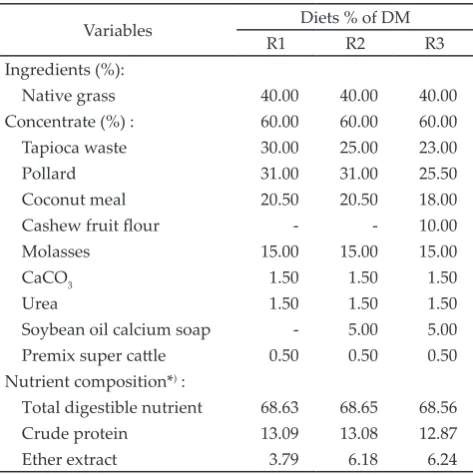
Variables Diets % of DM
R1 R2 R3
Ingredients (%):
Native grass 40.00 40.00 40.00
Concentrate (%) : 60.00 60.00 60.00
Tapioca waste 30.00 25.00 23.00
Pollard 31.00 31.00 25.50
Coconut meal 20.50 20.50 18.00
Cashew fruit flour - - 10.00
Molasses 15.00 15.00 15.00
CaCO3 1.50 1.50 1.50
Urea 1.50 1.50 1.50
Soybean oil calcium soap - 5.00 5.00
Premix super cattle 0.50 0.50 0.50
Nutrient composition*) :
Total digestible nutrient 68.63 68.65 68.56
Crude protein 13.09 13.08 12.87
Ether extract 3.79 6.18 6.24
Note: R1= 40% native grass (NG) + 60% concentrate, R2= 40% NG + 60% concentrate supplemented with 5% soybean oil calcium soap (SOCS), and R3= (40% NG + 60% concentrate supplemented with 5% SOCS + 10% cashew fruit flour (CFF). *) Estimation from
Standar Tables of Feed Composition for ruminants in Indonesia. Table 1. The ingredient and nutrient composition of
experi-mental diets
Note: *⁾ Analysis result by IPB Integrated Laboratory. R1= 40% native grass (NG) + 60% concentrate, R2= 40% NG + 60% concentrate supplemented with 5% soybean oil calcium soap (SOCS), and R3= (40% NG + 60% concentrate supplemented with 5% SOCS + 10% cashew fruit flour (CFF).
Variables R1 TreatmentsR2 R3
Total fat 2.90 4.01 4.03
Total fatty acid 51.38 53.93 52.66
Saturated fatty acid 27.82 19.17 18.17
Palmitic 20.58 19.20 20.86
Stearic 1.55 1.89 1.85
Unsaturated fatty acid 23.56 34.76 34.19
Oleic 6.30 9.17 9.33
Linoleic 10.20 20.05 19.29
Linolenic 1.85 3.15 2.18
Data Analysis
The data were analyzed using Analysis of Variance (ANOVA) by means of Statistical Package for the Social
Sciences (IBM®SPSS® version 21.0., 2012). Duncan
Multiple Range Test (DMRT) was applied to determine the differences among treatments. Differences were con
-sidered significant at P <0.05. and P<0.01.
RESULTS
Animal Performance
The supplementation of 5% SOCS (R2) and 5% SOCS + 10% CFF (R3) treatments did not significantly affect the dry matter, organic matter intake, feed ef
-ficiency, and the average daily body weight gain of Bali cattle (Table 3). The data also showed that the average dry matter and organic matter intakes of native grass and concentrate were not different between the
treatments.
Nutrient Digestibility
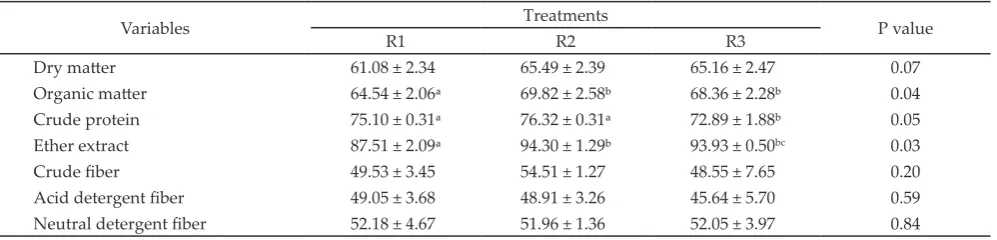
Different treatment rations did not have significant effect on dry matter digestibility (DMD), however sig
-nificantly affect (P<0.05) on the digestibility of organic matter (OMD) and ether extract (EE). The crude protein digestibility in Bali cattle fed with control (R1) and ra
-tion supplemented with 5% SOCS (R2) was higher than the ones fed with ration supplemented with 5% SOCS + 10% CFF (R3); but there was no difference of crude protein digestibility between cattle treated with control and 5% SOCS. The supplementation of 5% SOCS and 5% SOCS + 10% CFF in ration did not affect the digestibility of crude fiber (CF), acid detergent fiber (ADF) and neu
-tral detergent fiber (NDF) in Bali cattle (Table 4).
The data showed that the Bali cattle fed with ration supplemented with 5% SOCS and 5% SOCS + 10% CFF did not have significant difference in DMD compared
to those fed with control. The averages of OMD and EE
of ration supplemented with 5% SOCS and 5% SOCS + 10% CFF were significantly higher (P<0.05) compared to
those of the control ration. However, there was no
sig-nificant difference between the averages of OMD and EE between Bali cattle fed with ration supplemented with 5% SOCS and 5% SOCS + 10% CFF.
Blood Metabolite
Supplementation of 5% SOCS and 5% SOCS + 10% CFF did not have significant effect on the cholesterol,
Note: DMI= dry matter intake, DBWG= daily body weight gain. R1= 40% native grass (NG) + 60% concentrate, R2= 40% NG + 60% concentrate supple
-mented with 5% soybean oil calcium soap (SOCS), and R3= (40% NG + 60% concentrate supple-mented with 5% SOCS + 10% cashew fruit flour
(CFF).
Variables Treatments P value
R1 R2 R3
Total dry matter intake (kg/day) 4.77 ± 0.65 4.96 ± 0.41 5.20 ± 0.19 0.25
Native grass dry matter intake (kg/day) 1.65 ± 0.28 1.51 ± 0.28 1.88 ± 0.24 0.27
Concentrate dry matter intake (kg/day) 3.12 ± 0.42 3.44 ± 0.16 3.32 ± 0.42 0.42
Total organic matter intake (kg/day) 4.33 ± 0.59 4.49 ± 0.37 4.67 ± 0.19 0.61
Native grass organic matter intake (kg/day) 1.49 ± 0.26 1.37 ± 0.26 1.69 ± 0.22 0.27
Concentrate organic matter intake (kg/day) 2.84 ± 0.38 3.13 ± 0.15 2.98 ± 0.38 0.44
Daily body weight gain (kg/head/day) 0.65 ± 0.19 0.81 ± 0.17 0.92 ± 0.16 0.24
Feed efficiency (DBWG/DMI) 0.13 ± 0.03 0.16 ± 0.02 0.18 ± 0.03 0.19
Table 3. The average of dry matter and organic matter intake (% dry matter), daily weight gain and feed efficiency of Bali cattle
Note: Means in the same row with different superscripts differ significantly (P<0.05). R1= 40% native grass (NG) + 60% concentrate, R2= 40% NG + 60% concentrate supplemented with 5% soybean oil calcium soap (SOCS), and R3= (40% NG + 60% concentrate supplemented with 5% SOCS + 10% cashew fruit flour (CFF).
Variables Treatments P value
R1 R2 R3
Dry matter 61.08 ± 2.34 65.49 ± 2.39 65.16 ± 2.47 0.07
Organic matter 64.54 ± 2.06ᵃ 69.82 ± 2.58ᵇ 68.36 ± 2.28ᵇ 0.04
Crude protein 75.10 ± 0.31ᵃ 76.32 ± 0.31ᵃ 72.89 ± 1.88ᵇ 0.05
Ether extract 87.51 ± 2.09ᵃ 94.30 ± 1.29ᵇ 93.93 ± 0.50bc 0.03
Crude fiber 49.53 ± 3.45 54.51 ± 1.27 48.55 ± 7.65 0.20
Acid detergent fiber 49.05 ± 3.68 48.91 ± 3.26 45.64 ± 5.70 0.59
Neutral detergent fiber 52.18 ± 4.67 51.96 ± 1.36 52.05 ± 3.97 0.84
triglycerides, low density lipoprotein (LDL) and high density lipoprotein (HDL) levels in the blood of Bali
cattle (Table 5).
Meat Fatty Acids Composition
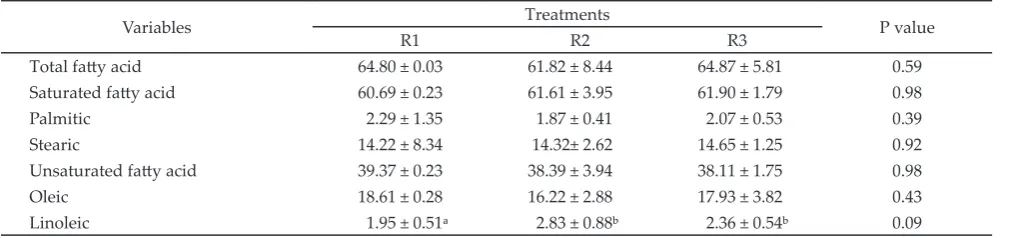
The supplementation of 5% SOCS and 5% SOCS + 10% CFF did not have significant effect on the total fat content, saturated and unsaturated fatty acids composi
-tion in Bali cattle’s meat (Table 6). The level of palmitic, stearic, oleic and linolenic acids of Bali cattle meat were not different among the treatments, but the meat’s linoleic acids contents of 5% SOCS and 5% SOCS + 10%
CFF treatments were higher than that of control.
DISCUSSION
Animal Performance
Fat is often added to rations to increase the dietary energy density and total energy intake. The
supplemen-tation of soybean oil calcium soap and cashew fruit flour in ration did not increase the intake of dry matter, or
-ganic matter, feed efficiency, and daily body weight gain of Bali cattle. This confirms the report of Salinas et al. (2006) where fat calcium soap in different levels cannot increase the dry matter intake, daily body weight gain and feed efficiency on goats. The addition of 5% SOCS in ration which did not affect the intake of dry matter and organic matter of Bali cattle was expected due to the high substance of fat in SOCS (6.18%) and SOCS + CFF
(6.24%) rations. The high level of energy density and the energy consumed had caused the cattle to restrict the
intake of ration to catch the homeostatic energy within its body.
The influence of supplementation of 5% SOCS in R2 ration and 5% SOCS + 10% CFF in R3 resulting in the similar performance of the cattle’s intake of dry matter, daily weight gain, and feed efficiency compared to the control (R1) indicates one important point. That is the
calcium soap product is clearly able to depress the tox-icity of high unsaturated fat acid in soy bean oil on the growth of microbe and fermentation within the rumen.
This was shown by the digestibility of dry matter and fiber fraction (crude fiber, ADF, and NDF) which were not different between all treated rations (R2, R3, and
control). Fiorentini et al. (2015) reported the rations with some types of protection could decreased the effects of lipid in ruminal. It confirms the research by Manso et al. (2006) who reported that the inclusion of palm oil fatty
acids as calcium soaps in the ration was able to reduce
the negative effects of the addition of 41 g of palm oil/kg on fiber digestibility.
The digestibility of organic matter and EE in SOCS and SOCS + CFF treatments were higher than that of
control. These were the indicators that the
supplemen-tation of 5% SOCS (R2) and 5% SOCS + 10% CFF (R3)
could increase the density and the total energy intake
and thus ensure sufficient energy flow absorbed within the rumen to fulfill the energy needed by the treated Bali cattle. The high density of energy consumed in R2 and R3 rations might come from the addition of 5% Note: R1= 40% native grass (NG) + 60% concentrate, R2= 40% NG + 60% concentrate supplemented with 5% soybean oil calcium soap (SOCS), and R3=
(40% NG + 60% concentrate supplemented with 5% SOCS + 10% cashew fruit flour (CFF).
Table 5. The average of blood metabolite profile of Bali cattle (mg/dl)
Variables Treatments P value
R1 R2 R3
Cholesterol 81.59 ± 19.26 100.00 ± 28.44 96.81 ± 14.43 0.46
Triglyceryde 28.99 ± 9.62 25.49 ± 9.75 25.97 ± 11.66 0.91
Low density lipoprotein (LDL) 46.71 ± 15.09 56.00 ± 24.07 55.76 ± 12.65 0.72
High density lipoprotein (HDL) 29.19 ± 10.03 38.91 ± 13.94 36.18 ± 6.75 0.37
Table 6. The average of fatty acids profile of Bali cattle meat (%)
Variables Treatments P value
R1 R2 R3
Total fatty acid 64.80 ± 0.03 61.82 ± 8.44 64.87 ± 5.81 0.59
Saturated fatty acid 60.69 ± 0.23 61.61 ± 3.95 61.90 ± 1.79 0.98
Palmitic 2.29 ± 1.35 1.87 ± 0.41 2.07 ± 0.53 0.39
Stearic 14.22 ± 8.34 14.32± 2.62 14.65 ± 1.25 0.92
Unsaturated fatty acid 39.37 ± 0.23 38.39 ± 3.94 38.11 ± 1.75 0.98
Oleic 18.61 ± 0.28 16.22 ± 2.88 17.93 ± 3.82 0.43
Linoleic 1.95 ± 0.51ᵃ 2.83 ± 0.88ᵇ 2.36 ± 0.54ᵇ 0.09
SOCS and 10% CFF. This is based on the general theory
that the addition of lipid in ruminant rations is intended to increase energy density, improve livestock system
efficiency and generate better meat quality for improv
-ing human health (Fiorentini et al., 2015). In addition,
the high EE digestibility for R3 was probably caused by the influence of tannins contained in the 10% CFF which
played a role in depressing the process of
biohydroge-nation of PUFA in the rumen (Khiaosa-Ard et al., 2009).
The high digestibility of SOCS and SOCS + CFF rations
will increase the amount of energy absorbed and used
by the cattle.
An interesting finding in this research was that the supplementation of 5% SOCS (R2) and 5% SOCS + 10% CFF (R3) resulted better daily weight gains of Bali cattle (0.81±0.17 kg/head/day for R2 and 0.92±0.16 kg/head/day for R3). These results were higher compared to the daily weight gains of Bali cattle reported by Tahuk & Dethan (2010), i.e. 0.53 kg/head/day. The average values of ADG in Bali cattle fed with SOCS and SOCS + CFF were not different than that of control (0.65±0.19) kg/head/day. This result was likely caused by the insufficient number of cattle as replication in this study.
Nutrient Digestibility
higher OMD compared to control. In addition, the
aver-age values of OMD of Bali cattle fed with SOCS ration were not significantly different from SOCS + CFF ration. However, the high level of OMD averages of cattle treated with SOCS and SOCS + CFF ration compared to cattle treated with control might suggested that the addition of 5% of calcium soap has increased the ether
extract (EE) digestibility. This is inline with Voigt et al.
(2006) who stated that the digestibility of organic matter
was higher for ration with Ca-PFA (fat supplement con-tained the highest proportion of unsaturated FA) than for rations with hydrogenated triacylglyceride from palm oil and fractionated triacylglyceride from palm oil because of the increased digestibility of EE.
The high digestibility of EE in SOCS ration (94.32%) and SOCS + CFF ration (93.93%) was suspected as an implication of the addition of 5% SOCS which could increase the flow of fatty acid in the post ruminal diges -tion. This could be linked to calcium soaps’ role which
was protecting unsaturated fatty acids in soybean oil
from hydrolysis and hydrogenation of rumen microbes.
Voigt et al. (2006) argued that the rumen-protected
fats have to be highly digestible in the post-ruminal
tract. Manso et al. (2006) reported that the EE
digest-ibility increases because the added fat is characterized by a greater digestibility and availability within food
particles than the fatty acids. The increase in the flow and digestibility of fat or fatty acid would increase the
amount of energy digested and absorbed in the system
of the cattle's body.
The data showed that supplementation of calcium
oil and cashew fruit flour could significantly influence (P<0.05) the digestibility of crude protein. The supple
-mentation of 5% SOCS + 10% CFF in R3 ration resulted the lowest digestibility of CP (P<0.05) compared to control and supplementation of 5% SOCS. The low di
-gestibility of crude protein in Bali cattle fed with SOCS + CFF ration was possibly caused by the influence of tan
-nin substances in the cashew fruit flour. The substances
cause the degradation of digestibility of crude protein in the rations. Tannins can form complexes with protein
and carbohydrate substances (Jayanegara et al., 2009).
Bunglavan & Dutta (2013) reported that these complexes
are stable at normal rumen pH, but it dissociates when
pH falls below 3.5 (such as in the abomasum, pH 2.5-3)
or rises above pH 8 (for example in the duodenum, pH 8). The strong bond of tannin complexes with the two substances caused the digestibility of protein substance and fraction of carbohydrate substances decrease in the digestion process (Jayanegara & Palupi, 2010). Even though the existence of tannin can reduce protein digestibility in rumen, the complex bonds of
tannin-protein give a benefit towards the increase in tannin-protein flow in the post rumen digestion (Aguerre et al., 2016).
Similar result reported by Wina et al. (2012) who stated
that even though tannin compounds can decrease the crude protein digestibility, they are actually useful in
increasing protein by-pass flow which is required for cattle’s growth. Digestibility of control and SOCS crude protein indicated that the use of 5% SOCS did not have negative effect on the digestibility of crude protein.
The supplementation of 5% SOCS and 10% CFF in this research did not influence the chemical condition
within the rumen ecosystem. It was shown by the
aver-age values of pH, NH3-N and total VFA on the whole
treatments which were still in normal ranges (pH of R1= 6.20, R2= 6.30, R3= 6.30; NH3-Nconcentration of R1= 8.35
mM, R2= 7.02 mM, R3= 9.30 mM; and total VFA produc
-tion of R1= 89.75 mM, R2= 82.94 mM, R3= 88.95 mM). The different treatments which resulted in pH level
ranged between 6.20 and 6.30, indicating that ration
fermentation was still in normal state. Hungate (1988)
reported that the rate of fermentation within the rumen
can be obtained during this process and later at 39 oC
and at a pH of 6.0-7.0.
The average variable values of rumen fermentation were in normal range which indicated that the
supple-mentation of 5% SOCS and 10% CFF in the rations did not give significant negative effect on the digestion
process in the rumen. Voigt et al. (2006) reported that
calcium salts of long-chain fatty acid are insoluble at ruminal pH of higher than 6.0 and thus, have little effect
on microbial fermentation This result was in accordance
with Hidayah et al. (2014) who reported that the
inclu-sion of different levels of sesame calcium soap, canola and flaxseed oils did not affect the pH level, ammonia
and total VFA production of an incubated rumen. The role of calcium soaps supplementation to depress the
negative effects of unsaturated fatty acids in the rumen
ecosystem was possible due to a stable bonding of ionic
product which was insoluble in the rumen pH condition
(neutral pH). It was might due to the non significant dif -ferent in digestibility of DMD, CF, ADF, and NDF of all treatments.
Blood Metabolite
In the present work, the effects of CSFA supple -mentation on several blood parameters i.e. triglycerides, low density lipoprotein (LDL) and high density
lipopro-tein (HDL) in Bali cattle is presented in Table 5. Results of the research showed that the supplementation of 5% SOCS and 10% CFF in R2 and R3 rations did not give significant effect on the levels of cholesterol, triglycer
-ides, LDL and HDL of Bali cattle. This result is different
from the report of El-Nour et al. (2012) who stated that
the effects of fat supplementation in ewes feed resulted
in the increased plasma concentrations of cholesterol, triglycerides, high-density lipoprotein cholesterol (HDL-C), low-density lipoprotein cholesterol (LDL-C), and progesterone.
The supplementation of 5% SOCS and 10% CFF had not yet resulted in significant change towards all parameters of blood metabolite of Bali cattle. This was
likely caused by the amount of soybean oil calcium
soap and cashew fruit flour supplemented in the ra
-tions did not contribute sufficient nutrient towards the synthesis of cholesterol within the cattle’s body. Dietary
cholesterol or “exogenous” cholesterol accounts for ap-proximately one-third of pooled body cholesterol,
and the remaining 70% is synthesized in the body
(endogenous cholesterol). Exogenous cholesterol from
food could significantly influence the amount of pro -duction and the formation of endogenous cholesterol. Both “endogenous” and “exogenous” cholesterol are transferred by a number of lipoprotein particles
includ-ing chylomicrons, VLDL, LDL and HDL (Kapourchali
et al., 2016).
There were no significant differences in the level of cholesterol between treatments in the treated cattle. This was possibly the result of the use of 5% SOCS as one
of the ration ingredients which contains high PUFA re-sponsible in depressing the cholesterol synthesis within
the body of Bali cattle. Ramprasath et al. (2012) reported that plasma cholesterol concentrations decreased with the consumption of high PUFA and increased with high
saturated fatty acid (SFA) rations. This served as an indi -cator that PUFA contained in the soybean calcium soap was likely able to depress cholesterol synthesis within
the body of Bali cattle that consumed both rations (R2 and R3). The absence of cholesterol increase in blood plasma of cattle treated with SOCS (R2) and SOCS + CFF (R3) rations had subsequently implicated that the level of triglyceride and LDL in the cattle treated with R2 and R3 rations were also not different with cattle treated
with control.
The suppression in the absorption and synthesis of cholesterol subsequently has implications towards
the level of triglycerides and LDL in SOCS + CFF treat -ment might be also contributed by the tannin substances
contained in the 10% CFF which influences the process
of biohydrogenation of fat in the rumen. In relation to
biohydrogenation of FA in the rumen, tannin played a role in reducing PUFA biohydrogenation, accumulat-ing t11 C18:1 (vaccenic acid) and/or decreasaccumulat-ing the concentration of C18:0 (stearic acid) (Khiaosa-Ard
et al., 2009). Such phenomenon can be linked to the
toxicity of tannin phenolic towards bacteria species
in-volved within the process of biohydrogenation of fatty
acid (Khiaosa-Ard et al., 2009). It is also possible that
phenolics may inhibit the process of lipolysis which is a
precondition prior to further transformation of fatty
acids, i.e. biohydrogenation (Lourenco et al., 2010).
Meat Fatty Acid Composition
The feed supplementation of SOCS and SOCS + CFF in the rations did not produce significant differ
-ences in the cattle’s profile of fatty acids (total fatty acids, unsaturated and saturated fatty acids), except the
linoleic acid content (Table 6). The supplementation of
5% SOCS in R2 ration and 5% SOCS + 10% CFF in R3
ration tended to produce higher linoleic acid substance
in the meat of Bali cattle compared to R1 ration (control). The supplementation of 5% SOCS and 10% CFF
had not yet able to improve the composition of total
fatty acid and the ratio of PUFA/SFA in the meat of Bali cattle. This result was likely caused by a number of fac
-tors known to influence the composition of fatty acid in beef cattle. Smith et al. (2009) reported that several major factors influencing fatty acid composition in beef
include the age of animal, ration composition, and breed
type. Animal age and breed type specifically affect the concentration of mono unsaturated fatty acid (MUFA) in beef by affecting stearoyl-CoA desaturase (SCD) gene
expression and activity, whereas ration is the sole source
of the essential fatty acids, linoleic acid, and α-linolenic
acid.
The supplementation effect of 5% SOCS and 10% CFF towards the change of fat substance, total fatty acids, and the ratio of PUFA/SFA which were not signifi
-cantly different from the control was suspected as the
product imperfection of calcium soap and CFF tannins in protecting PUFA of soybean oil from biohydrogena-tion process in the rumen. Our results were in
accor-dance with Fiorentini et al. (2015) who argued that there
was a partial dissociation of calcium salts in soybean oil. Block et al. (2005) reported that the calcium salts of fatty acids could not completely inert in the rumen or
as a “bypass” fat because calcium salts still dissociated
into free calcium ions and free fatty acids. This was con
-firmed by Jenkins & Bridges (2007) who stated that the long chain of unsaturated fatty acids e.g. linoleic and linoleic acids were difficult to be protected from rumen
bacterial biohydrogenation processes compared to oleic
fatty acid in the effort to increase the unsaturated fatty
acids content in milk and “red” meat. The result of this
research is in line with the report by da Luz e Silva et al.
(2009) who stated that feeding CSFA increased ether ex
-tract percentage but had no effect on total of saturated,
unsaturated, and saturated:unsaturated ratio. The
rela-tively similar data of fat, fatty acid, and ratio of PUFA/
preventing the process of biohydrogenation of PUFA in the rumen.
Our data showed that the contents of palmitic
acid, stearic acid and oleic acid in the Bali cattle treated with control (R1), 5% SOCS (R2), and 5% SOCS + 10% CFF (R3) rations were not significantly different, but the linoleic acid content in Bali cattle’s meat fed R2 and R3 tended to be higher than control. The result of this
research is in agreement with the research done by (da
Luz e Silva et al. (2009)) where CSFA increased conju
-gated linoleic acid (CLA) isomer C18:2 c9, t11 (P<0.0001), total CLA (P=0.0001), but had no effect on total n-6
and total n-3 percentages and n-6:n-3 ratio. The higher
level of C18:2c9, t11 could be due to the action of
Δ9-desaturase under C18:1 t11 which was also increased in
rations containing CSFA. According to Silva et al. (2014),
the endogenous synthesis of C18:2 c9, t11 CLA is the major source of CLA in body fat of ruminants.
The under achievement of the maximum effect of
the soybean oil calcium soap supplementation to change
unsaturated fatty acids profile in Bali cattle’s meat may be attributed to the change of nutritional characteristic and the durability of unsaturated fatty acids calcium
soap against the ecosystems dynamics and microbial
biohydrogenation processes in the rumen. Block et al.
(2005) suggested that the calcium salts durability against the rumen was influenced by the degree of unsaturation,
pH, and resident time in the rumen.
CONCLUSION
In conclusion supplementation of 5% SOCS and 10% CFF in ration improved digestibility of organic mat
-ter, ether extract, and linoleic fatty acid content in meat of Bali cattle.
ACKNOWLEDGEMENT
The authors would like to thank Directorate General of Higher Education of Indonesia for BPPS scholarship and supporting this research through
Funding Research Program-MP3EI.
REFERENCES
Adebowale B. A., O. Olubamiwa, & M. A. K. Ogunjobi. 2011. Substitution value of sundried cashew apple bagasse in the diets of Clarias gariepinus. Int. Res. J. Agric.Sci. & Soil Sci. 1: 268-272.
Aguerre M. J., M. C. Capozzolo, P. Lencioni, C. Cabral, & M. A. Wattiaux. 2016. Effect of quebracho-chestnut tannin ex -tracts at 2 dietary crude protein levels on performance, ru-men ferru-mentation, and nitrogen partitioning in dairy cows.
J. Dairy Sci. 99: 1-11. https://doi.org/10.3168/jds.2015-10745
AOAC. 2005. Official Methods of Analysis 18 th. AOAC International, New York.
Apriyantono A., D. Fardiaz, N. L. Puspitasari, Sedarnawaty, & S. Budiyanto. 1989. Analisis Pangan. IPB Press, Bogor (ID). Block E., W. Chalupa, E. Evans, T. Jenkins, P. Moate, D.
Palmquist, & C. Sniffen. 2005. Calcium salts are highly digestible. Feedstuffs. 77: 1-7.
Bunglavan S. J. & N. Dutta. 2013. Use of tannins as organic pro-tectants of proteins in digestion of ruminants. Livest. Sci. 4: 67-77.
da Luz e Silva S., P. R. Leme, S. M. Putrino, A. S. C. Pereira, A. C. Valinote, J. C. M. Nogueira Filho, & D. P. D. Lanna.
2009. Fatty acid composition of intramuscular fat from
Nellore steers fed dry or high moisture corn and calcium
salts of fatty acids. Livest. Sci. 122: 290-295. https://doi. org/10.1016/j.livsci.2008.09.013
El-Nour H. H., S. M. Nasr, & W. R. Hassan. 2012. Effect of cal
-cium soap of fatty acids supplementation on serum bio
-chemical parameters and ovarian activity during out-of-the-breeding season in crossbred ewes. The Sci.World J. 2012: 1-7. https://doi.org/10.1100/2012/601840
Fiorentini G., I. P. C. Carvalho, J. D. Messana, R. C. Canesin, P. S. Castagnino, J. F. Lage, P. B. Arcuri, & T. T. Berchielli.
2015. Effect of lipid sources with different fatty acid pro
-files on intake, nutrient digestion and ruminal fermenta
-tion of feedlot nellore steers. Asian Australas. J. Anim. Sci.
28: 1583-1591. https://doi.org/10.5713/ajas.15.0130
Hidayah, N., S. Suharti, & K. G. Wiryawan. 2014. In vitro rumen fermentation of ration supplemented with protected
veg-etable oils. Med.Pet. 37: 129-135. https://doi.org/10.5398/ medpet.2014.37.2.129
Hungate, R. E. 1988. Introduction : The Ruminant and the Rumen. In: P. N. Hobson (ed.) The Rumen Microbial
Ecosystem. Elsevier Applied Science, London and New York.
Jayanegara, A. & E. Palupi. 2010. Condensed tannin effects on
nitrogen digestion in ruminants: A meta-analysis from in-vitro and in vivo studies. Med.Pet. 33: 176-181. https://doi.
org/10.5398/medpet.2010.33.3.176
Jenkins, T. C. & W. C. Bridges. 2007. Protection of fatty ac
-ids against ruminal biohydrogenation in cattle. Eur. J. Lipid Sci. Technol. 109: 778-789. https://doi.org/10.1002/ ejlt.200700022
Kapourchali, F. R., G. Surendiran, A. Goulet, & M. H. Moghadasian. 2016. The role of dietary cholesterol in lipo-protein metabolism and related metabolic abnormalities:
A mini-review. Food Sci. Nut. 56: 1-32. https://doi.org/10.1 080/10408398.2013.842887
Kearl, C. L. 1982. Nutrient Requirements of Ruminants in Developing Countries, Utah State University, Utah (US). Khiaosa-Ard R., S. F. Bryner, M. R. Scheeder, H. R. Wettstein,
F. Leiber, M. Kreuzer, & C. R. Soliva. 2009. Evidence for
the inhibition of the terminal step of ruminal alpha-linole-nic acid biohydrogenation by condensed tannins. J. Dairy
Sci. 92: 177-188. https://doi.org/10.3168/jds.2008-1117
Kumar, R., K. Sivaiah, Y. R. Reddy, B. Ekambram, T. J. Reddy, & G. V. N. Reddy. 2006. Effect of supplementation of di -etary protected lipids on intake and nutrient utilization
in Deccani lambs. Trop. Anim. Health Prod. 38: 151-158. https://doi.org/10.1007/s11250-006-4248-0
Lourenco, M., E. Ramos-Morales, & R. J. Wallace. 2010. The role of microbes in rumen lipolysis and biohydrogena-tion and their manipulabiohydrogena-tion The Animal Consortium. p 1008–1023.
Ludden, P. A., O. Kucuk, D. C. Rule, & B. W. Hess. 2009. Growth
and carcass fatty acid composition of beef steers fed soy
-bean oil for increasing duration before slaughter. Meat Sci.
82: 185-92. https://doi.org/10.1016/j.meatsci.2009.01.009
Maia, M. R., L. C. Chaudhary, C. S. Bestwick, A. J. Richardson, N. McKain, T. R. Larson, I. A. Graham, & R. J. Wallace.
2010. Toxicity of unsaturated fatty acids to the biohydroge
-nating ruminal bacterium, Butyrivibrio fibrisolvens. BMC Microbiol. 10: 52. https://doi.org/10.1186/1471-2180-10-52
Manso, T., T. Castro, A. R. Mantecón, & V. Jimeno. 2006. Effects of palm oil and calcium soaps of palm oil fatty acids in fattening diets on digestibility, performance and chemical
body composition of lambs. Anim.Feed Sci.Technol. 127:
175-186. https://doi.org/10.1016/j.anifeedsci.2005.08.013
2011. Ratio of n-6/n-3 in the diets of beef cattle: Effect on growth, fatty acid composition, and taste of beef. Anim.
Feed Sci.Technol. 170: 171-181. https://doi.org/10.1016/j.
anifeedsci.2011.09.006
Ramprasath, V. R., D. D. Buckley, J. E. Heubi, P. J. H. Jones, & L. A. Woollett. 2012. Decreased plasma cholesterol concen-trations after pufa-rich diets are not due to reduced cho-lesterol absorption/synthesis. Lipids 47: 1063-1071. https://
doi.org/10.1007/s11745-012-3708-8
Rufino, M. d. S. M., J. Pérez-Jiménez, M. Tabernero, R. E. Alves, E. S. De Brito, & F. Saura-Calixto. 2010. Acerola and cashew apple as sources of antioxidants and dietary
fibre. Int.J.Food Sci.Technol. 45: 2227-2233. https://doi. org/10.1111/j.1365-2621.2010.02394.x
Salinas, J., R. G. Ramırez, M. M. Domınguez, N. Reyes-Bernal, N. Trinidad-Larraga, & M. F. Montano. 2006. Effect of cal -cium soaps of tallow on growth performance and carcass
characteristics of Pelibuey lambs. Small Rum. Res. 66: 135-139. https://doi.org/10.1016/j.smallrumres.2005.07.058
Silva, R. R., L. B. O. Rodrigues, M. d. M. Lisboa, M. M. S. Pereira, & S. O. d. Souza. 2014. Conjugated linoleic acid
(CLA): A review. International Journal of Applied Science
and Technology. 4: 154-170.
Smith, S. B., C. A. Gill, D. K. Lunt, & M. A. Brooks. 2009.
Regulation of fat and fatty acid composition in beef cattle. Asian-Australas. J. Anim. Sci. 22: 1225-1233. https://doi. org/10.5713/ajas.2009.r.10
Tahuk, P. K. & A. A. Dethan. 2010. Performance of Bali bull in
greenlot fattening by farmers when rainy season in Timor island. J. Indon. Trop. Anim. Agric. 35: 257-261. https://doi. org/10.14710/jitaa.35.4.257-261
Voigt, J., S. Kuhla, K. Gaafar, M. Derno, & H. Hagemeister.
2006. Digestibility of rumen protected fat in cattle. Slovak J. Anim. Sci. 39: 16-19.
Wina, E., Y. Widiawaty, B. Tangendjaja, & I. W. R. Susana.
2014. Supplementation of calcium fatty acid to increase
milk production and performance of lactating dairy cow.
JITV. 19: 287-293.