Oversight of the organization is provided by a thirteen-member executive board, with the Smiths serving in key leadership roles. These communities have the potential to push the organization to other regions of the country. The aim of our research is to support the Foster House organization which serves as a transitional care facility for foster youth and to explore the conditions that support the education of children in their care.
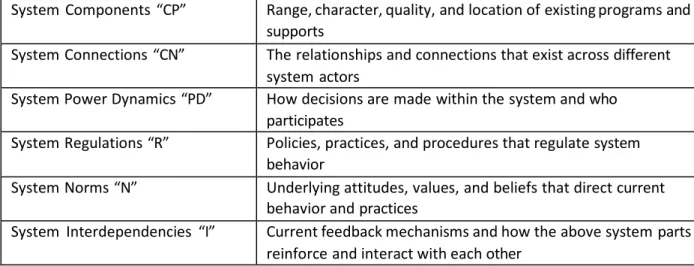
The framework guiding our design of the Foster House study was published by Foster-Fishman and Watson (2011) and is known as the Above-the-Line, Below-the-Line (ABLe) framework. The ABLe Change Framework calls for simultaneous attention to the content of the work and the processes of the work. This theory largely drives the Above the Line examination of our organization: focusing on the key system features that will lead to a deep understanding of the organizational problem.
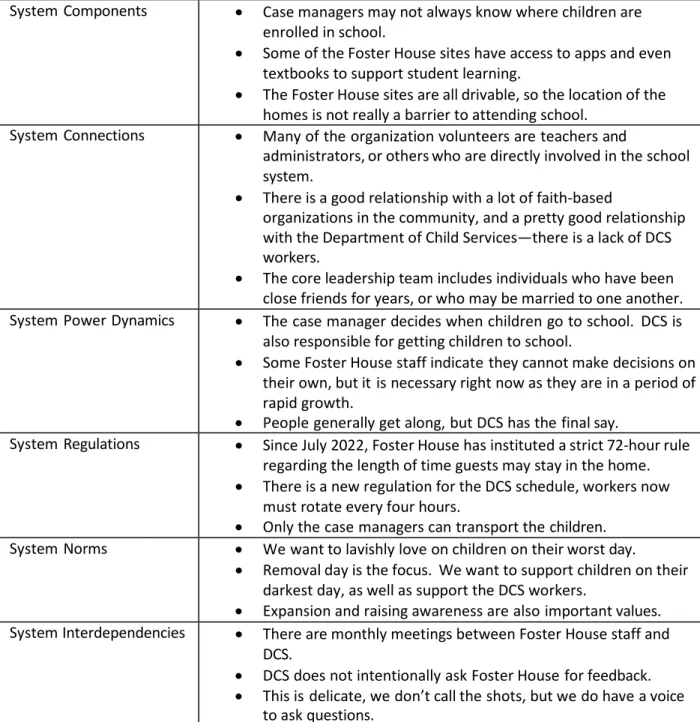
Are any current organizational policies or procedures hindering the overall goals? Sample documents related to the ABLe framework are listed below, while the full list of 179 documents coded and included in the study is in Appendix C. Some Foster House websites have access to apps and even textbooks to support student learning.
All places in Rejniška houses are driveable, so the location of the homes is not really an obstacle to attending the school.
Limited capacity of organization staff and volunteers, as well as the available capacity of affiliated agencies such as the Department of Child Services (DCS), play a significant role in the ability
Our goals in the data collection process were to help our partner organization identify the current system attributes that created and/or perpetuate the foster youth education problem in their transition program, as well as identify potential levers for shifting system components that would support the desired changes. These findings are intended to offer a deeper understanding of the problem of practice and are not intended to be critical of any foster care support role or organization. As an actionable step, we offer suggested recommendations to address these findings, which the organization may wish to consider as it continues to provide support.
The recommendations are made in response to currently available support, supported by research, and should be considered with caution following further review of readiness, capacity and sustainability within the organisation. Although the organization has several teachers and educators who are involved as volunteers, they have limited availability during the school week (program coordinator no. 1). The chief executive also warned: "There is a shortage of child protection staff - and what we have is so overstretched it's a problem." One facility operated by the organization has only 30 DCS workers for three counties, and it is common for all facilities to be completely full every night (Program Coordinator #1).
During the interview, they shared stories of children sitting at kitchen tables working alongside DCS staff doing schoolwork. Due to child safety and security concerns, the facilities are now device-free zones for children, and DCS workers must sit and observe a child if he or she uses any form of technology to complete schoolwork while guests are in the facility. (Program Coordinator #1). The official decides what will happen in terms of schooling, but "there are not enough examples".
This concern was reinforced by the Executive Director when she shared, “They have no shortage of it. Case workers are stretched thin.” In addition, the development director also expressed concern about the high staff turnover within DCS. Other sites echoed the same experience and shared: “The case manager decides who goes to school” (Program Coordinator #3).
Very rarely, if ever, does school bus transportation help get children to/from school in the region studied for our partner organization. It is clear to the staff of the partner organization that only DCS case managers have the authority to transport children to school. Thus, there is a lack of sharing of important educational data that will assist in the placement and success of children who have been removed (Ferguson & Wolkow, 2012).
Accountability structures are lacking or are ineffective between the organization staff and the affiliated organization (DCS)
It is not uncommon for removals to occur at the most inopportune times for children, such as the beginning or end of a grading cycle, further complicating transition issues (Ferguson & Wolkow, 2012). Due to the threat of immediate harm or death, the timing of these removals is disregarded. Records are often incomplete, which hinders proper placement and adherence to any specific academic plans applicable to the child.
Each worker is on a four- to six-hour shift, depending on district protocol, and then there is a shift change, leaving the foster child with another person to determine next steps (Program . Coordinator #1). Every four hours, children change who they communicate with in the institution, there is no time for relationships" (program coordinator No. 3). The result of the shift change is that each new person arrives on the scene to dictate the educational plan for the child at the time they arrive at work.
The Director of Development also echoes this concern, stating, "We see the inconsistency in case managers as part of the impact on education." The CEO echoes emphatically,. This is an area where things can fall through the cracks.” When there is a shift change, those workers who come to the facility do not always know what the plan is or even where the child is enrolled in school. There are often unanswered questions at 8am when the children should be at school or off, such as "can we transport this child" or "is there a bus to take them" or "who will pick up the child after school".
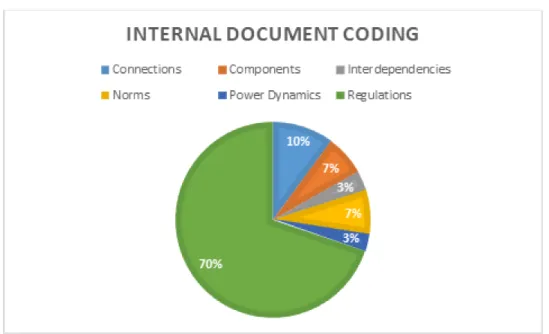
According to the state director of the Foster Home, "no one seems to know the answers to these questions as case managers focus on foster placement." In total, only seven of the 125 documents coded for regulations (5.6%) directly supported foster youth and described ways in which children should be served while in the facility. The interview responses confirmed this low level of accountability structure, as employees said, “We don't like the word rule” (program coordinator #1) and “We try not to politicize something, because that's really against our mission.
There is a correlation between unclear accountability structures and a lack of norms that address the organization's communication habits. 2007) defines systems at their most basic level and describes the importance of identifying systems clearly before adopting change. The work of Foster-Fishman et. 2007) focuses on the need for perspective in thinking to guide changed behavior. By identifying Foster House's systemic challenges with communication and thus a conflict with systemic roles, we positioned ourselves to seek recommendations to address this finding.
The organization is mission driven with a strong sense of purpose in the ministry of serving children on their worst day
However, she says "we have several schools that are 15 minutes away." PC2 indicates that a major problem with children going to school is that they are often just not enrolled anywhere. Respondent declarations in line with code "System Connections". the relationships and connections that exist across different system actors) Set. The program coordinators also share that "DKD is so understaffed right now - they just don't have the manpower to not take these kids to school every day."
There is limited contact with foster parents. 34;We have a good relationship with many faith-based organizations in the community. I feel like we have a pretty good relationship with the department, and. we try to stay connected in the community as best we can, so we have a lot of strong relationships with other organizations. We do get a lot of support from the community.'' Case manager determines what happens and what the plan is. Perhaps no one seems to know the answers to these questions (going to school) that the case managers focus on. placement."
And really, at the end of the day, DCS makes all the decisions and has control over that child.". 34; The person responsible for getting the child into school is their de facto collaborator.". 34;There is no strategic plan for where we are going .. we respond to people who help us." 34;The fact that volunteers will never be left behind with a child is non-negotiable."
34;There's a certain way our physical buildings have to look and feel, and that's one of the non-negotiables for the organization." We're literally just a place where caseworkers can bring the child while they're trying to find placement..". We try to reduce trauma for children in the 72 hours after removal. 34;We want the three days to love those children lavishly."
If anything, it's a break for the case worker as they try to find a job while they're in school." With the lack of staff they're making it a priority for these kids to go to school because they just don't have the manpower. right now, which in turn is good for the kids, because we need these kids to have some kind of normalcy, some kind of stability during the turmoil." That's the main purpose of our mission, and I feel like we're doing a pretty good job of keeping that as our central focus."
34; I share the ministry's message with society, and I look for opportunities to collaborate with other organizations and ministries. We're here to take care of kids on their worst day." 34;I think when we give them feedback, it's usually received - it seems to be received pretty well."