This study sought to establish the correlation between water access policies, informal practices and positive peace. Findings revealed that participants understand some aspects of positive peace in relation to water access.
Background to the study
According to Derman et al. 2005), the starting point of the Water Act of 1998 is that water is a public resource and a gift from God. Participation by the institutions that provide water and the protection of the environment or water policies is necessary for positive structural peace in the field of water supply.
Research problem
Tapela (2002) emphasized that formal institutional arrangements often strengthen the position of traditional elites because they ensure that the status quo of their power remains unchallenged. Planners often assume a homogeneous village, forgetting the different goals and priorities of the different village members.
Research hypothesis
This happens with a decentralized approach to water management, which takes into account the views of the end users (see Makoni, Manase and Ndamba, 2004; Tapela, 2002). Mohan and Stokke (2010) claimed that empowerment of marginalized groups requires a transformation of the prevailing economic and political relations in society, so that the structures become more open, representative and responsive to the needs of the people.
Key research questions
Objectives
Study area
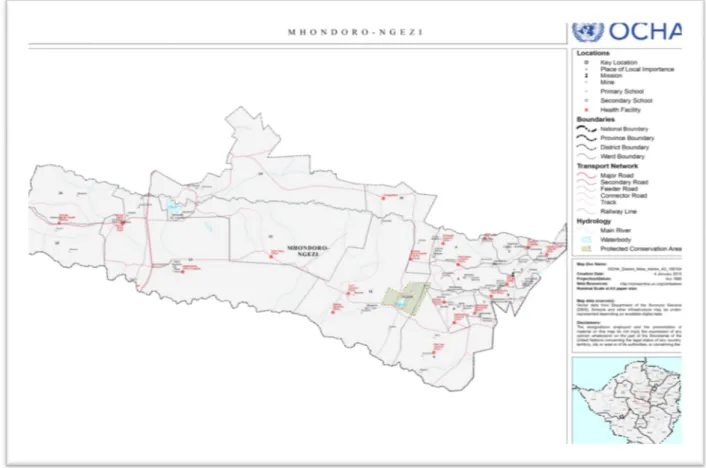
Mhondoro-Ngezi sometimes experiences prolonged dry spells, even during rainy periods (e.g. summer 2014-2015). The population consists mainly of farmers who survive from subsistence farming and remittances from ZIMPLATS Ngezi mine workers, as well as from agricultural activities such as the sale of agricultural products to mine workers.
Ethical considerations
The researcher has made every effort not to allow any personal biases or prejudices into the study. In conducting documentary analysis, the researcher aimed for the highest standards of rigorous research.
Structure of dissertation
It discusses the extent of the impact of informal practices on access to water for community members. It provides an overview of the impact of formal and informal access to water on peace, development and livelihoods in Division Tyrone.
Introduction
Rural areas and the use of water
According to the Sphere Standards as cited by Reed and Reed (2011, p. 1), people must have non-toxic and impartial access to a satisfactory amount of water for consumption, food preparation and individual and household sanitation. They therefore lack peace of mind, as they spend most of their lives searching for water.
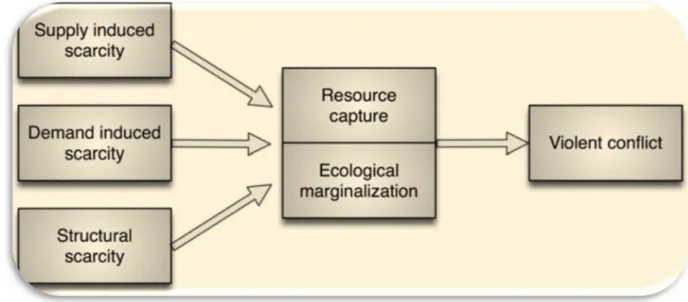
Water Conflicts
Thus, the establishment of a water body, such as a hydroelectric dam, can lead to competitive access among ancillary users and lead to disputes. Kalwani, (2001) in Mbonile (2005, p. 61) pointed out that urban centers also contribute to water conflicts through the generation of solid and liquid wastes that pollute major water sources.
Peace Indicators
Stockholder Participation in water management
Human rights and Water
Hall and Lobina (2012, p. 16) stated that in 2004, Uruguay became the first country to include a specific guarantee of the human right to water and sanitation in its constitution. According to Kidd (2011, p. 5), the Constitution requires the state to “take reasonable legislative and other measures, within available resources, to achieve the progressive realization of the right to water.”
Development and Livelihoods Sustenance
In ridge and pre-irrigation, a similar technique is used for a larger volume of water used. The General Assembly of the United Nations drew attention to the importance of water for sustainable development and poverty alleviation by declaring 2003 the International Year of Freshwater. 19.
Water, the environment and health
The outbreak is linked to the contaminated water of a reservoir, the only source of drinking water in the village. Also, large and medium-sized farmers who suffer more losses due to pollution are in the minority.
Water policies in SADC countries
- South Africa
- Tanzania
- Malawi
- Namibia
The Minister of Water authorized the establishment, purpose and management of water point committees. This Act provided for the control, conservation, distribution and use of Malawi's water resources.
Informal practices
The social interactions of the Boran community are based on Nagaa Boran, 'the peace of Boran'. Historically, the management of water was a central part of the general customary laws and regulations of every ancestral society.
Summary
To show respect, some locals believe that by asking approval from crocodiles or river spirits before entering the river, no harm will come to them. As part of the adab (gesture of respect and kindness), they never catch too many river fish and giant shrimps and small fish or shrimps are always released back into the water.
Introduction
Research methodology and methods
Denscombe (2003, p. 105) asserted that, “qualitative research is important in that it emphasizes respect for human beings as people and not simply as objects of study”. 2014, p. 368) asserted that, compared to single-method approaches, mixed-method research is seen as providing a more complete and deeper understanding of the topic under investigation and having a greater scope.

Sample size and sampling technique
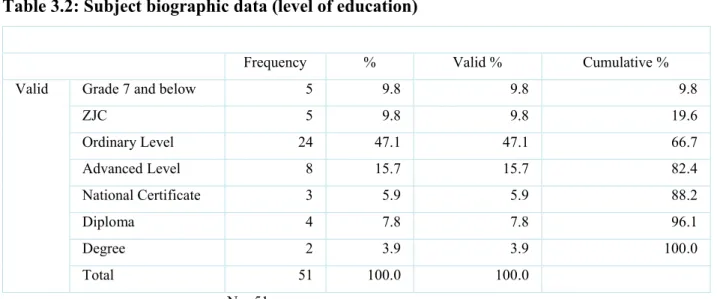
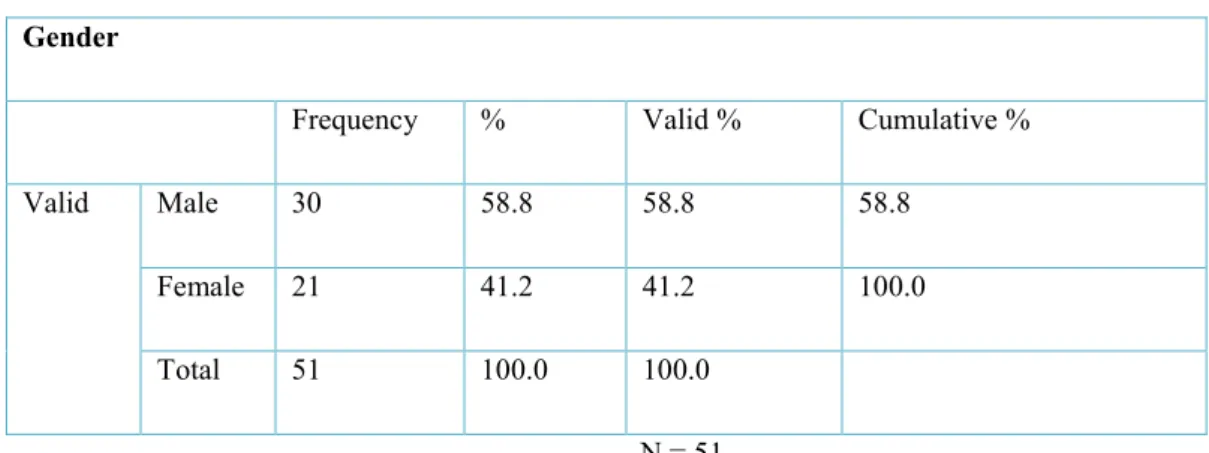
Teddlie and Tashakkori (2009, p. 730) emphasized that to realize the full potential of this approach, the strengths of the qualitative and quantitative components of the study must overlap, while their weaknesses must compensate for each other. Of the 203 adult residents, 51 responded to the questionnaires, representing a sample of 25.12% of the total adult village population.
Data collection
The researcher participated in the lives of the people being studied while also maintaining a professional distance. The researcher finally obtained a hard copy of the National Water Policy after a visit to the headquarters of the Ministry of Environment, Water and Climate.
Data Analysis
After each interview, the researcher listened to the recorded interviews or read the notes, and then transcribed the interview. During the data analysis process, the researcher interpreted the respondents' (accurately transcribed) answers.
Theoretical Framework
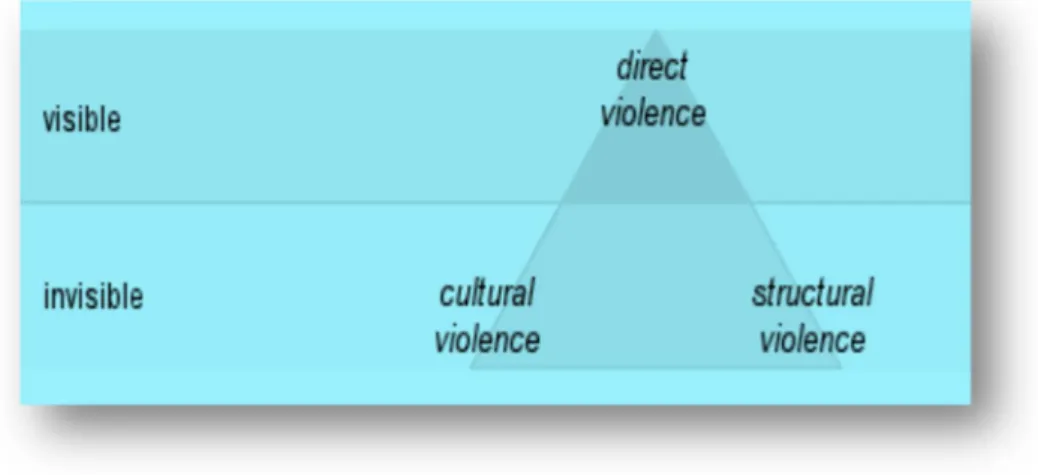
Theory of Positive and Negative Peace
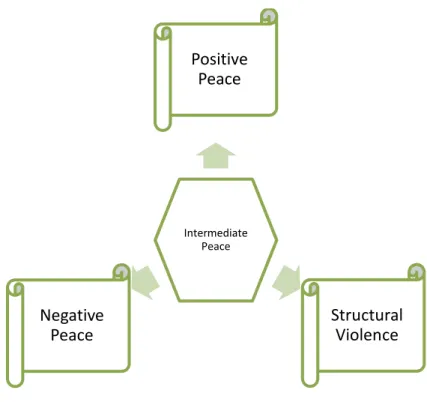
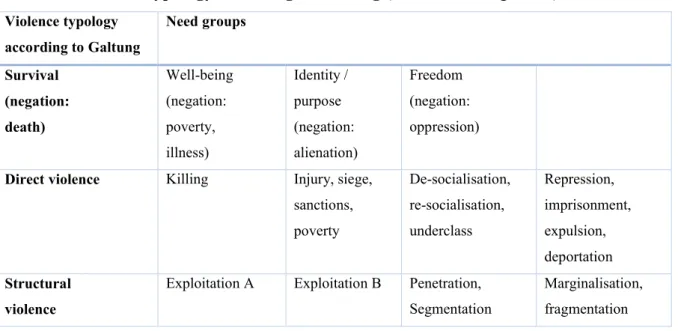
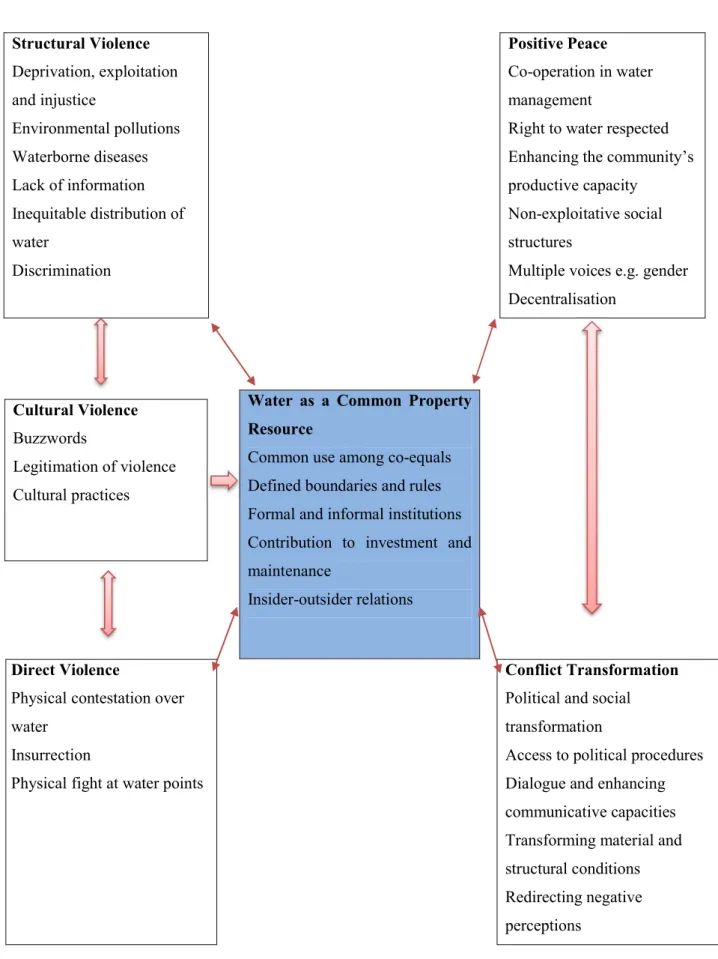
Structural violence is a serious form of social oppression, which can also be identified in relation to the treatment of the natural environment. Readorn, cited by Sandy and Perkins (2000), asserted that positive peace is the understanding of the full enjoyment of the full range of human rights to water by all people.
Common Property Resource Management Theory
One of the propositions made by CPRM theory is that the minimum condition for functioning CPRs is clearly defined boundaries for water resources and its users (see Dietz et al., 2003). Vincent and Elinor in Turner (2007, p. 4) argued for the use of the term 'community pool' rather than.
Conflict transformation theory
Lederach (2003) posited that conflict transformation theory sees peace as central to and rooted in the quality of relationships. According to Lederach (2003, p. 3), conflict transformation theory suggests that "the capacity to engage in change processes at the interpersonal, intergroup, and socio-structural levels must be developed."
Summary
According to Miall (2004, p. 12), conflict transformation typically involves multiple actors, such as development and humanitarian organizations, international NGOs involved in conflict prevention and transformation, states and intergovernmental organizations, parties to a water conflict and other relevant organizations. groups within the affected societies. Development and humanitarian organizations carry out capacity building and support indigenous capacity for conflict management.
Introduction
Historical context of Zimbabwe’s Water Policy
The Water Act of 1998 introduced the polluter pays principle.32 This means that water pollution is an offense which is now punishable by a fine. This eliminates structural violence against nature. 2008) disputed the above claims and argued that enforcement of the Water Act is weak.

Multi-stockholder involvement
In cases where there is a non-existent Village Development Committee (VIDCO), "the Minister will appoint persons to the ward development committee from a list of names drawn up by the councilor for the ward". If there is no WADCO, "the Minister may appoint such persons as he deems fit to constitute the committee".
Institutional arrangements and the provision of water
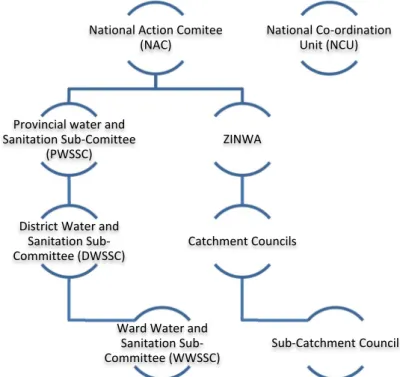
It also has a secretariat called the National Coordination Unit (NCU), whose primary purpose is to provide for the day-to-day administration of the water and sanitation sector on behalf of the NAC. Representatives from NGOs involved in the implementation of water supply and sanitation in rural areas of the province are also co-opted in addition to employees of the above-mentioned ministries.
The right to water
In addition to the constitution, Zimbabwe's other laws recognize the importance of the right to water and the duty of the state and local authorities to provide adequate water to their people. The focus of the above sections on water is the right to health that the population should enjoy.
Gender equity
It also advocates the availability of water for domestic use to reduce women's workload.46. 2013, p. 4) argued that in cases where gender departments are included in water and sanitation committees, their roles and powers are not clearly stated.
Water resources development
As Gozo's 2011 study discovered, most of the completed dams have lost their capacity significantly due to siltation from inappropriate catchment management (for example, the Suri Dam). Development of water resources may also mean tapping of underground water to meet the basic needs of the rural population.
Implementation of water policies
This is due to the lack of human capacity in terms of skills to qualify and quantify pollution levels and their proper interpretation in accordance with EMA provisions. Implementing institutions are weak on the ground and lack the resources in terms of transport to review and enforce the 'polluter pays' principle as law.
Water availability, accessibility and quality
According to the Zimbabwe Water Forum (2013, p. 2), the economic recession of the 2000s led to a collapse in revenue for maintenance, rehabilitation and even the purchase of water treatment chemicals. One cholera case was confirmed in Chiredzi district with 204 confirmed typhoid cases reported in other parts of the country.
Environmental protection
Poor health limits victims' economically productive tasks and reduces their self-esteem – a necessary ingredient for positive peace. The Environmental Management Agency (EMA) Act (2002) recognizes the importance of the environment to the well-being of people and section 57 prohibits water pollution and requires any person guilty of the latter to pay for the removal of toxic substances or “must pay to third parties such repairs, costs of repair, restitution or compensation as may be determined by the court upon the request of such third parties.” It traced the history of the structural violence of exclusion from access to water, from the colonial period to the present.
Introduction
Positive peace and access to water
Harmony
When harmony is present in the community, there is coexistence and community members help each other get water. Harmony is living with other people in a friendly way and helping each other (egalitarianism) to access water for daily use.
Community without corruption
In the end, the well will continuously fail and people's rights to water will be violated. In the questionnaire, 76.47% of respondents indicated that they strongly agree with the fact that peace is present when there is no corruption in the water supply, 13.73% agree, 1.96% were neutral, 5.88% disagree and 1.96% strongly disagree.
Peaceful resolution of conflicts
I have a child the same age as this one (pointing to a four-year-old child), she's going to daycare, and I don't have money in the bank, nor a funeral policy. The responses from the questionnaire showed that 74.51% of the respondents indicated that they strongly agreed that conflicts occur in relation to people trying to access water, 21.57% agreed and 3.92 % could not answer.
Informal water access practices
- Boreholes
- Water point committee
- Mythical rivers
- Informal practices and ecological peace
- Community gardens
Rhoda (25 years old, female) agreed: “We don't allow people to wash on the banks of the river because soap pollutes the water.” People are not allowed to bathe in the river because soap pollutes the water and leads to the death of the living organisms in the water” (Zunde, male, 30 years old).

Summary
The village chairman, during dry seasons announces that we should not use nets while fishing in the river. Trees must not be cut, and gardens are also planted 30 meters or more from the rivers.
Water, Development and Sustenance
Introduction
Findings
- Whither development?
- Service provision
- Societal engagement
Mr. Manyere (Male, 32) agreed: “We were not consulted on issues related to borehole listing. The councilor just told us that "we drilled a well for you".
Summary
The percentage of 22 wells with a household population of 1,750 means that they are strained and therefore not supplying the rural population with sufficient water. However, from the example given in Table 6.1 above, there are advantages in accessing information from this database.
Summary and Conclusions
Summary
Positive and Negative Peace Theory revealed that positive peace is social justice and equality – the removal of structural violence. The chapter explored the involvement of rural residents in the formulation of water policies in their area.
Conclusion
Stakeholder participation in the new water management approach: a case study of the Save River Basin, Zimbabwe. A missed opportunity: the case of the water reform debate in Zimbabwe's fourth parliament.