Mondli Hlatshwayo is an associate professor at the University of Johannesburg's Center for Education Rights and Transformation. Zilibele Mtumane is Professor and Head of the Department of African Languages and School of Languages at the University of Johannesburg.
PEER REVIEW
And in some ways, it is this same silence that implicitly validates these archaic processes. Furthermore, where they – the personal and the political – come into contact; a process of becoming according to Massumi (1995).
Notes
Feeling Some Typ'a Way: A Young Black Woman's Journey Through Education.' South African Journal of Higher Education. Perverse prikkels en politieke economie van South African Academic Journal Publishing.' South African Journal of Science.
WOMEN
ENTREPRENEURSHIP
Entrepreneurship and women's economic empowerment in Zimbabwe: Research themes and future research perspectives.' The Journal for Transdisciplinary Research in Southern Africa, 16(1). Following Kgebetli Moele's The Book of the Dead (2009), which gave the virus itself a voice, The Reactive heralds a significant shift in the portrayal of HIV in South African literature.
The First-Person
Masande Ntshanga's novel The Reactive (2014) is the first South African novel written by a black male writer with the first-person voice of an HIV-positive man, Lindanathi. Reading these two novels together allows us to understand literary patterns, associations and dissociations that reveal a cultural symbolism of HIV/AIDS, part of a broader cultural symbolism of disease in South African literature.
HIV-Positive Narrator in Two South African Novels
Eben Venter's Afrikaans novel Ek Stamel, Ek Sterwe (1996) which was translated into English by Luke Stubbs as My Beautiful Death (2004), and which received – significantly – few critical reviews in English as an HIV narrative, tells the story of a white South African man, Konstant, in the Australian diaspora who eventually succumbs to AIDS. The shifts and continuities in the representation of HIV/AIDS found between these two novels, published 18 years apart, appear to disrupt the trajectory of the post-colonial bildungsroman as it (for the first time?) through the HIV- positive narrator is mediated. .
SPECIAL EDITION
It also looks at the reality of the disease that was considered incurable in the 80s. The level of displacement in The Reactive is the basis for most of the novel. Two of those groundbreaking texts were published in the December 2018 edition of the Johannesburg Review of Books.
The epigraphs are not in my South African edition of the novel – they were probably included in the US to provide context for an American audience. Unknowable Communities: Necessary Fictions and Broken Contracts in the Heart of the Country.’ Experiments with Truth: Narrative Non-Fiction and the Coming of Democracy in South Africa.
Cultural Devotion as Depicted in J.C
Buthelezi’s Kushaywa Edonsayo
It is a common belief among these Africans that a child born before marriage belongs to the mother's family. They teach our children not to respect what is theirs, not to respect our history…The culture of calling our kings and elders by names is not our African respect…) (Buthelezi. From the above discussion, it is observed that there is a great cultural conflict within African societies.
Therefore, it is still a challenge for African societies to strive to maintain indigenous African values. Reclaiming Our Africanness in the Diasporized Context: The Challenge of Asserting a Critical African Personality.’ The Journal of Pan African Studies.
The Public Transport Crisis in South Africa
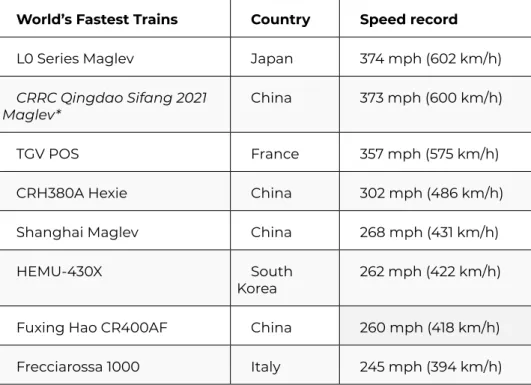
However, there is a huge gap between what Ramaphosa said about bullet trains as one of the main modes of transport and the actual reality of public transport in South Africa (BBC, 2019). Impacts of the Fourth Industrial Revolution on Transportation in the Developing Nations.' International Educational Scientific Research Journal. Exposing precarious working conditions in the South: an example of the minibus taxi industry in South Africa.'.
Public Relations Tools to Improve Perceptions of South Africa's Passenger Rail Agency in Gauteng.''Not in My Backyard?'': Challenges in Assessing the Social Impact of the Gautrain High Speed Rail Project in South Africa.'' In: Manish K.
Unpacking the Municipal Demarcation Application
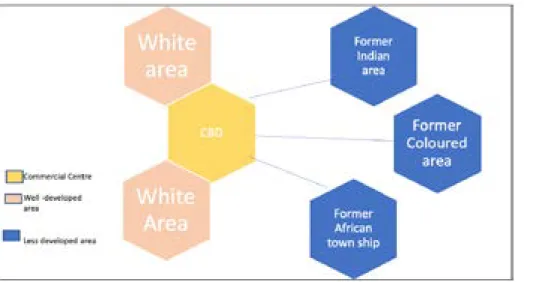
This categorization depended on their compliance or non-compliance with the criteria and the discretion of the Municipal Demarcation Board (MDB) (RSA, 1998). The following section briefly looks at the requirements of the Municipal Demarcation Act (27 of 1998) which was recently updated to the Municipal Demarcation Bill (2020). The development aspect as such was left to the appointed council of the municipality to fulfill.
Section B of the form asks for the background of the application and requires the applicant to provide the advantages and disadvantages of the proposal. Section E is quite complex and technical as it is based on the criterion as found in section 24 of the Municipal Demarcation Law (117 of 1998) read together with section 25 of the Municipal Demarcation Bill (2020) and section 152 of the Constitution (refer to table 2 ).
The Buzz Around Access to Financial
Individuals
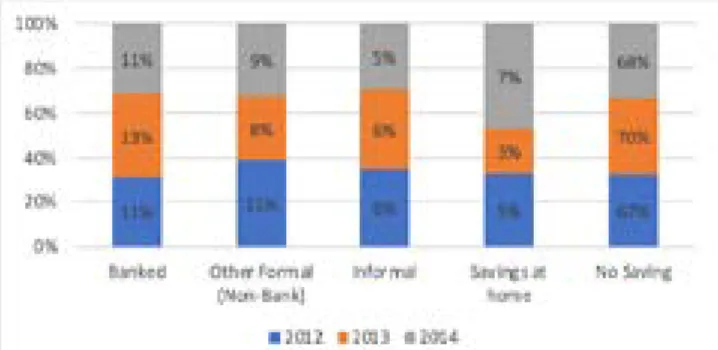
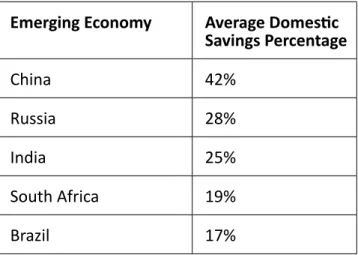
Theories of access to financial services provide a general framework for financial services and intermediation demand. These results demonstrate the importance of asset ownership as a determinant of access to financial services. The results indicate that access to financial services is a diversified measure to deal with the consequences of risks.
The study finding is that access to financial services is a function of the individual's previous shocks. Since financial sector reforms began in 2004, South Africa's overall access to financial services has improved.
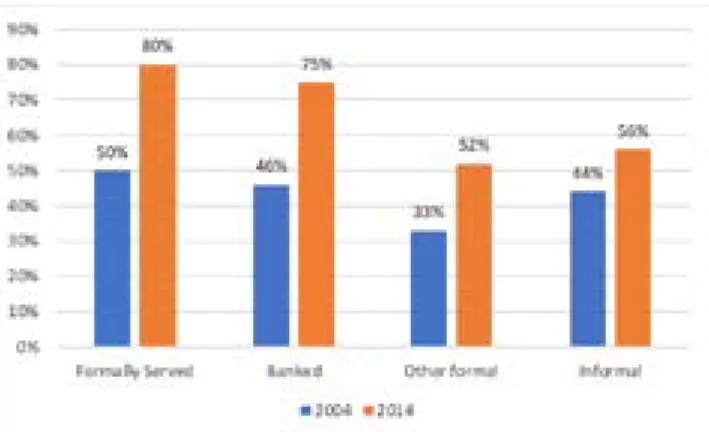
Emerging Economy Average Domestic Savings Percentage
Formal and Informal Rural Credit in Four Provinces of Vietnam.” The Journal of Development Studies. Reaching Out: Access to and Use of Banking Services by Country.’ Journal of Financial Economics. Measuring Subjective Expectations in Developing Countries: A Critical Review and New Evidence.’ Journal of Development Economics.
Ongoing Mobile Banking Use and Relationship Commitment – A Multi-Country Assessment.’ Journal of Financial Services Marketing. Nexus Between Financial Inclusion and Economic Growth: Evidence from the Emerging Indian Economy.’ Journal of Financial Economic Policy.
David Moore Interview
August 2022
INTERVIEW
Mugabeist rule had led the country to the effective rule of the 'rag proletariat'. One of the reasons I moved to teach here in South Africa was to be closer to my favorite country. No solutions are offered as we have reached the dead end of every political economic model – ranging from the rubble of the old Soviet style systems to the rise of the right embedded in the rule of Trumps and Bolsonaros everywhere.
As the promises of the Holy Trinity crumble at borders, borders cannot contain them. There is no solution available as we have come to the blind side of any political-economic model – from the ruins of the old Soviet systems to the rise of the right-wing embedded in the Trump administration.
Coups, Conspiracies, and the Conceits of Power in Zimbabwe
After an attempt at a theoretical and contextual introduction to Mugabe's Legacy, I dug into the main menu with something akin to the mainstay of Joost Fontein's almost simultaneously published book on the politics of death in Zimbabwe: a death. Surprisingly (to me), none of them mentioned in any other than complimentary way that Mugabe learned many of the tricks of his trade during Zimbabwe's liberation war. Zvomuya returned to the moment in the mid-1970s, Mugabe's legacy is considered integral to Mugabe's political creation: his ability to get rid of those he thought challenged him.
Zvomuya recalled a story that even Mugabe's mother warned his fellow nationalists in the early 1960s. As Zvomuya quoted Graham Greene (apparently one of Mugabe's favorite readings), 'a man is not offered two courses to take: a good one and a bad one.
EXCERPT
Then in the mid-1970s Zvomuya introduced the young vashandi ("the people" or more specifically "the workers") radicals whom Mugabe got rid of when he had had enough of their criticism. The first dealt with the roots and consequences of the economic crisis, perhaps the source of many crises in his country. His answer(s) wandered in and out of the scripts dictated by the dictates of developmental discourse.
Secondly, however, 'some of the issues were also the way we handled specific cases. Percy Zvomuya, 'The accidental dictator: even Mugabe's mother said he shouldn't have been president', The Citizen, 9 September 2019, @ https://citizen.co.za/news/south-africa/insight/2176711 /the - accidental-dictator-even-mugabes-mother-says-he-shouldn't-have-been-president/; 'What is left of Zimbabwe.
Book Review
The writing of South African history has been controversial, mainly due to the exclusion of the majority of African people, whose past achievements have often been ignored or treated with disdain. This is done by, among other things, portraying the agency of the oppressed majority to resist colonialism and apartheid. In a fascinating way, they extend our mind and knowledge to the seventeenth-century societies of Southern Africa and reflect on the San as the first inhabitants of the region.
The arrival of the Bantu speakers who were farmers is another dimension that is often misrepresented. The expansion of the early Bantu speakers southward from East Africa (the Great Lakes region) and West Africa (probably around Angola) negates the revisionist idea presented.
BOOK REVIEW
How exactly these kingdoms co-existed and the sources of various conflicts are some of the crucial elements that this book unpacks. This colonial expansion and the courageous African wars of resistance are discussed in an appropriate context of South African history. A brief history of South Africa is filled with information such as the economic crisis of the 1930s, the rise of the National Party (NP), its seizure of power in 1948 and the establishment of apartheid.
The book lays out the detailed logic of this apparent self-determination project of the National Party. Credit to the authors for including such aspects in our history, as poverty and inequality are part of the South African landscape for example.